
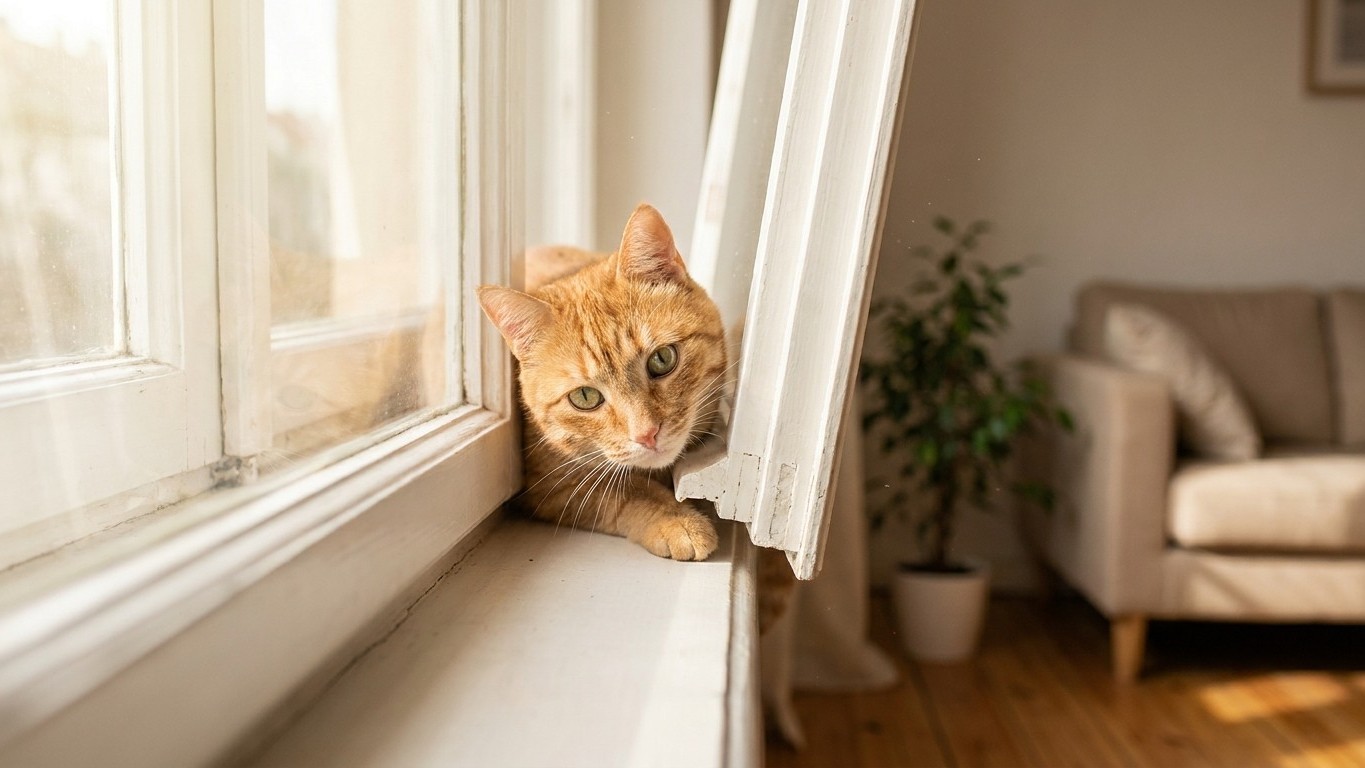
A gap of just eight to ten centimetres is all a tilted window leaves open, yet that narrow sliver has sent hundreds of cats to emergency vet clinics across Europe with crushed organs, snapped blood vessels and fractured limbs. The mechanism is brutally simple: a cat squeezes head-first into the wedge-shaped gap created by a top-hinged tilted window, and because that gap narrows sharply towards the bottom, the animal slides in but can’t slide back out.
Cats slip into the window gap and get stuck while trying to reach the outside, most of the time with the back of their bodies, and when trying to free themselves they slip even deeper into the gap, so the blood supply in their rear legs gets clamped and vital organs are crushed. A vet at Vienna’s University of Veterinary Medicine, quoted by ScienceDaily, put it bluntly: “Depending on the duration, being stuck in the window gap can lead to a life-threatening situation for cats.” This isn’t a rare, freak accident either. It’s a recognised clinical condition with its own name in German veterinary literature, and British cat owners with continental-style tilt-and-turn windows are just as exposed to the risk.
Key takeaways
- A wedge-shaped gap in a tilted window looks like an escape route to cats but becomes a crushing trap they can’t reverse out of
- Summer ventilation habits make this a near-daily emergency for some veterinary clinics, with young and curious cats at highest risk
- Most cats can recover full mobility if treated promptly, but rescue technique matters—one wrong move can cause spinal damage
Why the trap works so well, and why summer makes it worse
Tilted windows are seductive to cats precisely because they promise a way out without looking like one. The cat sees a kind of exit in the gap between the window frame and the sash, and will try to slip through there to get outside, but because the gap tapers sharply towards the bottom, there is a high risk that the animal will get stuck and be trapped. Once wedged, the instinct to struggle only makes things worse. A cat stuck in a tilted window will try to free itself, and the associated movements, combined with body weight, usually mean it only sinks deeper, compressing the body considerably between the costal arch and the pelvis.
Warm weather is when this becomes a near-daily emergency for some clinics. These dramatic situations often happen in the summer months, largely because owners understandably want ventilation on hot days and leave windows ajar without a second thought. A major German study covering more than a thousand feline fall cases at Freie Universität Berlin found that falls occurred more often in summer, at 77%, and mainly at night, at 62.1%. Vienna’s own veterinary hospital sees a similarly seasonal pattern: each year the University of Veterinary Medicine Vienna treats 70-80 cats with injuries from falling from windows. Young cats are disproportionately represented in these figures, largely down to curiosity and a lack of road sense around heights rather than clumsiness.
What a rescue actually looks like, and why panic makes it worse
If you ever find your cat wedged in a tilted window, resist the urge to yank. Vets recommend a slow, deliberate technique: reach one hand under the cat’s chest and the other under the belly, then carefully lift the cat only a few centimetres, just until you reach a point in the gap through which the animal can be lifted out. Jerky movements risk spinal damage, so calm handling and a soothing voice matter more than speed. One unsettling detail vets flag repeatedly: cats are barely able to signal that they’re in pain, and the shock and resulting adrenaline often make them behave calmly or crawl after release, which shouldn’t fool anyone into thinking they’re unharmed.
That calm exterior is exactly why a trip to the vet is non-negotiable, even if your cat trots off looking fine. Clinically, this injury has become common enough to earn its own treatment protocol, sometimes involving fluids to stabilise circulation after shock, anti-inflammatory medication, and pain relief before any physiotherapy begins. The recovery outlook is genuinely encouraging when treatment starts promptly: veterinary research suggests around three-quarters of cats affected by tilted window trapping regain full mobility through structured physiotherapy, though the process can stretch over several months of muscle massage and gradual limb mobilisation.
Making tilted windows safe without sacrificing fresh air
You don’t need to give up ventilation to protect your cat. A few habits close the gap between comfort and catastrophe. Young cats, unneutered cats prone to wandering during mating season, and older cats with declining vision or joint mobility all carry elevated risk, so households with any of these should be especially vigilant. The most effective single change is simple: never leave windows tilted when your cat is unattended, leaving them open only when you’re at home to intervene, and keeping them closed when your cat is home alone.
Beyond that, a few practical adjustments make a real difference:
- Fit mesh or grille screens designed to clip or glue onto the frame, which still allow full opening for cleaning while blocking the tilt gap entirely
- Ventilate in short, supervised bursts through the day rather than leaving a window permanently ajar
- Keep windows closed overnight, since cats tend to be more active and more likely to explore once the house goes quiet
- Never allow unsupervised access to balconies, even fully enclosed ones, without a secure barrier
Interestingly, Austria has taken this seriously enough to legislate: cat keepers there are legally bound to protect their pets from a possible plunge out of windows or balconies, using suitable safeguards such as nets or grilles. Britain has no such law, which means the responsibility sits entirely with individual owners. Given how quickly a warm afternoon can turn into an emergency dash to the vet, that’s a responsibility worth taking as seriously as any other safety habit in the home, right alongside keeping the cooker guard on and the medicine cabinet locked.
Sources : tractive.com | sciencedaily.com