
Have all necessary info. Writing the article now.
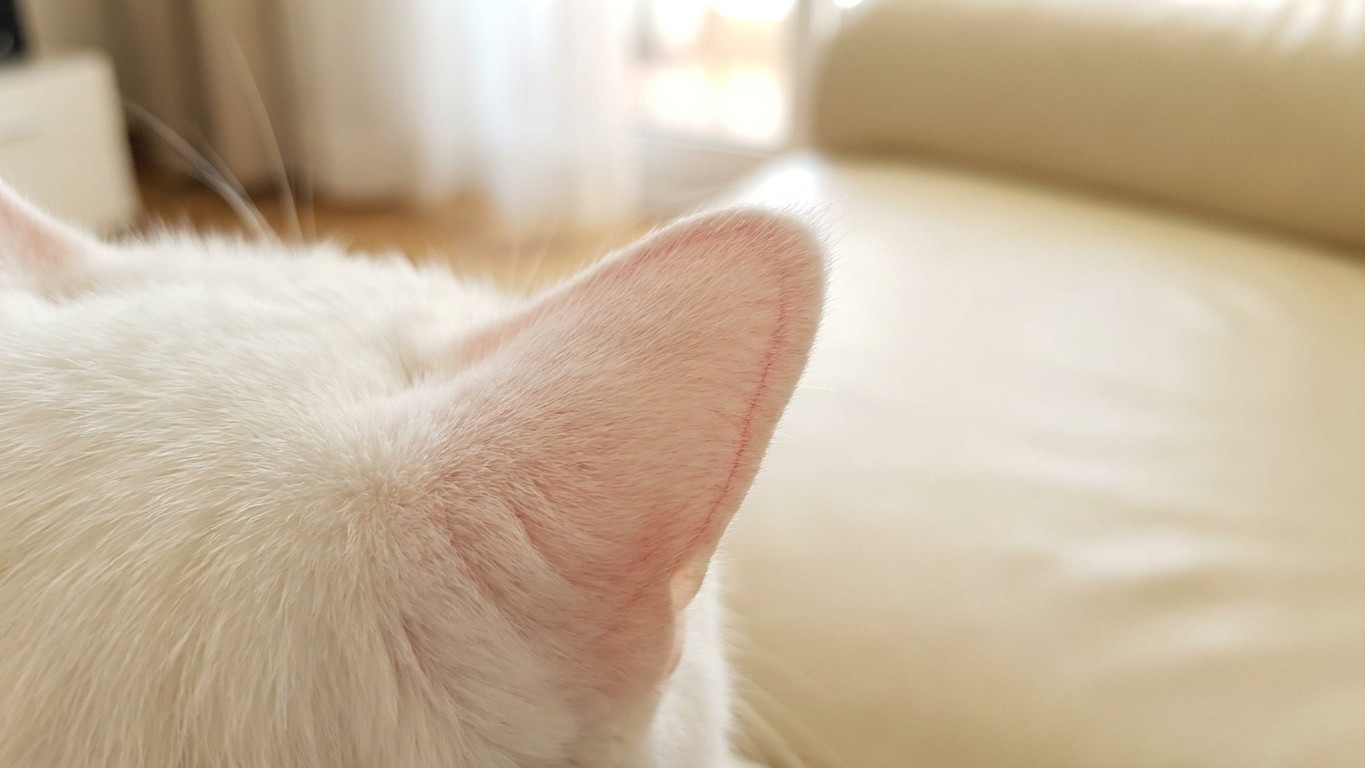
That pretty pink flush at the tip of a white cat’s ear isn’t just a passing blush from a sunny afternoon on the windowsill. It’s the earliest visible sign of solar dermatitis, a UV-triggered skin condition that, left unchecked, can progress to squamous cell carcinoma, one of the most common skin cancers seen in cats. What looks like harmless sunburn today can become a serious problem within a few years.
Key takeaways
- That pink tint on white cat ears looks harmless but hides a dangerous progression to cancer
- Even indoor cats by sunny windows are at risk—glass doesn’t block UV as effectively as you’d think
- A scab that keeps coming back on the ear tip is a massive red flag vets say owners constantly miss
Why white cats’ ears are so vulnerable
The ear tip is a perfect storm of exposure and fragility. Squamous cell carcinoma tends to arise in sparsely-haired and lightly-pigmented areas of the skin, particularly the eyelids, the top edge of the nose, lips, ears, and other areas that have greater exposure to ultraviolet rays. There’s simply no melanin there to absorb and scatter UV radiation, and the fur covering is thin enough that sunlight reaches the skin almost unimpeded.
Breed matters too. White and light-colored cats are more likely to get these tumours, and outdoor cats are also predisposed, while a decreased risk has been reported in Siamese, Himalayan, and Persian breeds, likely related to their protective pigment. I find that genetic quirk genuinely fascinating: the very same pointed pigmentation that gives Siamese cats their striking dark ears and mask also happens to shield them from a cancer that plagues their all-white cousins. Nature’s sunscreen, built right into the coat pattern.
The progression follows a fairly predictable path. Solar dermatitis, also called solar dermatosis or actinic keratosis, is an inflammatory skin disease caused by prolonged exposure to the sun’s radiation. In the early stages, the skin may look pink and scaly with some hair loss, and as the condition progresses, the area becomes crusted and ulcerated. That itching and irritation isn’t trivial either. The lesions appear to cause irritation and the cat may shake its head or scratch at the ears, causing bleeding from the ear margins or tips. Watching a cat repeatedly worry at a sore ear tip is one of the more uncomfortable things to witness as an owner, and it’s often the moment people finally book that vet appointment.
From sunburn to cancer: the timeline vets worry about
This is the part owners genuinely don’t expect. Skin damage doesn’t just sit there quietly. Precancerous or cancerous lesions such as squamous cell carcinoma can develop, and earlier skin damage can become skin cancer years after exposure. Your cat’s sunbathing habit from three summers ago could be the seed of a problem showing up now.
Veterinary dermatologists describe this as a genuine disease spectrum rather than separate conditions. Solar (actinic) dermatoses are a group of conditions that share a common cause, exposure to excess ultraviolet radiation, and there is a progression from solar dermatitis through to actinic keratosis and eventually squamous cell carcinoma. Once a tumour has formed, the appearance tends to shift. This type of tumour starts out as red, crusty looking areas on the tips of the ears, and the sores may seem to come and go and will slowly get bigger with time. That “comes and goes” pattern is dangerously misleading. A scab that heals over and reappears looks like a minor recurring scrape, not a growing tumour, which is exactly why so many cases get missed until they’re advanced.
The good news, and it’s genuinely good news, is that catching it early changes everything. This type of cancer can be treated successfully if it is caught early. Early detection is vital in cats with SCC. A biopsy is usually how vets confirm what they’re dealing with. In addition to physical exam findings, veterinarians might perform skin biopsies or other tests to confirm a diagnosis or rule out look-alike conditions. If it has progressed to full carcinoma, squamous cell carcinoma of the ear tips is treated with surgical removal, followed by radiation therapy or medications applied to the skin. Surgery on ear tips sounds dramatic, but cats generally cope remarkably well with a partial ear pinna removed, better than most owners expect.
What actually works to protect your cat
Sunscreen sounds like the obvious fix, but there’s a catch most people don’t realise: cats groom themselves obsessively, which limits how long any topical product stays put. Cats’ grooming habits usually limit the usefulness of sunscreen, but if sun exposure can’t be avoided, sunscreen can be tried, provided you follow your vet’s recommendations and use only a product that’s safe for cats. Never reach for a human sunscreen, some ingredients are toxic to cats if licked off, so always check with your vet first.
If you do go down the sunscreen route, timing and formulation matter. A waterproof sunscreen containing titanium dioxide with an SPF of at least 30 applied twice daily can help protect the ears, though it isn’t recommended for use around the eyes, nose, or mouth. But realistically, prevention works best when it’s about managing environment rather than relying on cream. Limit sun exposure by keeping cats indoors, especially during the sunniest hours of the day. One vet dermatology resource puts a specific window on it: affected or at-risk cats should avoid sunbathing between 9 AM and 4 PM. If your white cat adores a particular sunny windowsill, a simple UV-filtering film on that window, or a blind pulled halfway during peak hours, does more good than any cream ever will.
A few practical habits go a long way here:
- Check ear tips monthly for redness, scaliness, or crusting, especially through spring and summer
- Keep white or pale-eared cats indoors during the hottest midday hours
- Ask your vet about cat-safe, vet-approved sunscreen if outdoor access can’t be avoided
- Never dismiss a “scab that keeps coming back” on the ear tip as just a scratch
One detail that surprised me while researching this: solar dermatitis isn’t only a hazard for outdoor cats. The condition is well documented in indoor cats who like to sleep by sunny windows. Glass doesn’t block UV as effectively as most people assume, so that beloved sunbeam nap spot can be doing quiet damage over years, long before that first pink tip ever appears.
Sources : askavet.com | hospital.vetmed.wsu.edu