
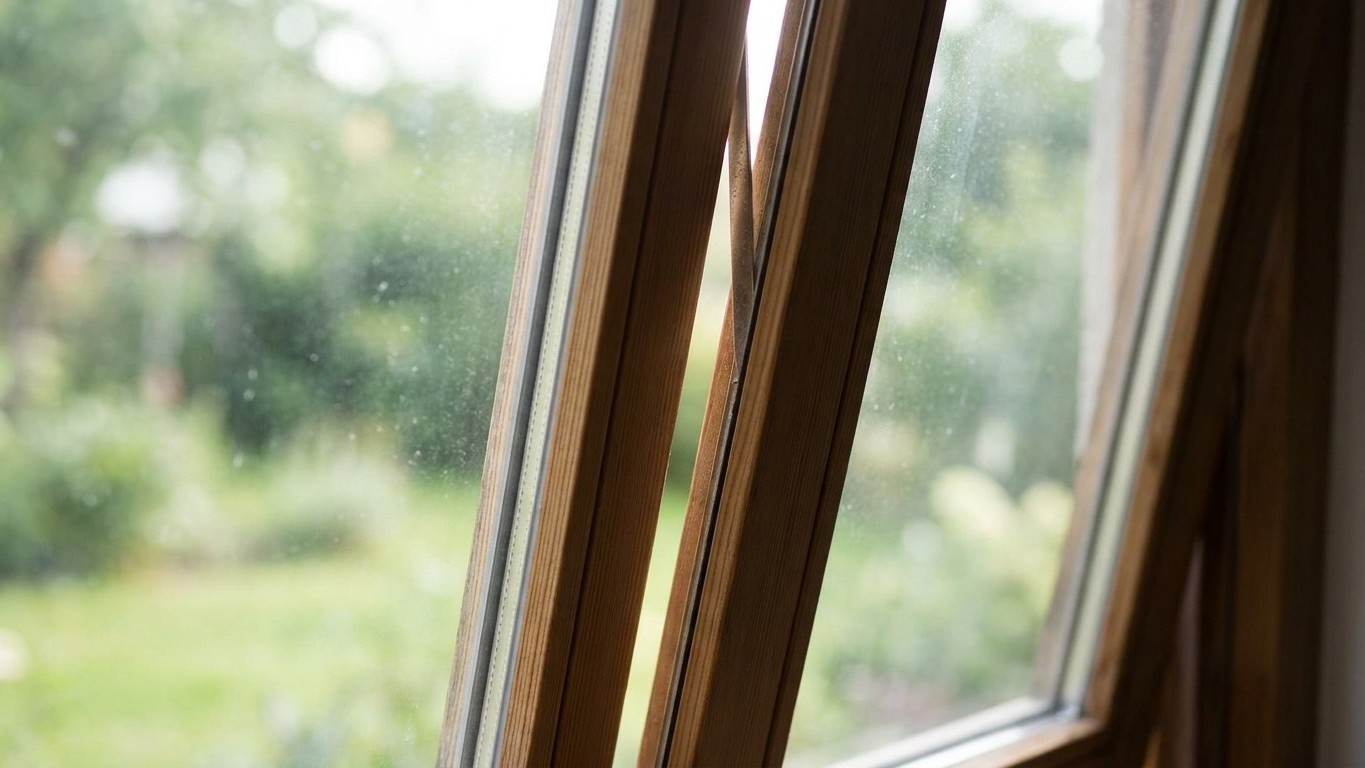
A tilted window looks harmless enough. But show that narrow triangular gap to a vet who treats cats regularly, and you’ll get a very different reaction: winces, and probably a story about a patient who never walked the same way again. The condition even has its own name in veterinary literature: window entrapment trauma, or “Kippfenster syndrome” in the German research where it was first documented in detail.
Here’s what actually happens. A cat pushes its head and shoulders through the gap at the top of a bottom-hung window, the kind that tilts inward rather than sliding sideways. The opening looks wide enough at the top, but it tapers sharply. This trauma syndrome occurs when cats try to escape through the small V-shaped opening at the top of bottom-hung windows, but instead become trapped. The cat’s body slides down as it wriggles forward, and the middle section, roughly between the last rib and the pelvis, gets pinned by the frame.
Key takeaways
- Vets have a name for this injury: ‘Kippfenster syndrome’ — and they see cases every single week
- The real danger isn’t the trap itself, it’s what happens after your cat is freed
- A cat can seem perfectly fine hours after rescue, then develop life-threatening complications days later
The Bit Vets Wish Every Owner Understood
This is where the real damage begins, and it’s far more than a bruise. The trauma occurs when cats become accidentally trapped, often around the thoracolumbar area, leading to varying degrees of organic hypoperfusion that can affect various structures, including the spinal cord, muscles, nerves and kidneys, depending on the severity of the trauma. In plain terms, the frame squeezes shut on the exact spot where the aorta and major nerves supplying the back legs run. Blood simply stops getting through.
Panic makes it worse. A trapped cat doesn’t lie still and wait for rescue; it thrashes. Cats slip into the window gap and get stuck while trying to reach the outside. Most of the time the animals get stuck with the back of their bodies. When trying to free themselves they slip even deeper into the gap. Every panicked wriggle tightens the trap and lengthens the time the tissue goes without oxygen. The blood supply in their rear legs gets clamped and vital organs are crushed.
The clinical signs, once a cat is finally freed, are unmistakable to anyone who knows what to look for. Clinical signs that can be related to ischaemia are coldness of the affected limbs, no palpable femoral pulses and low rectal temperatures. The back legs go limp, cold to the touch, and the cat may show no response to pain there at all, which sounds like a small mercy but is actually one of the more worrying signs a vet can see.
Why Freeing the Cat Isn’t the End of the Danger
Here’s the part that surprises most owners: getting the cat out of the window doesn’t switch the damage off. It can switch it on. Restoring blood flow to starved tissue triggers what’s called reperfusion injury, and researchers studying this exact condition found severe biochemical disturbance in the bloodstream once circulation returned. CK activity was severely increased in the majority of the presented cats, whereas half of the cats had severely increased AST levels, as CK is the most specific enzyme for skeletal muscle damage, which peaks very early after the insult. That flood of muscle breakdown products travelling through the bloodstream can overwhelm the kidneys and, in the worst cases, the lungs.
The numbers make sober reading. A study of cats treated for this exact injury found the prognosis of cats after entrapment in a bottom-hung window is fair, with an overall survival rate of 65%, but that figure hides a huge range depending on severity. Cats admitted with the most severe neurological damage, complete hind-limb paralysis with no pain response at all, faced a mortality rate of 55%. And the cause of death often isn’t the paralysis itself. Owners should be aware of sudden respiratory distress syndrome as one of the main causes of death with bottom-hung window trauma. A cat can seem to be recovering from a leg injury, only to develop breathing problems days later, as the toxins released during entrapment do their damage elsewhere in the body.
This isn’t a rare curiosity confined to textbooks either. Every year the University Clinic for Small Animals at the Vetmeduni Vienna treats about 70 to 80 cats that suffer from bone fractures or internal injuries after such accidents. And there’s a clear seasonal pattern owners should know about: the study found that statistically June, July and August are the most dangerous months. Vienna vet Roswitha Steinbacher, who treats these cases, puts it bluntly: “Do not leave your cats alone when windows are tilted or open without appropriate safeguard.”
Making Tilted Windows Actually Safe
None of this means you have to seal your cat into a stuffy flat all summer. It means the tilt-and-turn window, increasingly common in newer UK builds and renovated flats, needs treating as a genuine hazard rather than a harmless vent. A few practical fixes work well:
- Fit a window restrictor or safety catch that stops the frame opening far enough to create that fatal V-shaped gap in the first place
- Use a rigid mesh cat screen across the whole window rather than relying on the tilt function for ventilation
- Never leave a tilted window unsupervised in a room your cat has access to, even for a quick trip to the shop
If you do find a cat trapped, resist the urge to yank them free. Support the body, lift gently rather than pull, and get to a vet immediately regardless of how the cat behaves afterwards, because the shock situation and the resulting adrenaline lead to the fact that the cat often behaves calmly or crawls after being released from its dangerous situation, and you shouldn’t let this fool you.
One detail rarely mentioned: blood tests taken hours after entrapment are far more useful to a vet than ones taken immediately, since muscle enzyme levels typically haven’t peaked yet at the point of rescue. It’s precisely why a vet will often want to keep a “fine-looking” cat in overnight for monitoring rather than sending it straight home, even when the walk from the window to the car looked perfectly normal.
Sources : ncbi.nlm.nih.gov | pmc.ncbi.nlm.nih.gov