
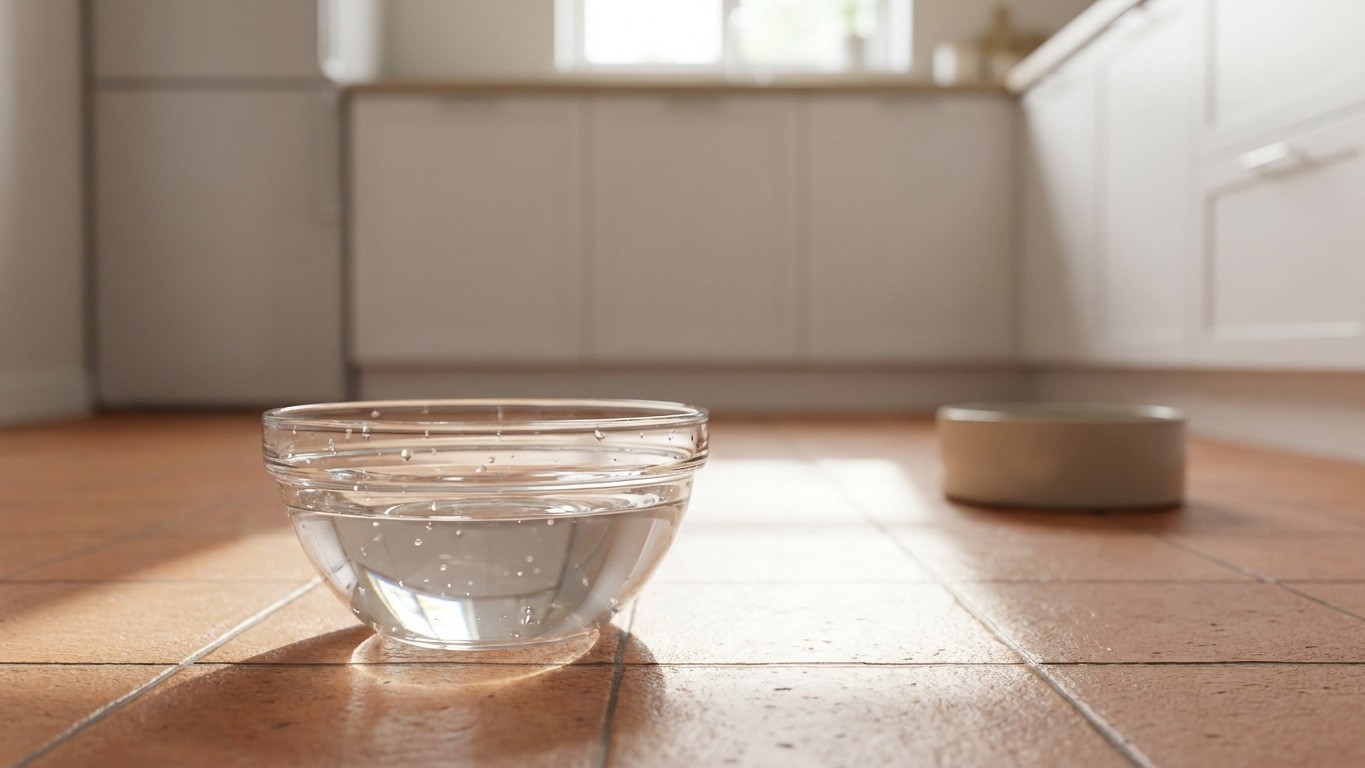
The dinner-and-water combo tray is one of the most common pieces of kit in British homes, yet it is often the very first thing a vet will ask you to change. Not because the bowl is the wrong shape or the wrong colour, but because of where it sits: right next to the food. A cat who “just doesn’t drink much” may in fact be a cat who has quietly decided that bowl is off-limits, and the consequences of that decision can build for years before anyone notices.
Key takeaways
- Wild cat instincts make cats avoid water placed near food, fearing contamination from prey
- Whisker fatigue from cramped bowl placement may cause cats to simply stop drinking
- Poor hydration over years can silently damage aging kidneys, especially in cats over 10
Why your cat treats the water bowl like a contaminated carcass
This isn’t fussiness for the sake of it. In the wild, cats rarely eat and drink in the same spot, largely because cats instinctively avoid contaminating their water sources, since the gut contents of a carcass can leak into nearby water, making it unsafe to drink. That risk assessment hasn’t been switched off just because your cat’s “prey” now comes from a pouch. Vets and behaviourists frequently point out that some cats simply dislike the smell of food while drinking, a behaviour rooted in instincts inherited from wild cats that keep food and water sources apart.
Royal Canin’s own guidance for owners managing feline kidney health is refreshingly blunt on the point: a cat with CKD will need access to lots of fresh water, and water bowls should be placed in a separate area to where they’re fed. Some nutrition specialists even suggest a specific distance, recommending water sources be placed at least one metre away from food stations, since cats often instinctively avoid water that could be contaminated by a “kill”. I’ll admit I once shrugged this off as internet folklore, until I moved my own cat’s water bowl across the kitchen and watched her drink from it for the first time in months.
The whisker problem nobody mentions at the pet shop
There’s a second, more physical reason bowls placed too close together cause trouble, and it has a slightly odd name: whisker fatigue. The theory goes that whisker fatigue is a term veterinarians use to describe the sensory overload cats feel when their whiskers repeatedly rub against an object. When two bowls sit tightly side by side, there’s barely room for a cat’s face, let alone the sweep of those hyper-sensitive vibrissae, without brushing hard surfaces on every visit.
It’s worth being honest that this isn’t settled science. A 2020 study evaluating forty cats found that subjects did not seem to experience eating issues when fed from a typical bowl, though around three in four cats seemed to prefer using a whisker-friendly dish. So the jury’s still out on whether whisker fatigue causes genuine distress or simply a mild preference, but the practical fix, wider bowls and more breathing room, costs nothing and upsets no one.
What “he just doesn’t drink much” can actually mean
Cats are notoriously poor drinkers to begin with, which makes bowl placement more than a matter of comfort. Chronic kidney disease is depressingly common in older cats: a large UK VetCompass study estimated feline renal disease prevalence at around 4% in first-opinion practices, rising to affect 30 to 40% of cats over ten years old, and it was responsible for over 13% of deaths in cats aged five and above, at a median age of 15. Chronic mild dehydration, the kind caused by a cat quietly avoiding an unappealing bowl for years, is exactly the sort of slow-burn habit that can tip an ageing kidney over the edge.
None of this means fountains are a magic cure, incidentally. Research on the subject is more nuanced than the marketing suggests: controlled studies in healthy cats have not shown a consistent increase in average water intake from fountains versus bowls at the population level, though individual cats often show strong preferences. Diet plays a bigger role than most owners realise too, since wet food carries far more moisture than kibble ever will. Nutritionists working on kidney care often recommend the “N+1” rule, providing one water source per cat in the household, plus one extra, which sounds excessive until you remember that a cat with even one hidden reason to avoid a bowl (smell, whiskers, a rowdy dog wandering past) will simply stop drinking rather than compromise.
What to actually do about it
Start by physically separating the bowls, ideally into different rooms or at least a good stride apart, rather than the classic side-by-side stand sold in most pet shops. Swap a deep, narrow water bowl for something wide and shallow, glass or ceramic tends to stay cleaner and smell-free longer than plastic. Then top up with a few extra water stations around the house, particularly if you have more than one cat competing for access, and change the water daily since even a light film on the surface can be enough to put a fussy cat off.
If your cat is drinking noticeably more or less than usual, don’t just tweak the bowl and hope for the best. That kind of change in thirst is one of the classic early warning signs of kidney or thyroid problems, and it warrants a proper conversation with your vet rather than a Google search. One genuinely surprising detail from cat physiology: cats lap water in a strange way, flicking their tongue against the surface at roughly four times per second rather than scooping it, sending a small column of liquid flying upward before closing their mouth around it. It’s a neat trick of physics that took Scientists years to properly explain, and it’s a small reminder that even the most everyday feline habits are rarely as simple as they look.
Sources : royalcanin.com | cuteness.com