
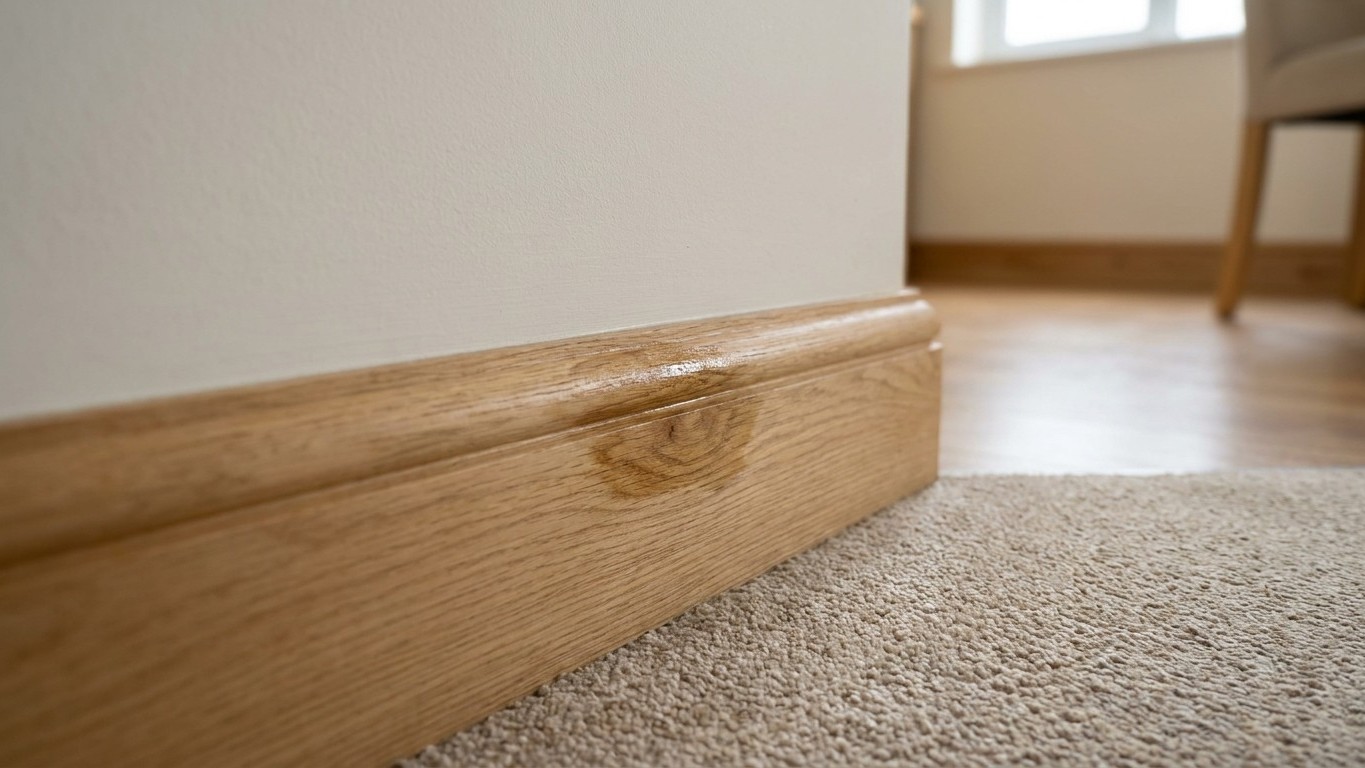
Three weeks of scrubbing a corner every morning with an ammonia-based floor cleaner, and the smell kept coming back. That’s because the culprit wasn’t repeated spraying at all: a genuine leak or condensation build-up was creating a fresh wet patch each night, completely unrelated to the litter tray. The cat had simply been drawn back to a spot that, thanks to the cleaner itself, now smelled exactly like urine.
This mix-up happens more often than you’d think, and it’s worth unpicking both halves of the story, because the cleaning mistake and the mystery damp patch are two separate lessons that every cat owner should know.
Key takeaways
- Ammonia cleaners smell like cat urine to felines—making them MORE likely to spray, not less
- That wet patch reappearing each morning might have nothing to do with your cat’s litter box habits
- One expensive mistake kept repeating because the real culprit was hidden behind furniture
Why ammonia cleaner is the worst possible choice
Reaching for a strong-smelling floor cleaner feels logical when you’re desperate to kill an odour. But cat urine naturally contains ammonia, and using ammonia-based products can make the spot smell more like urine to a cat, encouraging repeat accidents. A cat’s nose isn’t fooled by a “clean” chemical smell the way ours is. Cats have a strong sense of smell, up to 14 times stronger than humans, so what registers to us as a fresh, sharp floor cleaner reads to them as an invitation.
Ammonia-based cleaner may attract a cat to continue to mark the affected area, and if not cleaned thoroughly, lingering scent can continue to attract the cat to spray in the area. Vets recommend something quite different: use an enzyme-based cleaner to break down urine compounds, avoid ammonia-based products, and thoroughly clean and dry the area to prevent repeat accidents. Enzymatic cleaners work because urine contains minerals that can clump into crystals, and enzymes actually break down that acid rather than just masking the smell.
There’s a technique to it too. Locate every soiled spot, using a black light if necessary, then blot rather than scrub, apply an enzymatic cleaner, and allow it to fully penetrate and dry. Scrubbing, ironically, pushes urine deeper into flooring and grout, exactly the opposite of what you want.
Spraying, or something else entirely?
Here’s where the story gets more interesting, because not every mark on the skirting board is deliberate territorial spraying. There’s a real difference between a cat backing up to a vertical surface and squirting a small amount, and a cat squatting to produce a puddle on the floor. Spraying involves small amounts of urine on walls and vertical surfaces, while inappropriate urination involves larger amounts of urine on horizontal surfaces.
The smell itself is a clue too. Even with urinary accidents, the urine itself should retain similar colour, odour and consistency to normal urine, whereas urine from spraying has a more pungent odour, often smelling musky or fishy, and may be gritty in texture. If the patch you’re mopping up doesn’t smell overwhelmingly “catty”, that’s a hint you might be dealing with something that isn’t urine at all.
This distinction matters medically, too. If a cat has a UTI or other medical issue causing discomfort in the litter box, they may begin peeing elsewhere, because in their mind the litter box has become the source of their discomfort. This can develop into feline interstitial cystitis, also known as feline idiopathic cystitis (FIC). Bladder stones, kidney disease and infections can all masquerade as “naughty” behaviour, which is exactly why a trip to the vet should always come before any behavioural fix. If a cat starts spraying or urinating outside their box, it’s often a sign something is wrong, so it’s always worth visiting the vet to rule out an underlying health condition first. Male cats deserve particular urgency here: they’re at higher risk of a painful and life-threatening condition called urethral blockage, which can escalate to fatality within as little as 48 hours.
When the wet patch isn’t urine at all
Now for the twist that catches so many owners out. A recurring damp patch in the same corner, especially one that reappears overnight regardless of how thoroughly you clean, can just as easily point to a household problem with nothing to do with your cat. Condensation forming behind furniture pushed against an external wall, a slow drip from a pipe under floorboards, a leaking radiator valve, or rising damp near a skirting board can all produce a patch that looks suspiciously like a fresh accident by morning. Ammonia cleaner won’t touch any of these causes, which explains why the smell and the wetness kept returning no matter how hard the scrubbing.
If you’ve ruled out your cat through a vet check and the litter tray set-up looks fine (enough trays, cleaned regularly, in a quiet spot), it’s worth running your hand along the skirting board, checking behind nearby appliances, and looking at the underside of any carpet or laminate in that corner. A patch that feels cold and slightly clammy, rather than smelling of ammonia, points strongly towards damp or condensation rather than cat wee.
Getting it right from here
The fix is refreshingly simple once you know what you’re dealing with. Swap any ammonia or bleach-based product for a proper enzymatic pet cleaner, and give it time to work rather than blasting the area and moving on. Use a UV torch in a darkened room to check whether old, dried marks are still lurking nearby, since a lingering scent trail can keep pulling a cat back to reoffend even after visible stains are gone.
And if the vet gives your cat a clean bill of health, don’t just assume the mystery is solved: call a plumber before you buy another bottle of cleaner. A £40 call-out fee is a lot cheaper than three more weeks of guesswork, and considerably kinder to both your flooring and your cat’s confused nose.
Sources : kinship.com | chewy.com