
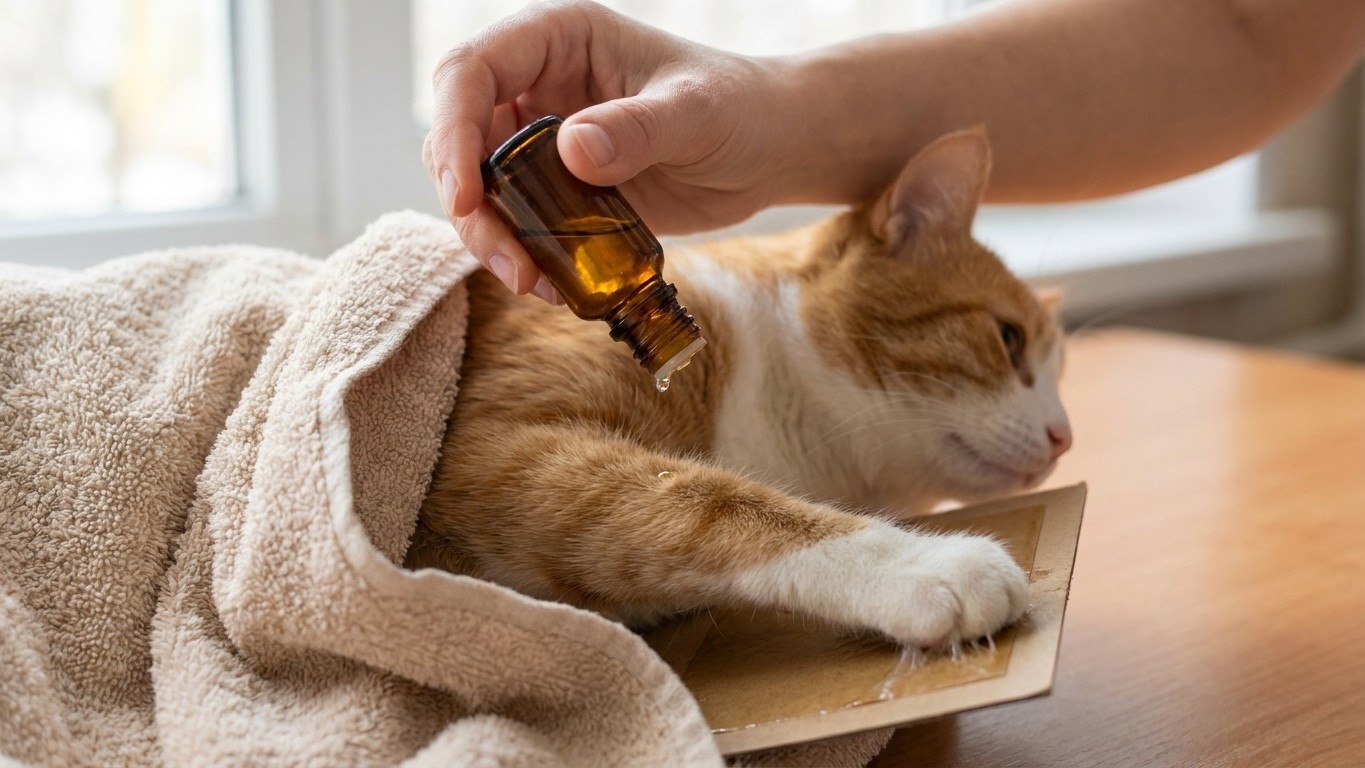
Vegetable oil, not brute force, is what frees a cat stuck on a glue board, and reaching for that bottle instead of yanking could be the difference between a scare and a trip to the emergency vet. If you’ve ever found a pet fused to one of these boards behind a shed, in a garage or near a bin store, the instinct to grab and pull is almost primal. Resist it completely.
Key takeaways
- A trapped cat’s panicked struggle bonds it tighter to glue—pulling risks tearing skin and paw pads
- Warm vegetable oil massaged gently into the glue slowly releases the animal without harm
- Glue traps are now illegal in England, Wales, and Scotland with penalties up to 51 weeks in prison
Why pulling turns a sticky situation into an injury
Glue traps work because the adhesive is engineered to hold fast under exactly the kind of panicked struggling a trapped animal produces. Your cat can hurt himself if he gets riled up from being stuck, and the glue could rip the skin. That’s the real danger here, not the glue itself. The bond between fur, skin and board is far stronger than most people expect, and a sharp tug doesn’t peel the animal free so much as tear away whatever gives first, which is usually delicate paw pads, whiskers or patches of skin.
Vets who deal with these calls regularly are consistent on this point. Never pull on the glue as it may hurt your cat. The safer starting point is simply to slow everything down. Remain calm if you see your cat tangled up in flytrap glue, and it’s often best to gently restrain your cat with a towel to calm him down before you begin removing the glue. A frightened cat wrapped snugly in a towel, with just the stuck limb exposed, is far easier and safer to work with than one thrashing on a patio.
The oil trick that actually works
Cooking oil is the tool every vet mentions, and for good reason. Apply a small amount of vegetable oil or mineral oil to the trapped area and gently massage the oil into the glue to help loosen it. Olive oil, canola oil, even baby oil will do the job, and the type of oil you use can vary and can include pretty much anything you have on hand, such as vegetable oil, canola oil, and even baby oil. Warming it slightly speeds things along. Rescue organisations that handle trapped wildlife recommend running hot water over the bottle for a couple of minutes until the oil feels warm on your wrist, but not hot enough to burn, then working it patiently into the contact point.
Patience really is the operative word. Continue the massage until the animal becomes free from the glue board, which may take some time and a great deal of patience. Once the trap releases, don’t stop there. Rinse the fur with lukewarm water and use mild dish soap, which will break down any residual oil left on the hair. Skip anything stronger. Avoid using harsh chemicals or commercial adhesive removers, as these can be toxic to cats, and stick to natural, non-toxic options like vegetable oil. The good news for anxious owners is that the glue itself rarely poses a poisoning risk. Sticky rodent traps are quite sticky, but the glue on them is non-toxic, so it won’t hurt a cat to have licked it.
Once your cat is free, check thoroughly for damage before assuming the ordeal is over. If she seems especially distant or is avoiding you for a day or two, check her for injuries, and take her to a veterinarian if you notice any tears or irritation on her skin. A vet visit is always worth it if there’s any redness, swelling, limping or behavioural change, and any vet will tell you the same: better to be checked over and reassured than to guess.
Why that board shouldn’t have been there
Here’s the part that surprises most people. Setting a sticky rodent board behind your own shed is now against the law in England. It is now illegal for members of the public in England to use glue traps to catch rodents and other animals, since the Glue Traps (Offences) Act 2022 came into effect on 31 July 2024. Wales moved first, and Scotland followed close behind. In October 2023, Wales became the first UK nation to implement a full ban on the use of glue traps, and a Bill banning their use in Scotland passed into law in March 2024.
The penalties aren’t trivial either. Anyone caught setting a glue trap to catch a rodent, or in a way that risks catching a rodent, without a licence, could face up to 51 weeks in prison, or receive a fine, or both. Only licensed pest controllers are exempt, and even then only in exceptional circumstances, in order to preserve public health or public safety when there is no suitable alternative. Oddly, the law doesn’t just stop at not setting them yourself. Under this legislation it is an offence not only to use a glue trap but a person commits an offence if they find a glue trap in use and doesn’t take steps to ensure that the glue trap no longer poses a risk. Spot one in a neighbour’s garden or an allotment shed and legally you’re expected to make it safe, not walk past.
The reasoning behind the ban goes well beyond cats getting stuck. Animal welfare groups have long argued the boards are needlessly cruel to the rodents themselves and catch far more than intended. These inhumane devices, in addition to causing severe suffering to the rodents, often harm non-target animals like birds, hedgehogs, and even pets. A hedgehog snuffling along a fence line at night is just as likely to wander onto a board as a mouse is, and unlike a cat, it has no owner nearby with a bottle of olive oil to help it.
One detail worth knowing if you ever inherit an old box of these traps from a shed clearout: some brands’ own instructions are genuinely grim. In some brands of glue trap intended for home use, the instructions actually recommend that the boards are thrown into a rubbish bin while the rodent is still alive because some householders will be too squeamish to kill them outright. That single detail explains, better than any statistic could, why so many vets, welfare charities and now Parliament itself decided these boards had no place in a country that calls itself a nation of animal lovers.
Sources : legislation.gov.uk | dialavet.com | humaneworld.org