
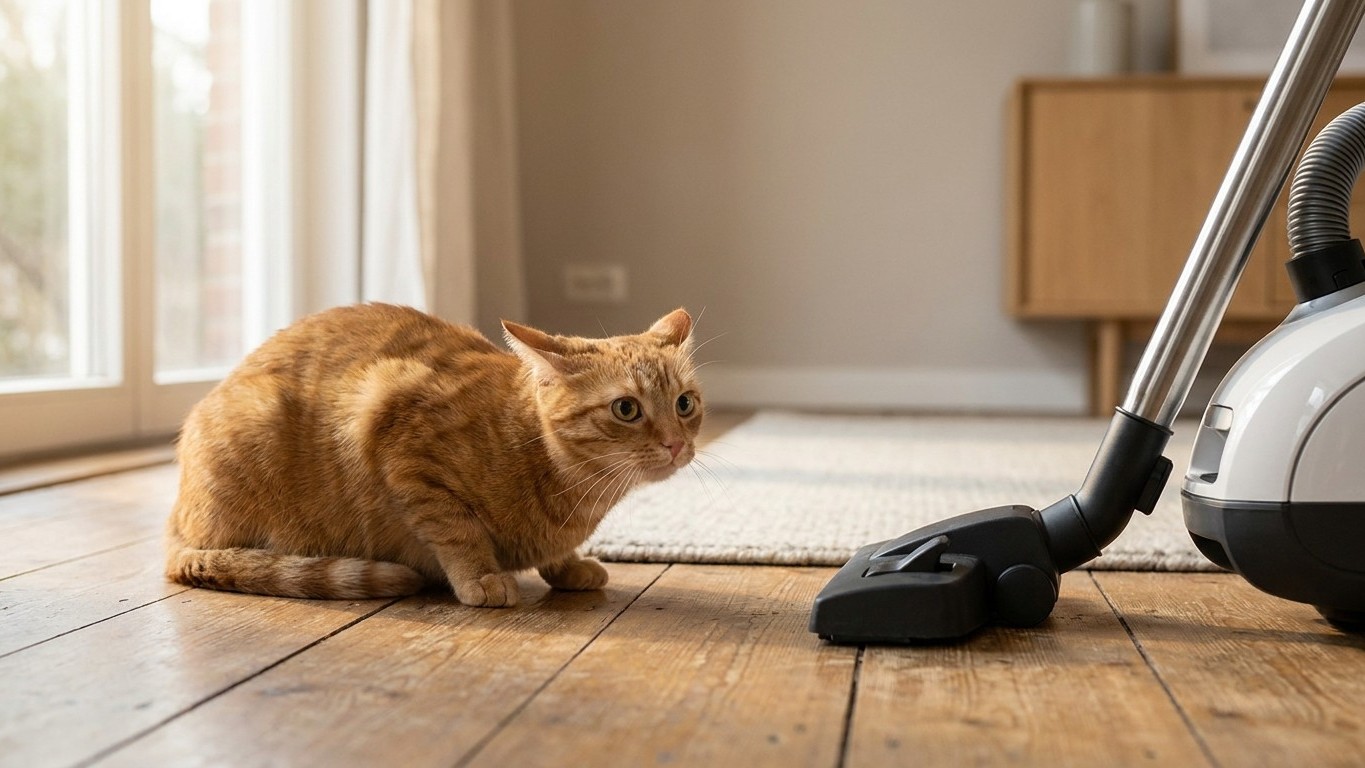
A ten-minute visit to a rescue centre does something a photograph never can: it lets a cat show you who they actually are, under real lighting, with real background noise, while a real human stands too close for comfort. Skip that meeting and you’re not just saving yourself a drive. You’re gambling on a stranger’s temperament based on nothing but a still image and a hopeful caption, and sooner or later something ordinary, like the roar of a Hoover, will reveal exactly what that missed visit would have told you for free.
Cats are not visually simple creatures to read from a screen. A cat that looks serenely composed in a photo might be a bundle of nerves the moment a vacuum starts up, and there’s a biological reason for that gap between image and reality.
Key takeaways
- A cat’s true temperament can shift dramatically between a photo and real-world sounds like vacuums
- Shelter staff spot behavioral red flags in minutes that photos hide forever
- Thousands of cats return to shelters because adopters skipped the in-person meeting
Why a ten-minute meeting matters more than a photo ever could
Reputable shelters build their whole adoption process around face-to-face time for a reason. Meeting the cat in person is your chance to spend time with them and see if they’re ‘the one’, and if they are, shelters usually ask that you take your new cat home within a few days of meeting them. That window exists because staff and volunteers who handle the cat daily notice things a photo simply cannot capture. Shelter staff can usually provide a behaviour assessment of the cats and sometimes a cat’s prior history, including whether a cat would do better as the only cat in a home or how vocal they tend to be. Ask three different volunteers about the same cat, incidentally, and you might get three slightly different answers, because speaking with more than one shelter worker can give you more insight into the cat’s behaviour and personality.
This isn’t bureaucratic box-ticking. Shelter staff can tell you about a cat’s response to various people, environments, and experiences, whether that’s car rides or children visiting the home. A noise-sensitive cat rarely broadcasts that trait in a still image, but it often shows up within seconds of a door slamming in the visitors’ room, or a phone ringing nearby. That’s precisely the sort of clue a rushed online scroll will never surface, and precisely why a rescue’s own notes matter so much more than aesthetics.
The science behind the vacuum-cleaner meltdown
Once you understand a cat’s hearing, the drama by the skirting board makes total sense. Cats can hear frequencies as high as 64,000 Hz, while humans max out around 20,000 Hz. The whine of a vacuum motor sits right inside that painfully sensitive range for them, while barely registering as an inconvenience to us. Add the physical side of things and the panic becomes almost inevitable: cats are afraid of vacuum cleaners for three major reasons, namely that vacuums are loud, they move erratically, and they smell strange.
Evolution hasn’t caught up with domestic life either. For wild cats, a loud noise historically could signify danger, so it’s no wonder the roaring of a vacuum cleaner can trigger a cat’s instinct to hide or flee. None of this makes your cat “difficult” or “broken”. It makes them a cat, wired for a world that didn’t include upright cleaning appliances. Reassuringly, the risk to their actual hearing is low: a cat’s hearing is unlikely to be impaired by loud vacuuming, since most vacuums operate within 80dB and robot vacuum cleaners emit sound levels of up to 70dB. The fear is real and distressing to watch, but it’s a fright response rather than physical harm, which is oddly comforting once you know it.
What a proper meet-and-greet does is expose sensitivities like this before they become a crisis at home. A calm, confident cat on camera might turn out to be startled by every clatter in your kitchen. A cat photographed mid-yawn, looking half-feral and unglamorous, might be the steadiest, most unshakeable companion you’ll ever own. Personality doesn’t photograph reliably, and adoption charities know it, which is why formal behaviour evaluations measure consistent behaviours and enable comparisons over time, providing insights into an individual animal’s behaviour that a snapshot simply cannot offer.
Skipping the visit has a cost, and the numbers back it up
This isn’t just theory. Mismatched adoptions genuinely lead to cats bouncing back into the system. A study assessing the return of 102 dogs and 72 cats to an animal shelter found that cats are most commonly returned due to the adopter’s personal reasons, at nearly 57%. Interestingly, more than half of the cats returned in that study had been owned for more than 60 days, suggesting the mismatch often only becomes obvious once daily life, vacuums included, gets underway. On the wider UK picture, a study of cat relinquishment in the United Kingdom found that 60% of cats entering shelters were given up by their owners, with 19% due to owner circumstances and 7% for behavioural reasons. Behavioural surprises are a smaller slice than people assume, but they’re entirely avoidable ones. The biggest thing that prevents people from adopting in the first place is having to deal with behavioural issues, which makes it doubly frustrating when those issues could have been flagged at the meet-and-greet stage rather than discovered weeks later, mid-hoover, mid-panic.
What to actually do if your cat already hates the vacuum
If you’re past the adoption stage and dealing with a genuinely noise-phobic cat, don’t reach for the vacuum and hope they’ll get used to it. Gradual, low-pressure exposure works far better than repetition alone. Try running the machine briefly in a different room while your cat has access to a hiding spot, scattering treats near (not on) the switched-off vacuum so curiosity edges out fear, and always giving them an escape route rather than closing doors during cleaning. If the fear spirals into aggression, obsessive grooming, or litter box avoidance, that’s a conversation for your vet, not a training issue to muscle through alone, since vacuum-related fear leading to aggression, overgrooming, or litter box issues warrants a chat with your vet.
Next time you’re tempted to adopt from a photo alone, remember this: a rescue cat’s true character usually lives in the ten minutes nobody bothers to spend, not the ten seconds it takes to fall for a good picture online.
Sources : researchgate.net | onlinelibrary.wiley.com