
I’ve got plenty of solid veterinary detail now to write this properly.
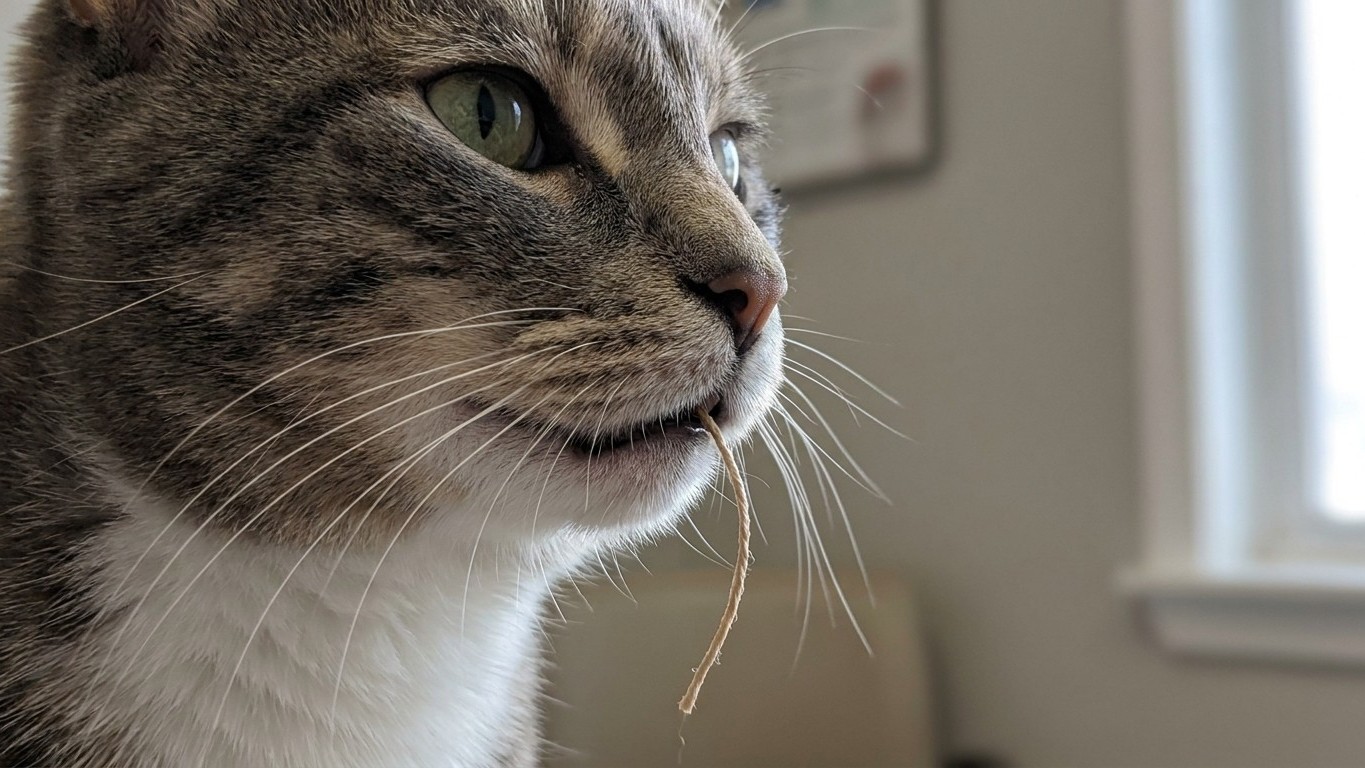
Roasting string, that ordinary kitchen twine used to truss a chicken or a joint of beef, sends more cats into emergency surgery than most owners would ever guess. The instinct to tug a dangling thread free from a cat’s mouth feels harmless, even kind. It isn’t. Once string, ribbon or thread is seen in a cat’s mouth, it should never be pulled, because anchored linear material can damage the intestines if it is tractioned. That two-second tug can turn a survivable situation into a surgical emergency.
Key takeaways
- A two-second pull can turn a manageable situation into emergency surgery requiring full abdominal exploration
- Cat tongues have backward-facing barbs that trap string—what looks loose outside may already be deeply embedded
- The string acts like a saw inside the intestines, bunching and cutting through living tissue as the bowel tries to move it
Why a piece of string is far more dangerous than it looks
Vets call this a “linear foreign body”, and the mechanics of it are genuinely unpleasant. Linear material becomes uniquely dangerous when anchored, commonly under the tongue, in the stomach or pylorus, or within the intestine. Once anchored, intestinal peristalsis continues, the bowel climbs the material, and the intestine becomes bunched and plicated. Think of it like fabric being gathered onto a drawstring, except the fabric is living bowel tissue and the string is slowly cutting through it from the inside.
The string dangles forward in the GI tract like a drawstring, and the intestine attempts to move it forward but because the foreign body is lodged, the bowel ends up inching up the string similar to the drawstring channel on the pants, and this type of folding upon itself is called “plication”. Left in place, that friction is bad enough on its own. Linear foreign bodies present a unique challenge as they can trail down the intestines which will result in intestinal plication and the string material can start to act as a saw on the mesenteric border of the intestines, which can result in perforation, bowel death, and septic peritonitis.
Now add a well-meaning hand pulling from the other end. Pulling it will not only be uncomfortable for your cat, but risks cheese-wiring the string through the gastrointestinal tract if it’s stuck. That’s the vet’s own turn of phrase, and it’s brutally accurate: taut string dragged through already-bunched bowel behaves exactly like a wire through soft cheese. A gentle two-second pull applies far more force to fragile intestinal tissue than it feels like from the outside, because the resistance you’re fighting isn’t a loose thread, it’s an anchor point buried in the body.
Where the string gets stuck, and why the tongue is the classic trap
For cats specifically, the base of the tongue is a notorious anchor site. For our feline friends, the base of the tongue is an exceedingly common place for linear objects to get stuck. Their tongues have backward-facing barbs called papillae, brilliant for grooming and stripping meat off bones, but they make it almost impossible to spit a string back out once it’s caught. The oral cavity should be examined carefully to rule out a string foreign body tethered beneath the tongue, especially in cats, since the string may cut through the frenulum of the tongue and bury itself in soft tissues. what looks like a loose thread hanging from the mouth might already be embedded and invisible where it matters.
Other favourite hiding spots include the stomach and the pylorus, the narrow passage where the stomach meets the small intestine. A string could get anchored in the stomach or intestines, especially if it was knotted or tangled, and it could get caught up in the pylorus. Symptoms don’t always appear straight away, which is part of what makes this so sneaky. Frequent or excessive vomiting is a red flag, and if a cat vomits after playing with or chewing on string, it could indicate the string is causing a blockage. Reduced appetite, lethargy, drooling and abdominal pain are the other signs worth watching for, and a piece of string protruding from either end of the cat is an unmistakable emergency, not a wait-and-see situation.
What actually happens at the vet’s
Once you’re at the practice, don’t expect a quick tug-and-done fix, even from a professional. If the vet suspects a linear foreign body, they will need to perform a surgery called exploratory laparotomy, where the cat is anaesthetised and the abdomen opened fully to allow surgical exploration. Imaging comes first. Vets may notice a “string-of-pearls” appearance to the intestines caused by bunching, or abnormal gas patterns, and if X-rays aren’t conclusive, an abdominal ultrasound may be more effective at spotting a linear foreign body.
During surgery the aim is to release the string from wherever it’s anchored, usually the tongue base or the stomach, and coax the rest through without shredding the bowel further. When a linear foreign body is suspected, exploratory surgery is commonly required to remove the material, often via multiple enterotomies, and to resect any damaged or perforated bowel. If sections of gut have already died from the sawing effect, they’re cut away and the healthy ends stitched back together. Cats typically remain hospitalised for one to three days afterwards, receiving intravenous fluids and pain medication, and are fed small amounts of a bland canned diet in the first 24 hours to help the gut resume normal movement. It’s a proper operation, not a five-minute job, and the earlier it happens, the better the odds.
There’s a genuine reason for hope if you catch it early enough, though. A review of cases found that conservative management, essentially monitoring closely rather than operating immediately, can sometimes work. In a review of twenty-four cases of gastrointestinal linear foreign bodies in cats, nine were successfully managed conservatively, with the string passing naturally within one to three days. But that outcome depended entirely on catching the case early, before serious plication set in, which is precisely why calling the vet the moment you spot string is so much more valuable than tugging at it yourself.
What to actually do if you spot the string
Resist every instinct to help with your hands. Leave the string exactly where it is, however tempting it looks, and get your cat to the vet as quickly as you reasonably can. The danger isn’t usually immediate, so you generally have time to seek proper veterinary care rather than acting alone. Ring ahead so the practice can prepare, keep your cat calm and confined (a carrier is ideal, chasing a frightened cat round the kitchen only increases the risk of it swallowing more string), and never cut a visible strand near the mouth either, since tension changes can still shift a hidden section further down.
If you’re trussing a joint this weekend, it’s worth binning the offcuts straight away rather than leaving them coiled on the worktop, and keeping sewing kits, tinsel and dental floss firmly out of paw’s reach. Cats find dangling, springy things almost impossible to resist, and that curiosity, so endearing everywhere else in their behaviour, is exactly what puts them at risk here.
Sources : pubmed.ncbi.nlm.nih.gov | dvm360.com