
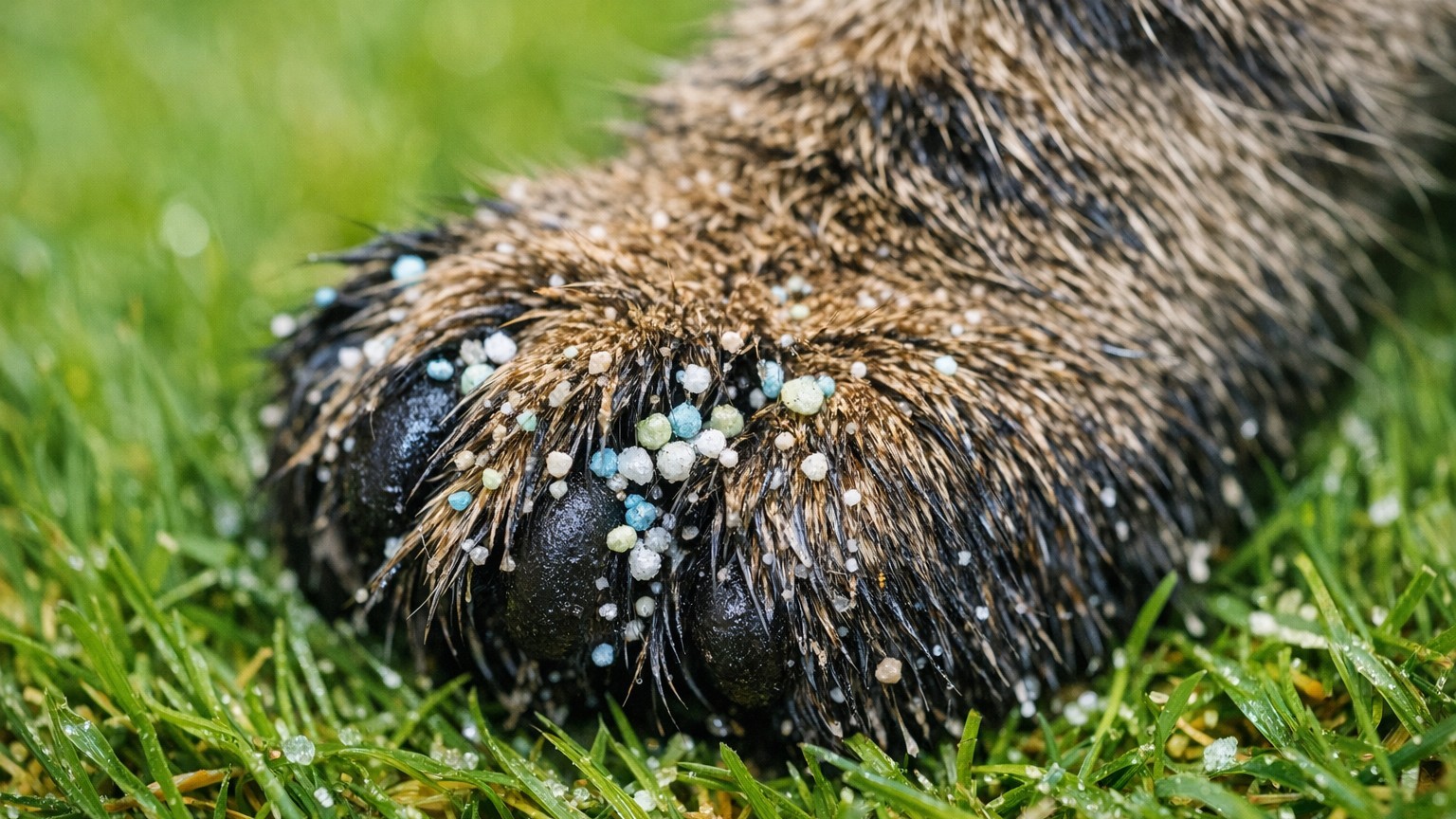
The connection happened in a single moment at the vet’s consultation table. Paws caked with granular residue, a cat that had spent three days vomiting and refusing to eat, and a bag of June lawn fertiliser left in the garden shed. The link is more common than most British cat owners realise, and it is hiding in plain sight every time a warm spell arrives and we reach for the green-up granules.
Key takeaways
- A cat’s fastidious grooming habit transforms a garden hazard into a toxic internal dose—no direct chewing required
- The symptoms look exactly like a normal off-day, making it easy to miss the fertilizer connection until it’s nearly too late
- Rain and wet paws create the perfect storm: dissolved chemicals, soaked fur, and desperate grooming combine into maximum toxicity
How cats absorb fertiliser without you noticing
Cats that walk on freshly fertilised lawns can pick up chemicals on their paws and fur, which they may then ingest during grooming. That fastidious self-cleaning routine that makes cats so endearing is, in this case, the very mechanism that turns a garden hazard into a toxic internal dose. Your cat doesn’t need to chew the granules directly. A single post-garden grooming session, paws tasting of nitrogen and potassium salts, is enough to make them ill.
Rain makes Everything worse. When you apply granular fertiliser and June showers arrive the same afternoon, the pellets dissolve rapidly into a concentrated slurry that coats every blade of grass. Wet fertiliser poses the highest risk to pets, so waiting for complete absorption is non-negotiable. The wet paw scenario is essentially the worst-case version: maximum chemical surface contact, maximum grooming incentive (cats hate wet feet), and maximum transfer to the mouth.
There is also a subtler risk for cats who never set foot in the garden. Lawn fertilisers and pesticides will cling to a person’s shoes and be carried inside. When you walk in and kick your shoes off, the chemicals follow, resulting in air and surface contamination. A cat sleeping on the kitchen floor, sniffing the doormat, or grooming after padding across treated carpets can accumulate low-level exposure over days without anyone making the connection.
What the symptoms actually look like, and why they’re so easy to miss
Signs and symptoms of toxicity include increased saliva production, vomiting, diarrhoea, abdominal discomfort, and loss of appetite, and they often occur within 2 to 10 hours of ingestion. The cruel irony is that those symptoms, a cat who won’t eat, seems subdued, and vomits once or twice, read exactly like a standard feline off-day. Three days can pass before the pattern becomes undeniable.
If a cat ingests a small amount of fertiliser, it may exhibit mild symptoms such as vomiting, diarrhoea, and lethargy, and in some cases increased salivation, pawing at the mouth, and redness around the mouth and eyes. That pawing gesture is a telling clue. A cat pressing and licking at its mouth repeatedly after a garden session is not being quirky; it is responding to chemical irritation.
With larger exposures, the picture becomes significantly more serious. Cats may experience seizures, tremors, and muscle weakness. In severe cases, fertiliser poisoning can cause respiratory failure, cardiac arrest, and even death. The real danger of dismissing the early symptoms for several days is that the window for straightforward treatment narrows considerably. A cat that has been intermittently dosing itself through repeated paw-licking may have accumulated enough to produce the more serious signs by the time a vet is consulted.
The culprit is rarely just nitrogen, phosphorus, and potassium. When other chemicals like insecticides, herbicides, and fungicides are added to fertiliser, along with large quantities of minerals like copper, manganese, and iron, the product becomes genuinely dangerous for cats. Many popular UK lawn feeds are combination products, a weed-and-feed or a moss killer combined with fertiliser, and those added herbicide compounds are often considerably more toxic than the NPK components alone.
What happens at the vet, and why the fertiliser bag matters enormously
Since symptoms of fertiliser poisoning can look like other ailments, consultation with a vet is critical to diagnose the condition, and the vet will ask about any contact the cat may have had with toxins, including fertilisers, and an estimate of how much was ingested. That conversation can only happen if you volunteer the information. A vet examining a lethargic, vomiting cat has no way of knowing that the lawn got treated 48 hours prior unless you mention it.
It is a good idea to bring a list of the ingredients of the fertiliser, with their concentrations from the bag or bottle. If you cannot bring the actual packaging, a photograph taken on a smartphone is the next best thing. This sounds obvious, but in the panic of rushing a sick animal to the surgery, the bag in the shed is the last thing on most people’s minds. Take the photo before you leave.
Treatment for a cat who has ingested fertiliser focuses largely on alleviating symptoms and providing overall support, and a one- or two-day hospitalisation may be necessary to monitor the animal until signs that the toxins have dissipated appear. To replace fluids lost in vomiting, prevent dehydration, and help flush remaining toxins out of the body, IV fluids will be administered while the cat is in hospital. Do not attempt to induce vomiting at home, different fertilisers and the amount ingested can require specific treatments, so inducing vomiting should only be done if a vet instructs it.
Preventing it next time: the practical rules
The timing of fertiliser application matters as much as the product itself. Waiting at least 48 hours after application before letting pets into treated areas is the minimum, and pets should be kept indoors during application and the drying period. Applying granules with rain forecast the same day effectively cancels both those conditions simultaneously, the product never properly integrates into the soil, and the wet grass becomes a chemical contact surface for far longer than it would in dry conditions.
After outdoor time, rinsing or wiping down a pet’s paws and underside to remove any residual chemicals is a worthwhile habit. A damp flannel kept by the back door costs nothing and could prevent a costly vet visit. For cats, who are obviously not leash-walked back through a specific gate, the more reliable option is simply keeping them in for the first two to three days after any lawn treatment.
On the question of organic versus synthetic: while organic fertilisers are better for the environment, many use animal-based ingredients like bone meal, blood meal, or fish emulsion that can attract cats to eat them directly, and the “organic” label does not guarantee a pet-friendly product. The same precautions apply regardless of what the front of the bag says. One additional hazard worth knowing: if an organic fertiliser has become mouldy in storage, tremorgenic mycotoxins can develop, potentially causing tremors and seizures, a risk entirely independent of the fertiliser’s chemical composition and one that catches even experienced cat owners off guard.
Sources : dialavet.com | thepoolandlawn.com