
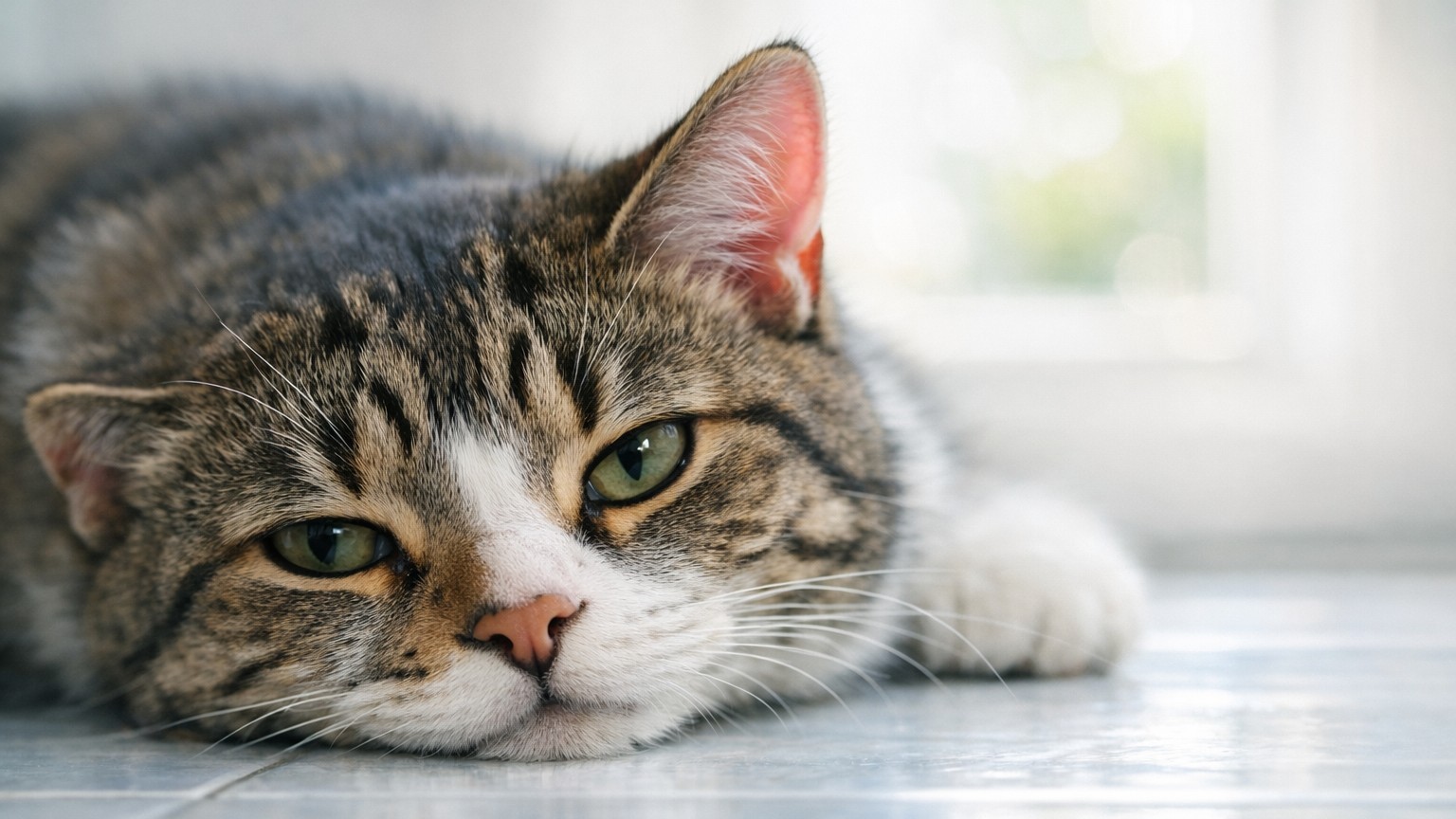
A cat lying flat on a cool floor, barely lifting their head as the afternoon sun pours through the window, looks every bit the picture of feline laziness. Most of us smile at it. Summer is here, the house is warm, and obviously our cats are just doing what cats do, lounging about with theatrical commitment. But there’s a version of that scene where something far more serious is happening, and the ears are the first place to look.
Your cat may show mild low energy, slightly faster breathing, and warm ears. Those three things together, on a hot day, are not a quirk. They are the earliest warning that your cat’s body is struggling with the heat, and what follows if you ignore them can turn life-threatening in well under an hour.
Key takeaways
- Hot ears aren’t laziness—they’re your cat’s first distress signal in the heat
- Heatstroke can turn fatal in just 20 to 30 minutes, before obvious symptoms appear
- Cats hide their suffering so well that by the time they look sick, irreversible damage may already be happening
Why cats are so bad at telling us they’re overheating
Cats are masters at hiding discomfort, which can make it tricky to spot early symptoms. That’s the core problem. A dog will pant visibly, pace, drool, all the drama you’d expect. Cats tend to go quiet. Signs are often more subtle in cats than in dogs, which means an owner can easily mistake genuine heat stress for ordinary napping. By the time the cat looks obviously unwell, things may already be progressing fast.
Cats are incredibly sensitive to heat, but unlike humans, they are unable to sweat efficiently to cool down. Heatstroke is typically caused by exposure to excessive ambient heat combined with their body’s inability to cool down sufficiently. Cats sweat through their paw pads to regulate their body temperature, and they also groom themselves, which helps to remove any excess heat-trapping fur and gives a cooling effect. On a mild day, these mechanisms work well enough. On a proper British summer scorcher, or, crucially, in a trapped, unventilated space, they simply can’t keep up.
The most common situation that leads to cats suffering from heatstroke is getting trapped somewhere with poor ventilation, such as a shed, greenhouse, or garage. It happens faster than people realise. Cats like to sleep in warm places such as conservatories, greenhouses or sheds. Accidentally being trapped in very hot areas with little air circulation, especially in summer, can increase the risk of overheating.
What hot ears actually mean, and how quickly things escalate
The ears matter because they’re one of the few areas of a cat’s body where the skin sits close to the surface, with minimal fur coverage. Feeling your cat’s ears can provide you with a bit of insight into their body temperature. If the ears feel hotter, it may be due to a fever. That said, hot ears alone aren’t a diagnosis, feeling the ears, nose or head is not considered a reliable method for determining a cat’s internal temperature. What they give you is a prompt to look harder at everything else: the breathing, the gum colour, whether your cat is responding normally to you.
Heatstroke can progress from mild discomfort to a dangerous emergency within 20 to 30 minutes. A cat’s normal body temperature is around 100–102.5°F, and organ damage begins when their temperature exceeds 104°F. That window is genuinely narrow. Inflammation caused by heatstroke sets off several reactions that affect every major system of the body, causing the breakdown of essential proteins and enzymes. This puts the cat at risk of organ failure and potentially death.
Knowing which cats are most vulnerable matters here. Obese, long-haired, old, young and brachycephalic (flat-faced) cats such as Persians are most at risk of developing heatstroke because they find it harder to cool down. Cats with underlying medical conditions such as heart disease, kidney disease, and asthma are also at increased risk. If your cat falls into any of these categories, your vigilance in hot weather needs to be a notch higher than average.
The signs to watch for, and what to do right now
Early signs include seeking cool surfaces like tile floors or sinks and increased grooming. Your cat might show mild low energy, slightly faster breathing, and warm ears. If the situation worsens, severe heatstroke shows as heavy panting, drooling, bright red or purple gums, and vomiting. Your cat may seem confused, walk unsteadily, or collapse. Seizures can happen in advanced cases as the brain overheats.
One sign that many owners miss: panting. Cats rarely pant unless they’re overheated or stressed. Any panting that doesn’t improve within minutes of moving to a cooler area needs veterinary attention. This is fundamentally different from dogs, who pant routinely. In a cat, open-mouth breathing with panting is always a red flag.
If you suspect your cat is overheating, the priority is clear. Remove them from the hot environment immediately. Use a cloth to wet their coat with lukewarm water and put them somewhere cool and safe. Cooling your cat down needs to be gradual to avoid shock and not cause your cat additional stress, as stress can increase their body temperature further. Dampen a towel with cool (not cold) water and gently apply it to your cat’s belly, paws, and neck. Avoid covering their entire body, as this can trap heat. You can also stroke them with the flannel under the chin, temples, and the ear flaps themselves, which can help cool down their head area.
Contact your vet immediately. This is non-negotiable. Should your cat show any signs of heatstroke, it is essential to start first aid immediately. The quicker your cat is cooled down and treated by a vet, the better its chance of fully recovering. When taking your cat to the vet, ensure the cat carrier is well ventilated, and if going by car, keep the temperature inside the car cool.
Prevention is simpler than people think
The practical steps are not complicated. A lack of fresh water on hot days can dehydrate cats, which can cause heat exhaustion, so multiple water stations around the house, including a bowl in a cool room, are worth setting up before summer properly arrives. Offer plenty of fresh water at all times. You could place multiple water stations throughout the house and outside.
If you have a cat that loves to roam outside, provide them with options to retreat in your garden when it gets hot, whether it’s cool shade under a bush or tree, or an outdoor shelter. When making a shelter, make sure it’s placed somewhere shaded with good ventilation and free access in and out to prevent them getting trapped and overheating.
One thing worth keeping in mind as summer approaches: prolonged high body temperature can damage a cat’s kidneys, liver, heart, and brain. Kidney problems are common after heatstroke and may not show symptoms until days later. That delayed onset is exactly why any cat that has shown signs of overheating should be seen by a vet even if they seem to recover quickly at home, because “seeming fine” after a heat episode is not the same as being fine.