
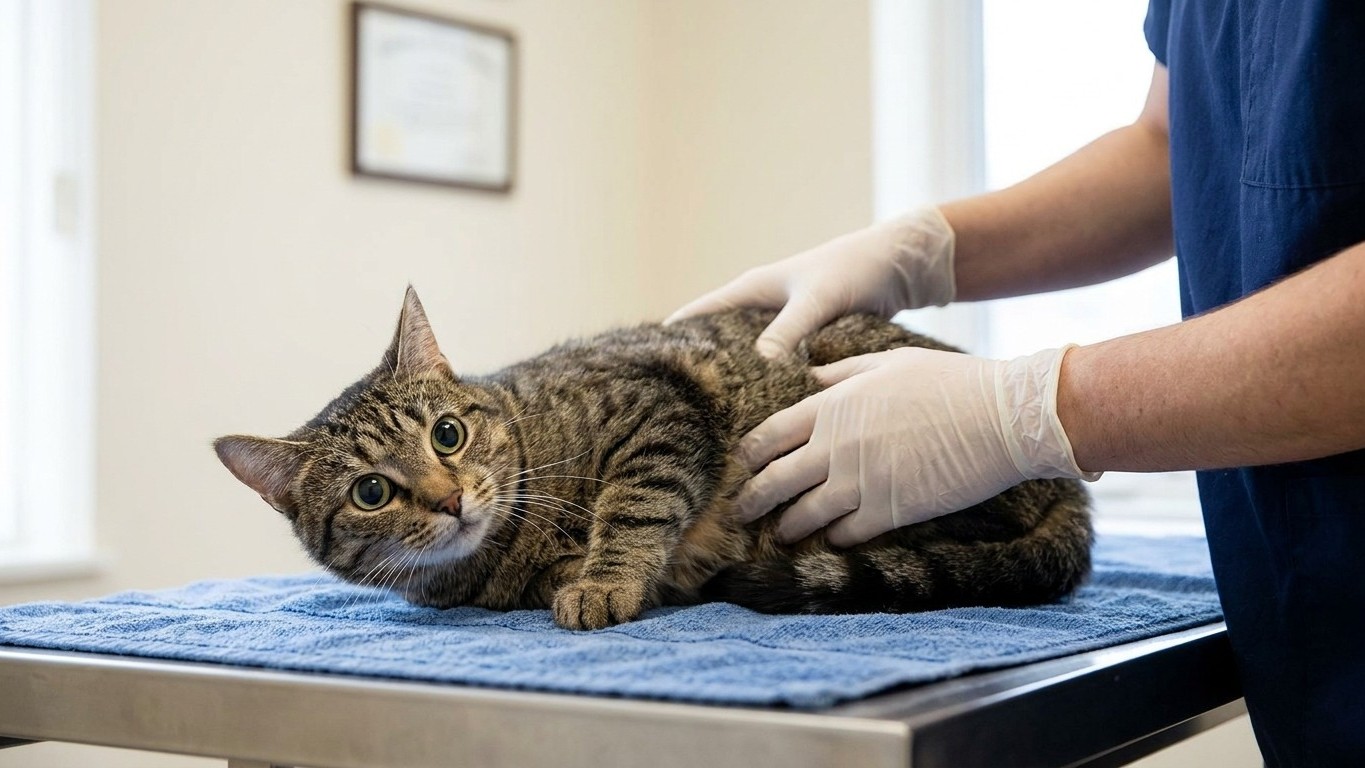
Permethrin, the active ingredient in most spot-on flea treatments for dogs, is one of the most common causes of poisoning in cats seen by vets across the UK and beyond. Permethrin is highly toxic to cats, but it remains one of the most common causes of poisoning in cats worldwide. The story in the headline, a cat trembling within hours of receiving a “few drops” of a dog’s flea pipette, is not a rare fluke. It’s a textbook case that vets see with grim regularity, and understanding exactly what happens inside that cat’s body explains why the panic is entirely justified.
Key takeaways
- A cat’s liver lacks the enzyme to safely process permethrin, the active ingredient in most dog flea treatments—making even ‘half a dose’ potentially fatal
- Symptoms can appear within minutes or be delayed up to 72 hours, catching owners off guard and making the connection to flea treatment harder to spot
- A breakthrough treatment called intravenous lipid emulsion has dramatically improved survival rates, but only if the cat reaches a vet in time
Why a dog’s dose can be lethal for a cat
The chemistry here is brutally simple, and it has nothing to do with a cat being “smaller” than a dog, so a proportionally reduced dose won’t save it. A cat’s liver can’t break down certain chemicals into a harmless form, and so the harmful chemical builds up in the cat’s body, causing serious illness. Dogs shrug off permethrin because their liver enzymes process it efficiently. Cats simply don’t have that enzymatic pathway. The dose of permethrin that is given to even small dogs is enough to poison a cat because the cat is missing an enzyme in the liver that would metabolize it effectively. That’s why “just a few drops” or “half the dog dose” is never a safe workaround, whatever a well-meaning owner might assume.
What follows inside the cat’s nervous system is genuinely dramatic. Pyrethrin and its derivatives exert neurotoxic effects on the central and peripheral nervous system, binding to sodium-gated voltage channels and decreasing the ability to inactivate them, thus resulting in hyperexcitability. In plain terms, the nerve cells fire and refire uncontrollably, like a light switch stuck in the “on” position. Permethrin is highly toxic to cats, it affects their nervous system, first causing it to become over sensitive (twitching/seizures) and then causing paralysis. That trembling isn’t a cat being cold or scared. It’s a nervous system being electrically overloaded.
Spotting the signs, and how fast they can appear
The onset can genuinely catch owners off guard because it isn’t always instant. Flea poisoning symptoms in cats usually occur minutes to hours after exposure to or application of the flea and tick medicine but may be delayed up to 72 hours. One documented case involved a cat that appeared to be completely normal until the next afternoon, when the owner noticed the cat’s ears and whiskers were twitching, and a few hours later, the cat had two brief seizures and then started tremoring. That delay is exactly why so many owners don’t connect the dots between the flea treatment applied yesterday and the trembling cat tonight.
Once symptoms do appear, they tend to escalate quickly. Vets watch for a fairly consistent cluster: tremors, facial and ear twitching, muscle spasms, seizures, and inappropriate walking or incoordination (ataxia), alongside drooling, dilated pupils, elevated body temperature, rapid breathing, and hyperexcitement. Oddly, not every cat presents the same way. Paradoxically, some cats present symptoms of lower body temperature, lethargy, and immobility, which can mislead an owner into thinking the cat is simply unwell rather than poisoned. If left unaddressed, the outlook is bleak: left untreated, permethrin poisoning is usually fatal.
What to do in the first sixty seconds, and what the vet will do next
If you realise you’ve applied a dog product to your cat, or your cat has been rubbing against a freshly treated dog, don’t wait to see if it “wears off”. Wash the affected fur immediately. If your cat has had contact with permethrin, wash it off immediately using warm water and dilute washing up liquid (if they will allow you to) and call your vet straight away. Then get on the phone, because contact your vet immediately if you’ve accidentally put a dog flea treatment on your cat or if your cat is showing signs of permethrin poisoning/toxicity.
At the practice, there’s no magic reversal pill. There is no known antidote for permethrin toxicity in cats, so treatment mainly consists of supportive care to treat the neurological signs and symptoms. In practice that means controlling the tremors and seizures first, often with methocarbamol or, in severe cases, propofol or barbiturates, since diazepam is not as effective in controlling the seizures as the above medications. Vets will also run a fluid drip and manage body temperature, because prolonged, uncontrolled tremoring can push a cat into dangerous hyperthermia.
One newer treatment has genuinely changed outcomes for the worst-affected cats: intravenous lipid emulsion, or ILE. Because permethrin is fat-loving, permethrin molecules are highly lipophilic and have been found to respond very well to ILE therapy, which works to expand the lipid compartment in the bloodstream to seclude the fat-soluble toxins and prevent them from reaching targeted organs. In a small Italian clinical study of nine cats admitted after accidental exposure to canine spot-on products, with lipid infusion, muscle tremoring subsided after about 10 minutes, and seven of the cats were discharged in 24 hours, with the other two discharged about a day later. That’s a remarkable turnaround for an animal that arrived convulsing.
Recovery, and the golden rule for multi-pet households
The genuinely reassuring news, once a cat is in a vet’s hands promptly, is that survival rates are good. There is a high survival rate among cats that are treated promptly and properly after permethrin toxicosis, and typically, cats that recover go on to live normal lives with no secondary consequences. Prognosis, though, hinges entirely on speed. If your cat’s symptoms are not treated, this toxicity may lead to seizures and death within a few hours.
Prevention is far less dramatic, and far cheaper, than an emergency vet bill. Permethrin is safe to use on dogs, but is extremely poisonous for cats, and is found in a number of different flea products for dogs, including spot-on treatments, shampoos, sprays and flea collars. Never assume a product is interchangeable between species just because the pipette looks identical. If you share a home with both a dog and a cat, keep them separated until any topical treatment has fully dried, and never let the cat groom a freshly treated dog. It’s a five-minute precaution against a genuinely terrifying, and entirely avoidable, night at the emergency vet.
Sources : wagwalking.com | pmc.ncbi.nlm.nih.gov