
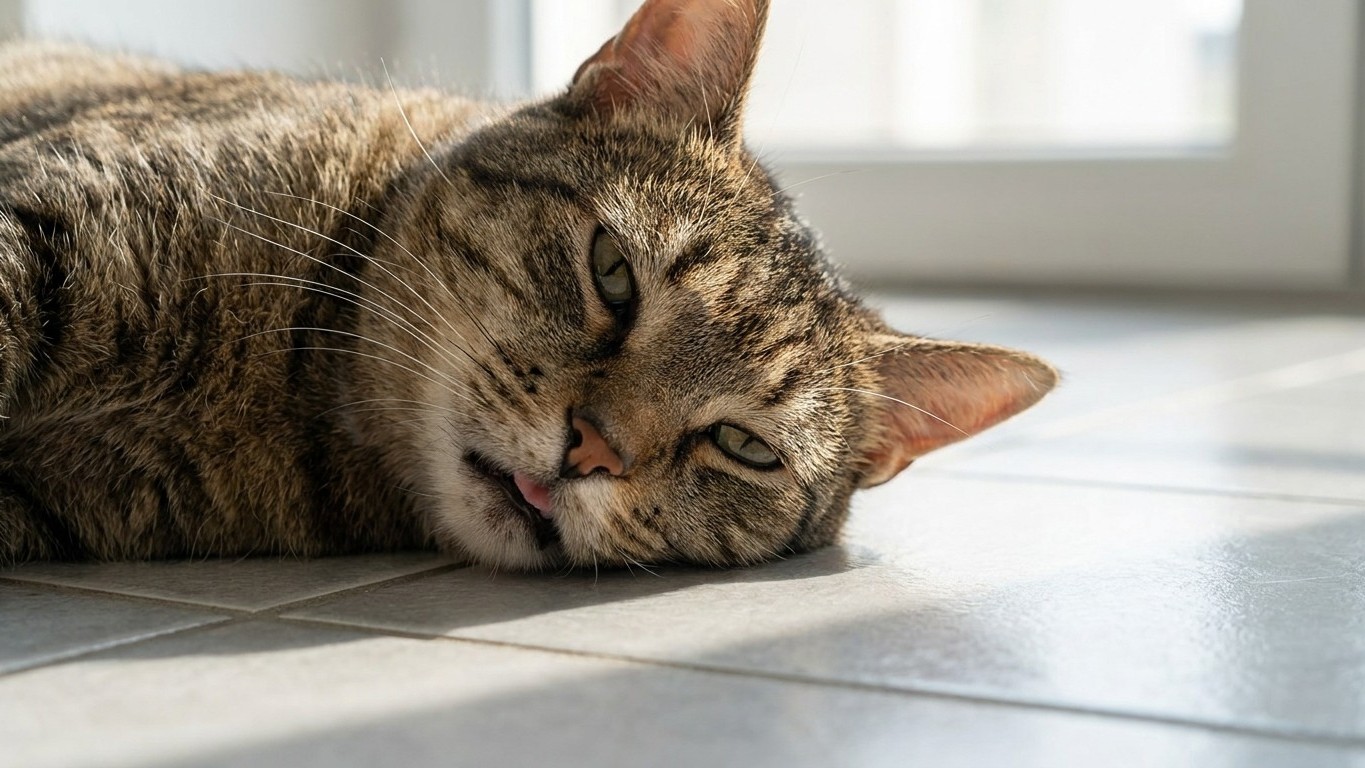
Cats panting like dogs is not normal, and it’s not funny at all. Unlike our canine companions, who pant regularly to regulate their body temperature, felines rely almost entirely on other methods to stay cool. When a cat starts panting, especially During a Heatwave, it usually means their normal cooling systems are Struggling to keep up. That’s worth knowing before you reach for your phone to film the “cute” spectacle.
Cats do sweat, just not where you’d expect. Their paw pads contain sweat glands (called merocrine glands) that release moisture when the animal is hot or stressed. You might notice damp little footprints on the kitchen floor during a particularly sweltering afternoon. But paw pads cover a tiny surface area compared to a cat’s whole body, so this sweating mechanism does very little on its own to bring down their core temperature. It’s more of a backup system than a primary defence.
Key takeaways
- Cats have sweat glands only on their paw pads—a tiny surface area that does almost nothing to cool their body
- Panting in cats is NOT a normal cooling mechanism like it is for dogs; it signals early heat stress or heatstroke
- Certain cat breeds and older cats face much higher risks of fatal heat-related illness during warm weather
Grooming is the real cooling mechanism
The main way cats manage heat is through saliva evaporation during grooming. When a cat licks its fur, the moisture spreads across the coat and evaporates, pulling heat away from the skin in the process. This is why you’ll often see cats grooming themselves more intensely during warm weather. It’s not vanity. It’s thermoregulation in action.
Cats also dilate the blood vessels near their skin surface, particularly around the ears, to release heat more efficiently. If you’ve ever noticed your cat’s ears feeling unusually warm or looking slightly redder on a hot day, that’s the mechanism at work. They may also stretch out flat on cool surfaces such as tiled floors or bathroom sinks, maximising the amount of body surface in contact with something cooler than the air around them. Seeking shade and reducing activity are behavioural adaptations too. A cat that suddenly becomes lethargic and refuses to move much during a heatwave isn’t being lazy. It’s conserving energy and minimising internal heat production.
So why was my cat panting?
When these systems aren’t enough, and the cat’s body temperature keeps climbing, panting can kick in as a last resort. Because open-mouth breathing isn’t a natural or efficient cooling strategy for cats the way it is for dogs, seeing it happen is a signal that something is off balance. A vet I spoke with explained that panting in cats often indicates the early stages of heat stress, and in some cases, genuine heatstroke.
This matters because a cat’s normal body temperature sits between 38 and 39.2 degrees Celsius, according to guidance published by the RSPCA. When temperatures rise above that range and stay there, cats risk organ damage. Heatstroke in cats can progress quickly, and it’s genuinely dangerous, not the amusing novelty it might first appear to be.
Certain cats face higher risks than others. Flat-faced breeds such as Persians and British Shorthairs have shorter airways, which makes any form of laboured breathing more serious for them. Overweight cats, kittens, and older cats with underlying health conditions are also more vulnerable to overheating. If your cat falls into any of these categories, a heatwave isn’t something to take lightly.
Signs your cat is struggling, and what to actually do
Panting rarely arrives alone. Look out for excessive drooling, bright red gums, restlessness, vomiting, or a wobbly, uncoordinated gait. In more severe cases, a cat may collapse or become unresponsive. Any combination of these symptoms alongside panting should be treated as an emergency, not something to wait out.
The first practical step is moving the cat to a cool, shaded, well-ventilated room immediately. Offer fresh, cool (not ice-cold) water, since a sudden drop in temperature can cause shock. Damp towels placed gently over the body, particularly around the paws, ears, and belly, can help bring the temperature down gradually. Avoid submerging a cat in cold water or using ice directly on the skin, as this can be counterproductive and distressing for an animal already in crisis.
Beyond emergency response, prevention makes a real difference during UK summers, which have seen increasingly intense heatwaves in recent years. Keep curtains closed during the hottest parts of the day to block direct sunlight, and use fans or air conditioning where available, positioned so the airflow doesn’t blow directly and constantly onto the cat if they seem uncomfortable with it. Fresh water bowls should be topped up throughout the day and placed in multiple locations around the house, since some cats are surprisingly picky about drinking from a bowl that’s been sitting in the sun.
Ice cubes added to water, or a few frozen treats made from diluted tuna water or plain chicken stock, can encourage cats to take on more fluids without forcing the issue. Brushing your cat regularly during warm spells also helps, as it removes excess fur and reduces insulation, making natural cooling through grooming more effective. This is especially useful for long-haired breeds like Maine Coons or Ragdolls, who carry considerably more coat to manage than their short-haired relatives.
If panting continues for more than a few minutes, or if it’s accompanied by any of the warning signs mentioned above, contacting a vet without delay is the only sensible course of action. Heatstroke in cats can be fatal if untreated, and early intervention genuinely changes outcomes. No home remedy substitutes for professional veterinary care once a cat’s temperature has climbed into dangerous territory.
One detail that surprises a lot of cat owners: unlike humans, cats don’t get an obvious flushed appearance when overheating, which means visual cues can be subtle until the situation has already become serious. Checking gum colour (pale, bright red, or bluish gums are all red flags) is a far more reliable indicator than simply looking at how “hot and bothered” your cat seems from the outside. Learning to read these quieter signals is probably the single most useful skill any cat owner can pick up before the next heatwave arrives.