
Head shaking in cats often gets dismissed as a quirk, a bit like scratching or that odd habit some cats have of kneading blankets before sleep. But when a Norfolk vet pulled a two-centimetre grass awn from a cat’s ear canal last summer, the owner realised days of what she’d assumed was fussiness had actually been genuine pain. Grass seeds, those innocent-looking barbed spikelets that cling to socks and dog fur every July, can travel deep into a cat’s ear, nose, or paw, and once lodged, they don’t come back out on their own.
Key takeaways
- A Norfolk vet extracted a two-centimetre grass awn from a cat’s ear, revealing what the owner had dismissed as mere fussiness was actually days of genuine pain
- Grass seeds have backward-facing barbs designed to burrow forward only—once lodged in an ear canal, they can’t escape and migrate deeper with every head shake
- DIY removal with tweezers can snap the seed and leave barbed fragments embedded even deeper, risking eardrum damage and infection
Why grass seeds are so good at getting stuck
The culprit is usually a species like wild barley grass (Hordeum murinum), whose seed heads have a spear-like shape covered in tiny backward-facing barbs. They’re built by nature to burrow into soil, or into fur, and only move in one direction: forward. A cat brushing through long grass in a hedgerow or an overgrown garden can pick one up on a whisker or in the fur near the ear, and the seed’s own structure does the rest, working its way inward with every head shake or grooming lick.
Ears are especially vulnerable because the L-shaped feline ear canal creates a natural trap. Once a seed passes the outer ear opening, it can’t simply fall out, and a cat’s instinctive reaction, scratching and shaking its head, only pushes the barbs deeper. Some seeds migrate remarkably far: veterinary case reports have documented grass awns travelling from the ear canal towards the jaw, or entering through the nose and later emerging as an abscess elsewhere on the body. It sounds like something from a horror film, but it’s a well-documented phenomenon in small animal practice, particularly during the grass-seed season that runs roughly from late May through September in the UK.
The signs owners tend to miss
Persistent head shaking is the headline symptom, but it rarely arrives alone. Cats with a grass seed lodged in the ear often tilt their head to one side, paw repeatedly at the affected ear, or produce a dark discharge that owners sometimes mistake for ordinary ear wax. If the seed has entered through the nose instead, expect sudden bouts of violent sneezing, sometimes with a bit of blood, and pawing at the face rather than the ear. Paws are the other common entry point: a seed working into the skin between the toes typically causes a small, angry-looking swelling, licking at one specific foot, and a limp that seems to worsen rather than settle over a few days.
What makes these cases tricky is that outdoor cats groom constantly and scratch their ears for all sorts of mundane reasons, so a genuine foreign body can hide in plain sight for a surprisingly long time. One thing to watch for: unilateral symptoms. A cat scratching both ears equally is more likely dealing with mites or a general skin irritation, but distress focused on one side, one paw, or one nostril should raise suspicion of something physically stuck there.
Why home removal is a genuinely bad idea
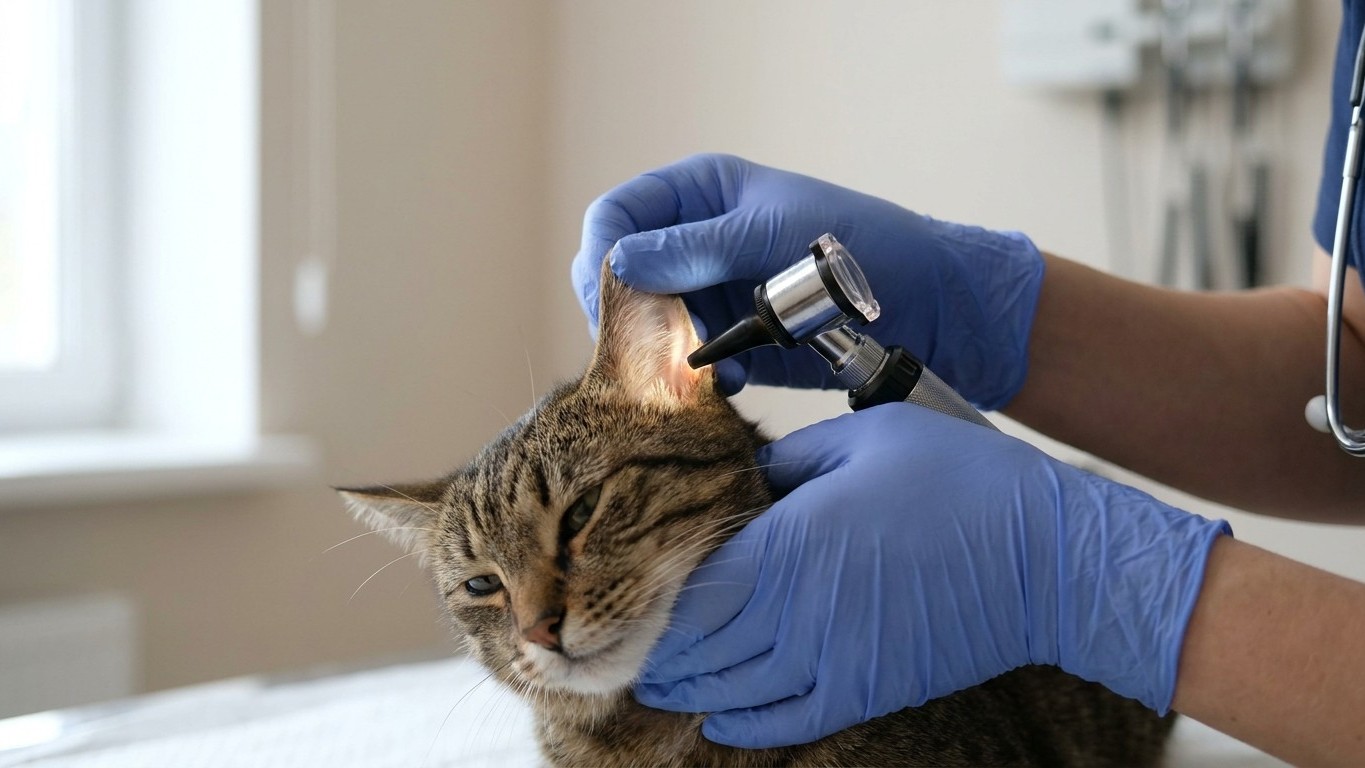
It’s tempting to grab a pair of tweezers the moment you spot something dark and thread-like poking out of your cat’s ear. Resist it. The ear canal is delicate, cats rarely sit still for the procedure, and a seed that’s already partly embedded will likely snap, leaving the barbed portion buried even deeper and out of reach. Vets use an otoscope to see exactly where the seed sits before extracting it with specialised forceps, and in many cases the cat needs light sedation simply because the canal is inflamed and painful to touch. Trying to do this at home risks pushing the seed further in, tearing the eardrum, or triggering a fight-or-flight response that ends with someone (cat or owner) getting hurt.
Left untreated, a lodged grass seed doesn’t resolve itself. The barbs keep it moving in one direction, and the body’s response is inflammation, infection, and sometimes a discharging abscess days or weeks later, often nowhere near where the seed originally entered. This is precisely why any cat showing sudden, one-sided head shaking, sneezing, or foot licking during the summer months should see a vet promptly rather than being given a few days to “settle down.”
Cutting the risk before it starts
Cats who roam freely through long grass, verges, or overgrown gardens face the highest exposure, and there’s no foolproof way to seed-proof an adventurous outdoor cat. Still, a few habits make a real difference. Running your fingers through your cat’s coat after it’s been out in tall grass, paying particular attention to the base of the ears, between the toes, and around the armpits, can catch a seed before it works its way in. Keeping garden grass trimmed through the summer reduces the sheer volume of seed heads your cat brushes past daily. And long-haired breeds benefit from a bit of extra grooming during peak grass-seed months, since matted fur near the ears gives seeds more surfaces to grip onto.
If your cat does start head shaking persistently, note which side it favours and how long it’s been going on, that detail helps your vet locate the problem faster once you’re in the consulting room. It’s a small, unglamorous seasonal hazard, but one that vets across the UK see reliably every summer, and a five-minute check after a garden ramble beats a sedated extraction any day.