
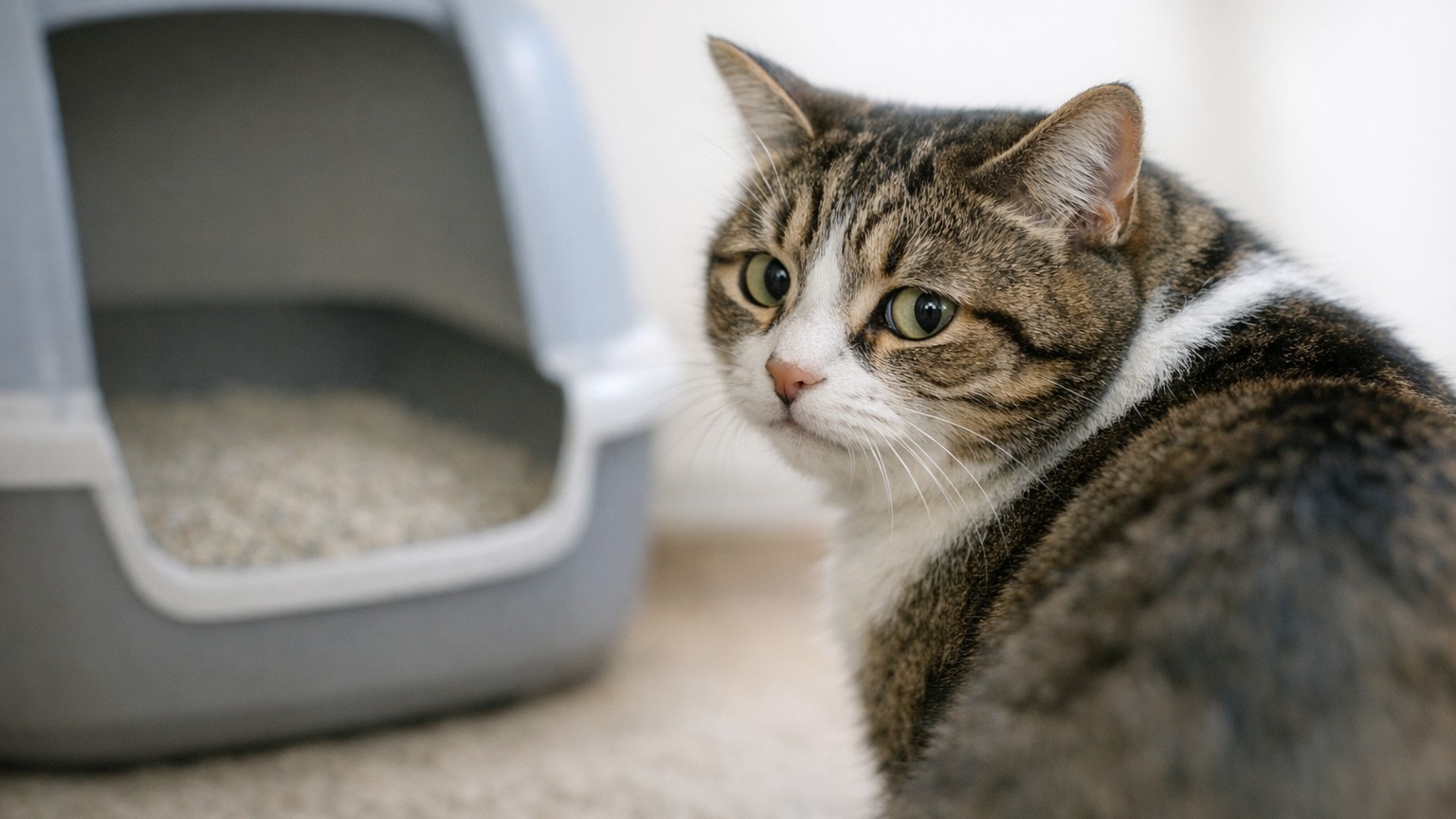
For years, I scooped my cat’s litter box once a week, gave it a rinse every month or so, and called it a job well done. My cat, Miso, occasionally squatted next to the box rather than inside it, which I put down to feline stubbornness. Then a vet appointment changed Everything. One look at the state of my tray and the penny dropped: what I thought was “clean enough” was, from Miso’s perspective, utterly unacceptable.
Key takeaways
- A cat’s sense of smell is so acute that what seems clean to you is an assault to them—and one wrong move creates lasting avoidance
- Most cat owners don’t realize scooping once a week is dangerously inadequate; vets recommend daily scooping and weekly deep cleans
- The box itself matters: old plastic harbors bacteria in microscopic scratches, and seemingly helpful features like lids actually trap odors your cat can’t escape
A cat’s nose is not your nose
The first thing worth understanding is just how differently your cat experiences the litter box. A cat’s sense of smell is very strong, and their need for a clean bathroom is equally powerful. What smells faintly stale to you is, to them, an assault. Cats are meticulous self-groomers who spend a significant portion of their day maintaining their coats; they bring that same standard of hygiene to their toilet habits. A dirty litter box is the most common reason cats don’t use their litter box.
The problem with my routine was more specific than just “not scooping enough.” I had been using a covered box for years, convinced the lid kept the smell contained. Most cats prefer uncovered boxes because they offer better air circulation and visibility. Enclosed boxes can trap odours and may feel unsafe to your cat. So I had inadvertently been sealing my cat into a small, poorly ventilated toilet every time she visited. The cover wasn’t protecting her nose, it was protecting mine, while hers took the full hit.
There was also the question of the box itself. Cat litter boxes are typically plastic, and bacteria like to hide in the little scratches that form at the bottom of the box. Every year or two, your boxes should be replaced, as by that point they are likely very scratched up inside and holding onto odours that may be offensive to your cat. Mine was four years old. It had been scrubbed, yes, but the plastic had been etched by thousands of digging sessions, and no amount of soap was shifting what had accumulated in those grooves.
What a proper cleaning routine actually looks like
This is where many cat owners, myself included, quietly underestimate the task. Scooping once a week is not enough. Vet guidance recommends scooping waste daily and fully cleaning the box weekly using unscented soap and warm water. Cats are very clean animals, and a dirty litter box is one of the top reasons they stop using it. Daily scooping is the baseline, the minimum, not the gold standard.
Twice daily scooping of all boxes is ideal. At least once a week, completely empty your litter box and provide fresh litter. At least once a month, clean and disinfect the box to remove any lingering residue. That’s three distinct levels of cleaning, each serving a different purpose. The daily scoop removes waste before ammonia builds up. The weekly full litter change resets the environment. The monthly deep clean tackles the bacterial load that accumulates in the plastic itself.
One detail that surprises most people: avoid cleaning products that may contain chemicals that can hurt your cat. Avoid any soaps with a noticeable scent, as cats often don’t like unusual, strong smells, especially around their litter box. That fresh pine or lavender cleaning product you’re using? Your cat may be avoiding the box precisely because it smells “clean” in a way that reads as chemical and wrong to them. Unscented, mild soap and hot water is the right approach.
There is also a less obvious reason to scoop frequently: it’s your early warning system. The added benefit of scooping frequently is that it helps you detect medical problems earlier. Changes in clump size, frequency, or consistency can flag a urinary issue days before any other symptoms appear.
When avoidance signals something medical
Physical Discomfort is one of the most common reasons cats avoid the litter box. They may associate it with pain. Conditions like UTIs, kidney disease, or even joint pain can make it uncomfortable to use the box. This is the part that catches owners off guard: a cat who repeatedly goes outside the tray isn’t necessarily being difficult. She may be unwell, and she may have learned to associate the box itself with pain, even after the medical issue has resolved.
Even if your cat’s health has returned to normal, that association may still cause her to avoid her litter box. This negative association is worth taking seriously. Urinary tract infections can cause frequent, painful urination and may lead a cat to avoid the litter box altogether. Older cats with joint pain may also find it hard to climb into high-sided litter boxes, making a lower-entry box more appealing.
If your cat is straining, meowing in discomfort, or using the box frequently with little success, seek veterinary help right away, those symptoms could signal a serious issue. If your cat is straining to urinate, passing blood, or visiting the box frequently with little output, seek veterinary care immediately. These can be signs of a urinary blockage, which is a life-threatening emergency. Always consult your vet if litter box avoidance starts suddenly or is accompanied by any of these signs.
The setup details that matter more than you’d think
One box per cat, plus one extra, is the general rule. So if you have two cats, provide three boxes. This gives each cat options and helps reduce conflict over territory. Many owners with a single cat assume one box is fine, and in principle it is, but the pressure on that one box to stay immaculate becomes far higher.
Location matters too. Position boxes in quiet, low-traffic areas away from food and water dishes to encourage use. Even a noisy dryer or washing machine near the box can be enough to cause avoidance. A cat who feels trapped or startled mid-visit will not forget the experience.
Many cats prefer fine-textured, clumping, unscented litter. Strong scents or gritty materials like crystals or pellets can be unpleasant. If you do switch litters, do it slowly by blending the new type in over several days, sudden changes are one of the quickest ways to create an avoidance problem from scratch.
One thing the vet pointed out that I hadn’t considered: the box should measure at least 1.5 times the length of your cat from nose to tail. Most standard supermarket trays fall short of this for larger breeds. A cramped box forces uncomfortable postures, which cats remember. Miso, as it turned out, had outgrown her tray two years earlier. A larger, open, unscented-and-scooped-daily setup transformed her habits within a week, no medication, no behavioural intervention needed. Just a clean, properly sized toilet in the right place. Sometimes the simplest fix is the one hiding in plain sight.
Sources : vetcarehosp.com | neakasa.com