
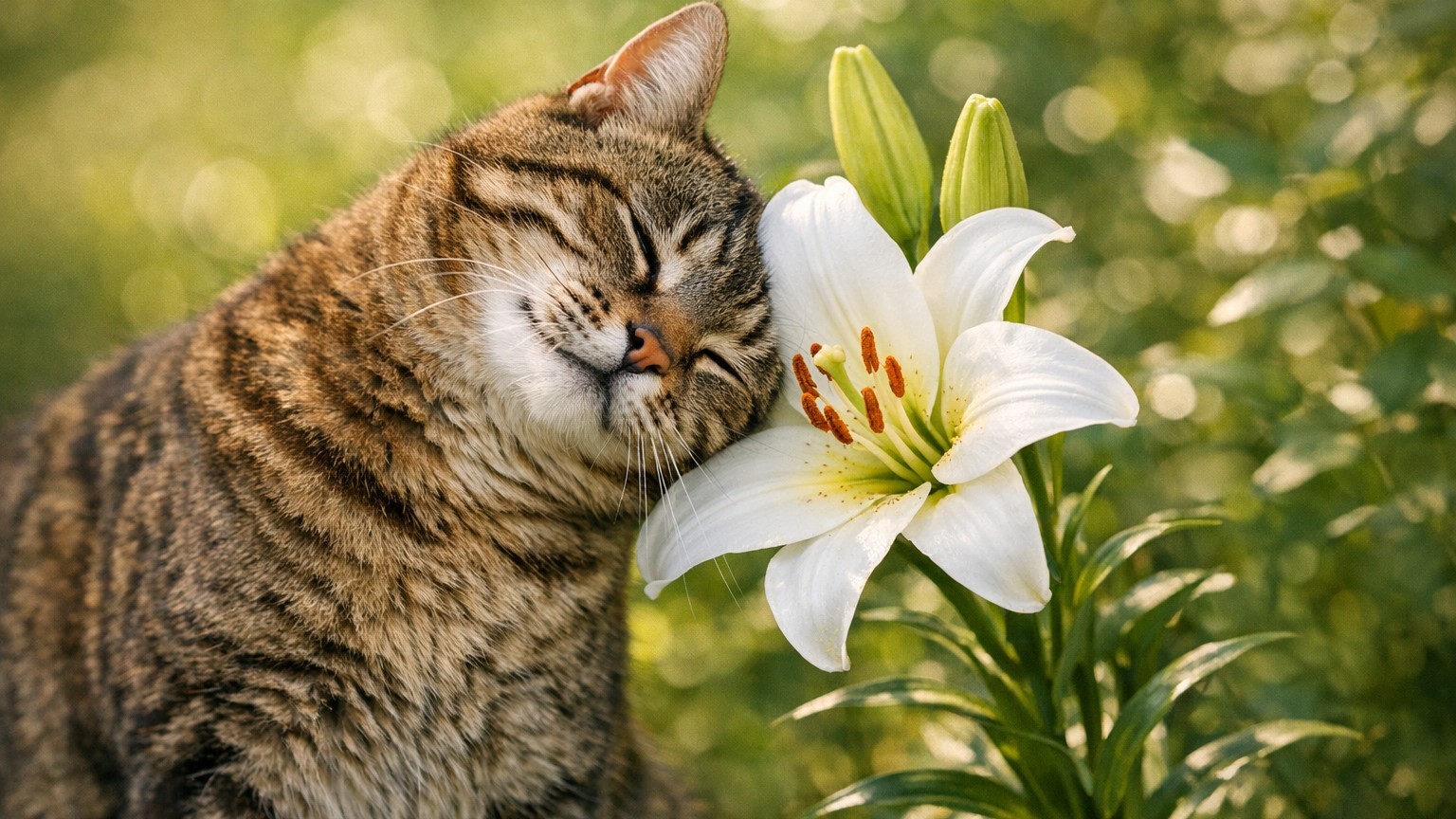
Most of us garden with our cats in mind, just not in the way we should. We pick plants for colour, fragrance, and whether they’ll survive a British summer. The question of whether our cat can safely roll through them, chew a leaf out of curiosity, or simply brush past a flower head on a warm July afternoon? That one barely crosses our minds. Until it does. Because the list of common UK garden plants that are toxic to cats is, to put it plainly, alarming.
Key takeaways
- Common UK garden favourites like lilies, daffodils, and foxgloves can be fatally toxic to cats—sometimes just from brushing against them
- Some plants work fast: lily poisoning can cause fatal kidney failure without immediate treatment, but symptoms may take days to appear
- You can create a beautiful, colourful garden that’s completely safe for cats by swapping toxic plants for stunning alternatives
The garden you thought was harmless
Many common plants and flowers found in UK homes and gardens are toxic to cats, including lilies, daffodils, tulips, and crocuses. That list alone probably covers half the contents of a typical British border. But here’s the detail that genuinely stopped me cold: lilies are the most dangerous plants for cats, as they can cause kidney failure. All parts of the lily plant are toxic to cats, including the head, leaves, stem and pollen. The pollen part matters more than most people realise. Although it’s very unlikely your cat will eat the flower directly, they may rub against it, get pollen on their coat and then lick it off whilst cleaning their fur. Your cat doesn’t even need to take a bite. A lazy afternoon rub against a stargazer lily, followed by a good groom in the sun, can be enough.
Lily poisoning in cats occurs fast, and without immediate treatment, your cat can experience kidney failure, which in most cases is fatal. The speed of that deterioration is what makes it so frightening. Signs that your cat may have ingested a toxic plant include vomiting, diarrhoea, drooling, loss of appetite, tremors, seizures, difficulty breathing, and abnormal heart rhythms. Symptoms can appear within minutes or may take several days to develop, depending on the plant. That delay is its own particular cruelty, you may not connect the dots until your cat is already seriously unwell.
Daffodils feel almost too innocent to be a threat, but they earn their place on the danger list. Daffodil bulbs contain crystals that are extremely toxic to cats if eaten. The heads and leaves can also make your cat unwell if consumed. Daffodils contain a poisonous substance called lycorine, which, if digested, can cause stomach upset, vomiting or wider serious illness. And if you’ve grown tulips for a bit of spring colour, note that while all parts of tulips are toxic to cats, ingesting the bulb is the most dangerous. Digging cats, curious kittens, and autumn bulb-planting season are a particularly risky combination.
The cottage garden culprits nobody warns you about
Foxglove is perhaps the most telling example of how our sense of a “traditional English garden” can mislead us. Foxgloves are a common cottage garden plant often used in more traditional garden settings, but they are highly toxic to cats, affecting their heart; in severe cases, ingestion can lead to cardiac failure and death. The mechanism here is particularly sobering: foxglove’s toxic principle is cardiac glycosides, including digoxin and digitoxin, which cause cardiac arrhythmias, vomiting, diarrhoea, heart failure and death. Digoxin, incidentally, is a compound that doctors use in carefully measured doses to treat human heart conditions. In an uncontrolled quantity, eaten from a garden plant by a curious cat, it’s a different story entirely.
Wisteria draping over a garden arch is one of the most romantic sights in any British garden. This highly ornamental climbing plant is highly poisonous to cats, dogs, and horses. The climbing plant produces pods and seeds that are toxic to pets. Signs of poisoning include vomiting (sometimes with traces of blood), dehydration, and diarrhoea. Hydrangeas, another garden staple adored for their full, blousy blooms, carry a different kind of chemical risk: hydrangeas contain cyanogenic glycosides, which can cause vomiting, depression, and confusion in cats.
The autumn crocus deserves a special mention, because it catches people out badly. Both spring and autumn crocus plants are toxic to cats. Ingesting spring crocus can lead to gastrointestinal issues like vomiting and diarrhoea. Autumn crocus is highly toxic, as all parts of the plant can cause severe symptoms, including vomiting, bloody diarrhoea, organ damage, respiratory failure, seizures, and even death. Many gardeners grow spring and autumn crocus side by side without appreciating the difference in severity, and the autumn variety looks deceptively similar to the spring one.
There’s one more offender worth flagging for vegetable garden enthusiasts. Tomato plants, especially the leaves, stems, and unripe fruit, are toxic to cats. They contain solanine, which can cause drooling, vomiting, and lethargy if ingested. The sprawling vegetable patch that feels miles away from “dangerous” is hiding its own hazards.
What to do if you’re worried your cat has eaten something
Speed is everything. If you suspect your cat has eaten part of a toxic plant, call your vet immediately. Do not wait for symptoms to appear. Take a sample or photo of the plant with you to the vet to help with diagnosis. That last point is one of the most practical pieces of advice going, knowing exactly which plant is involved helps a vet narrow down the likely toxins and treatment approach quickly. You can also contact the Animal PoisonLine, run by the Veterinary Poisons Information Service, on 01202 509000 for advice.
If there’s any concern that your cat has had contact with lily pollen specifically, wipe or bathe them to remove it from their fur before heading to the vet. Every minute matters with lily toxicity in particular.
Building a safer garden, without giving up on colour
Ripping out an entire garden isn’t realistic, and thankfully it isn’t necessary. There are genuinely beautiful alternatives that pose no risk to cats. Marigolds are safe for both cats and dogs and add a vibrant splash of colour to your garden. Sunflowers are non-toxic and can provide a fun, interactive element for your pets. Snapdragons, with their colourful blooms, are a safe and attractive choice for any pet-friendly garden. All rose varieties are non-toxic to cats and provide delightful fragrances, a classic garden favourite. For those who love fragrant herbs, basil, thyme, and parsley are safe in moderation.
If you want to go one step further and actively delight your cat as well as keep them safe, consider valerian. Cats love the scent of valerian, and it can even have a calming effect. Catnip is the obvious crowd-pleaser, of course, but valerian offers a subtler, more garden-appropriate alternative for those who’d rather not grow what amounts to a feline narcotic in full view of the neighbours.
One nuance worth knowing before you start replacing plants: not all marigolds are equal in terms of safety. Pot marigolds are cat-safe, but be careful not to confuse them with French or tagetes marigold plants, as these are poisonous to pets. The botanical name matters here, look for Calendula officinalis if you want to be certain. It’s a small but important distinction, and exactly the kind of thing worth double-checking with your vet or a reputable plant guide before adding anything new to the border.
Sources : countryfile.com | germantownah.com