
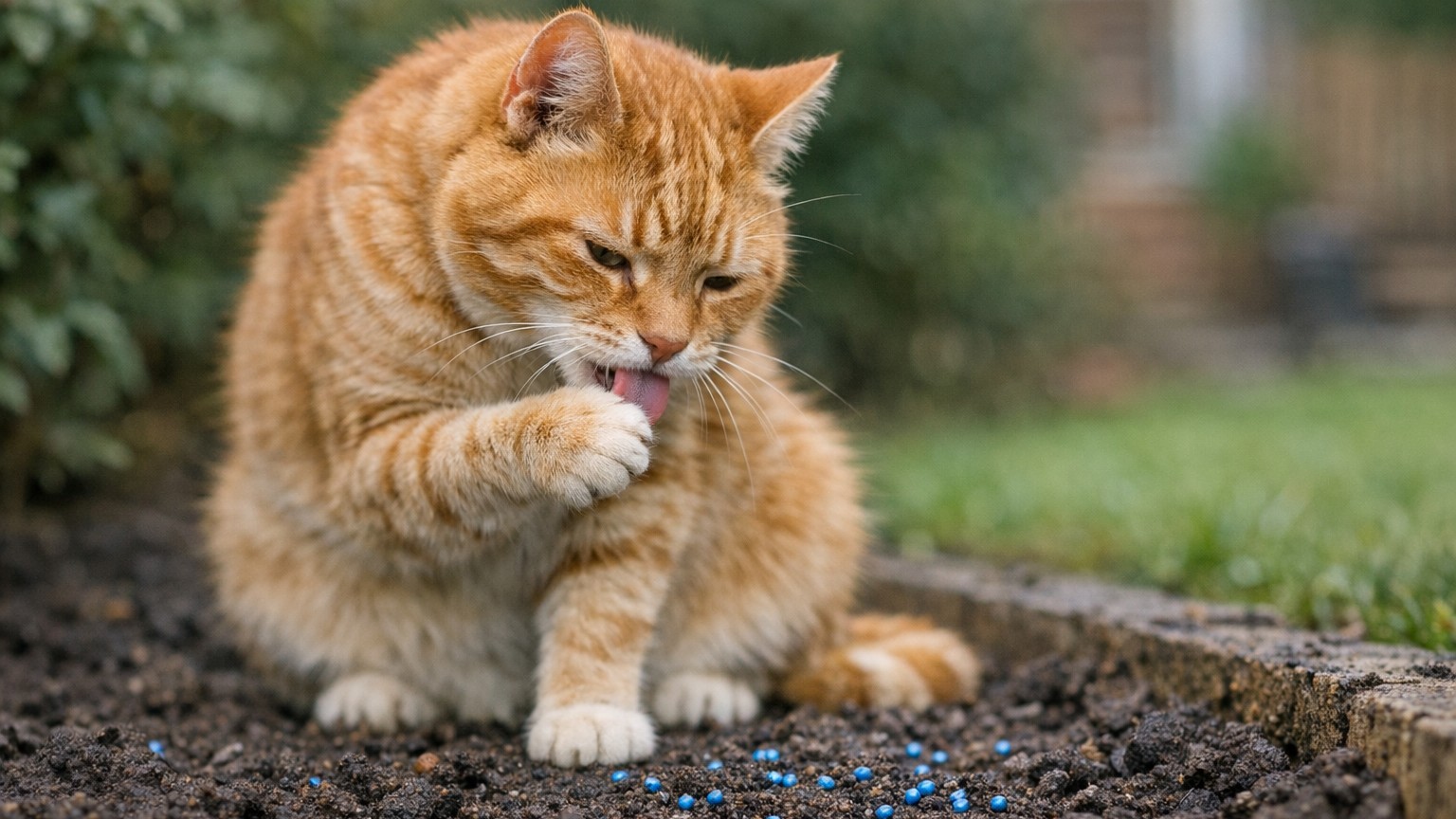
Those small blue pellets scattered along a June border look completely innocuous, practically invisible against damp soil. But thirty minutes after a cat walks through a freshly treated bed, sniffs at the granules, or simply grooms her paws afterwards, the scene can change very quickly. Drooling. Twitching. Then seizures. This is the reality of metaldehyde poisoning, and every UK cat owner who gardens needs to understand it.
Key takeaways
- A cat doesn’t need to eat the pellets directly—grooming contaminated paws after walking through treated borders can be fatal
- Poisoning symptoms appear in as little as 15-30 minutes, and vets call it ‘shake and bake’ syndrome for a haunting reason
- The UK ban on metaldehyde isn’t your complete protection: old stock may still lurk in sheds, and newer ‘pet-safe’ alternatives aren’t entirely safe
Why blue pellets are so dangerous to cats
Slug pellets containing metaldehyde are extremely toxic to cats. Most of the common blue pellets you see on garden centre shelves contain metaldehyde, a quick look at the back of the pack confirms it. The science behind why they’re so lethal is unsettling. The mechanism of toxicity is not thoroughly understood, but it appears that metaldehyde interferes with chemical transmission in the brain, leading to the classic symptoms of incoordination, tremors and convulsions.
The cruelest trick these pellets play is in their composition. To attract slugs, these baits often contain bran or molasses, making them tasty to other animals. The formulation of slug pellets resembles that of dried cat or dog food. So what smells like a snack to your cat is, in fact, a poison. Less than a teaspoon of bait containing metaldehyde can be toxic to pets and may be fatal without treatment. That is a genuinely frightening dose threshold for a garden product sold at supermarkets.
Here’s where cats face a specific, sneaky risk that even many dog owners don’t appreciate. Cats are less commonly affected than dogs but may ingest metaldehyde indirectly through grooming contaminated paws or fur. In cats, it may be enough if they come into contact with the bait and later groom themselves. A cat walking across a treated border, then sitting on the lawn for her usual post-garden wash, can poison herself without ever deliberately eating a single pellet. That’s the behaviour that can be so hard to forget once you’ve witnessed it.
What actually happens, and how fast
Clinical signs can start within just 15–30 minutes of ingestion and can progress rapidly. They include wobbliness and incoordination, drooling, twitching and muscle tremors, breathing difficulties, seizures, high temperature, coma and death. Vets have nicknamed metaldehyde poisoning the “shake and bake” syndrome, a reference to the tremors, seizures, and elevated body temperatures that occur when a pet consumes this dangerous chemical.
Severe cases can result in the animal becoming comatose. Rapid, flicking eye movements (nystagmus) may also occur, especially in cats. If left untreated, or if the pet has a poor response to treatment, respiratory failure and death can occur. Sadly, some pets that survive these initial signs develop liver failure two to three days after ingestion. The window for action is brutally short. If an owner thinks their pet has eaten any amount of slug pellets, no matter how small, they should contact their veterinary practice without delay, as clinical signs can start in as little as 30 minutes.
There is no antidote. There is no specific cure for metaldehyde poisoning, treatment is aimed at decontamination and treating the symptoms of toxicity. If your pet has only recently eaten the slug pellets, a vet may be able to give medication to induce vomiting to prevent any further digestion of the toxic product. Activated charcoal can stop further absorption of chemicals. Intravenous fluids may be required to correct metabolic changes, as well as medications to counteract seizures. Your pet will be hospitalised for monitoring during this time, with many doing well when treatment has been prompt. Always take the product packaging with you to the vet — it tells them exactly what active ingredient and concentration they’re dealing with.
The UK ban and what it actually means for your garden
In the UK, slug pellets containing metaldehyde are banned. This ban came into full effect on 1 April 2022, making it illegal to sell, supply, store, or use these products. This is genuinely positive news for wildlife too, from a wildlife perspective, problems may occur when animals higher up the food chain either try the slug pellets or consume the poisoned slugs. Toads, birds and hedgehogs are all susceptible to the effects of metaldehyde, and there are concerns about declining numbers of some of these species.
But the ban doesn’t mean every garden is now safe. Metaldehyde slug pellets have been banned in Great Britain since March 2022, but old stock may still be present. If you moved into a new property, inherited an allotment, or have a shed full of old garden supplies, it’s worth checking every box and packet. Any old metaldehyde stock should go to your local hazardous waste facility, not the bin, and certainly not the compost heap.
Ferric phosphate is now the primary active ingredient in UK slug pellets since the metaldehyde ban. It’s marketed as “wildlife-friendly” or “safe for pets,” but this designation requires qualification, ferric phosphate pellets are significantly less acutely toxic than metaldehyde, but they are not entirely safe for pets. Some ferric phosphate slug pellets also contain EDTA as a stabiliser. There is some evidence that EDTA increases iron absorption and therefore toxicity. So “pet-safer” is the honest term, not “pet-safe.” Always read the full ingredients list, and if you use ferric phosphate pellets, scatter them thinly rather than piling them up.
What to do instead, for your borders and your cat
The good news is that slugs have plenty of natural enemies, and encouraging them costs nothing. Hedgehogs, frogs, ground beetles, and song thrushes all predate slugs enthusiastically. A garden that makes space for these creatures, with log piles, a small pond, or even just rough areas of long grass — does a reasonable job of keeping slug populations in check without any chemicals at all. Nemaslug is a product that contains slug parasites which attack and kill slugs and snails but not other animals, so is completely safe.
Physical deterrents work well on smaller beds. Placing copper bands around plants or planting lavender, mint or rosemary may also discourage slugs and snails from entering the garden. Crushed eggshells and coarse grit create uncomfortable surfaces for slug locomotion. Beer traps are satisfyingly effective, though position them where your cat can’t get into them, dogs and cats have a lower tolerance for alcohol than most humans, and a cat who laps up a full beer trap won’t be having a pleasant evening.
If a cat walks across any area of the garden where pellets of any kind have been applied, owners should wipe down their pet’s paws and muzzles after garden access. It sounds fussy, but it takes thirty seconds and could prevent a veterinary emergency. Keep the bottle or packet of whatever you’ve used somewhere visible, so that if your cat does show symptoms, you can tell the vet immediately what they may have encountered. With early treatment, pets are less likely to develop serious signs. Even when signs occur, many pets recover fully within two to three days if appropriate treatment is started early.
One less-discussed risk: there’s no way to tell if a slug has already ingested a slug pellet. These poisons take a few days to kick in after a slug has consumed them, during that time, a cat can eat the slug. Cats that hunt and eat slugs in treated gardens are therefore at indirect risk even when they never touch the pellets directly. It’s another reason why the whole-garden approach to slug control, working with nature rather than against it, is ultimately the safest strategy, for your plants, your cat, and Everything else living in your outdoor space.
Sources : animalemergencycare.net | growlikegrandad.co.uk