
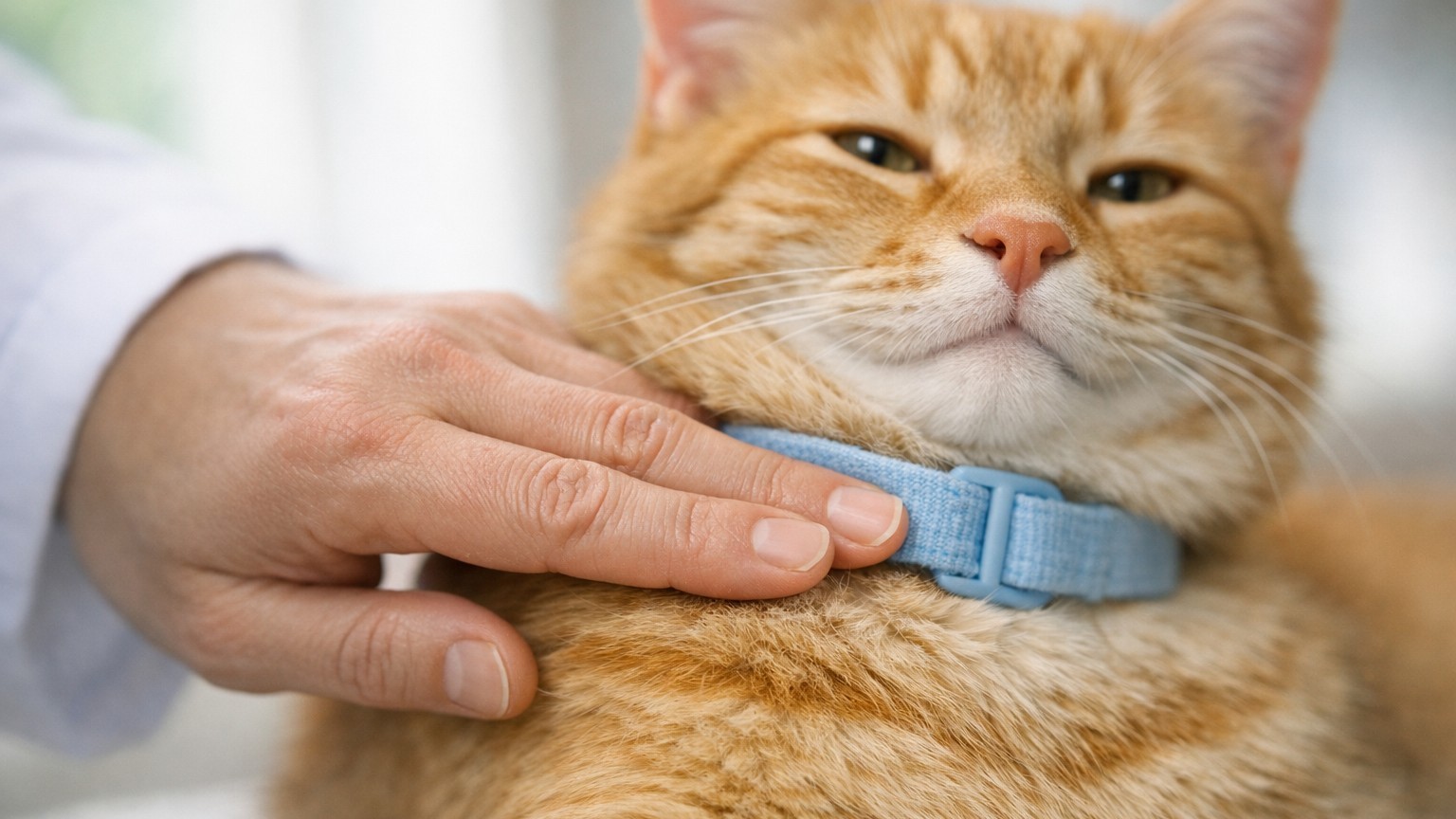
Most Cat Owners who’ve put a collar on their pet have done the same thing: pulled it snug, checked it felt secure, and assumed that was good enough. Then a vet, during a routine check-up, slides two fingers underneath the collar with ease, or can’t fit them in at all, and the penny drops. The two-finger rule is the single most important thing to know about cat collar fitting, and yet it’s one of the most commonly ignored pieces of pet safety advice around.
Key takeaways
- A vet’s simple two-finger test exposes a mistake nearly every cat owner is making
- Both too-tight AND too-loose collars pose serious, surprising dangers that vets see regularly
- Your cat’s collar fit changes constantly—weekly checks catch problems before they become injuries
The Two-Finger Rule: What It Actually Means
The two-finger rule for cat collars means you should be able to comfortably fit two fingers between the collar and your cat’s neck to ensure a secure but not tight fit. That’s your index and middle fingers, placed flat and side by side. Try sliding those two fingers side-by-side between the collar and your cat’s neck. If you can do so comfortably, without squeezing or force, the fit is ideal.
Simple enough in theory. But here’s where most owners go wrong: they measure against the fur, not the skin. The collar should fit snugly against the cat’s neck, not their fur. If your cat has a thick winter coat or is a naturally fluffy breed, that distinction matters enormously. The collar might feel perfectly loose against the fur while pressing uncomfortably tight against the actual skin underneath.
When you first fit a collar, your cat might tense its neck muscles, so after a few minutes you should always check and adjust the collar if necessary. This is something vets do almost instinctively, checking fit once the cat has relaxed, and it’s a step most owners at home skip entirely.
Why Getting It Wrong Is More Dangerous Than You Think
The consequences of a poorly fitted collar aren’t just about comfort. Both extremes, too tight and too loose, carry genuine risks that can result in serious injury.
A collar that is too tight can cause choking, discomfort, and skin irritation. A collar that is too loose can slip off or get caught on objects, posing a strangulation risk. The loose end of that equation surprises people. A floppy collar feels harmless, but if the collar isn’t properly fitted or becomes too loose over time, cats can get it stuck in their mouth when grooming themselves, or even get a paw stuck in there.
Kittens grow rapidly, up to 20% in neck girth between 8 and 16 weeks, making weekly checks essential. For adult cats, the risks are subtler but still real. Senior cats may lose muscle mass or develop thyroid enlargement, subtly altering neck shape. Overweight cats often accumulate fat deposits at the nape, masking true tightness until fur loss or swelling appears.
There’s a more alarming scenario that vets and welfare charities deal with regularly. The RSPCA has warned pet owners about the dangers of putting collars on their pets too tight, after finding a cat with one of the worst embedded collar injuries their staff had ever seen. When a collar is left without being checked and the cat gains weight, the skin can literally grow around it. Collar-related dermatology cases are not rare: veterinary dermatologists routinely see collar-related trauma, not as isolated incidents, but as predictable patterns tied to fit, duration, and material.
Breakaway Collars: Not Optional for Outdoor Cats
Fit is only part of the equation. The type of collar matters just as much, particularly for cats who go outside. Breakaway collars are strongly recommended by veterinarians and pet safety experts. These collars feature a special mechanism that releases under pressure, preventing strangulation if the collar gets caught on something.
Breakaway collars typically use a plastic or magnetic clasp that separates when a certain amount of force is applied. The trade-off is that your cat may occasionally come home without it, but that is a far better outcome than the alternative. Vet nurses frequently see cats whose collars haven’t been fitted correctly or, worse still, don’t have a safety breakaway clip.
One type to specifically avoid: collars that have a length of elastic as part of the design, allowing them to expand, can also cause serious injuries. International Cat Care would never recommend putting a collar with an elastic section on your cat. Elastic sounds like a sensible safety feature, but a cat can get a limb or jaw caught in the stretch, and the elastic then acts like a tourniquet.
On the material front, cats have sensitive skin and stiff materials can cause hair loss or feline acne on the neck. Lightweight, breathable fabrics like natural cotton or soft nylon are preferable.
How Often Should You Actually Check the Fit?
Most owners put a collar on and forget about it for months. The reality is that collar fit is a moving target. Cats can change in weight, fur density, and behaviour over time. Collar fit should be checked every one to two weeks, especially in growing cats, and reassessed after grooming visits or seasonal changes in coat thickness.
If your cat has seasonal shedding, re-measure neck girth at peak moulting, usually spring and autumn. Undercoat thickness changes collar dynamics more than topcoat length. That’s a detail most guides don’t mention, and it’s a genuinely useful one. A collar that passes the two-finger test in February may be noticeably tighter by April once a dense winter coat starts to thin and the skin sits differently.
the Warning Signs to watch for are redness, scratching at the collar, patches of fur loss around the neck, or a collar that has visibly moved from its usual position. If you notice signs of redness, irritation, or chafing around your cat’s neck, remove the collar immediately and keep the area clean and dry. Always consult your vet if skin irritation persists, collar-related dermatitis can progress quickly if left untreated.
One final thing worth knowing: microchipping is the safest and most permanent method of identification, and is a legal requirement for all cats over the age of 20 weeks in England. A collar is a useful visual signal to neighbours that a cat has an owner, but it should never replace a microchip. Collars come off. Chips don’t.
Sources : itv.com | petscare.com