
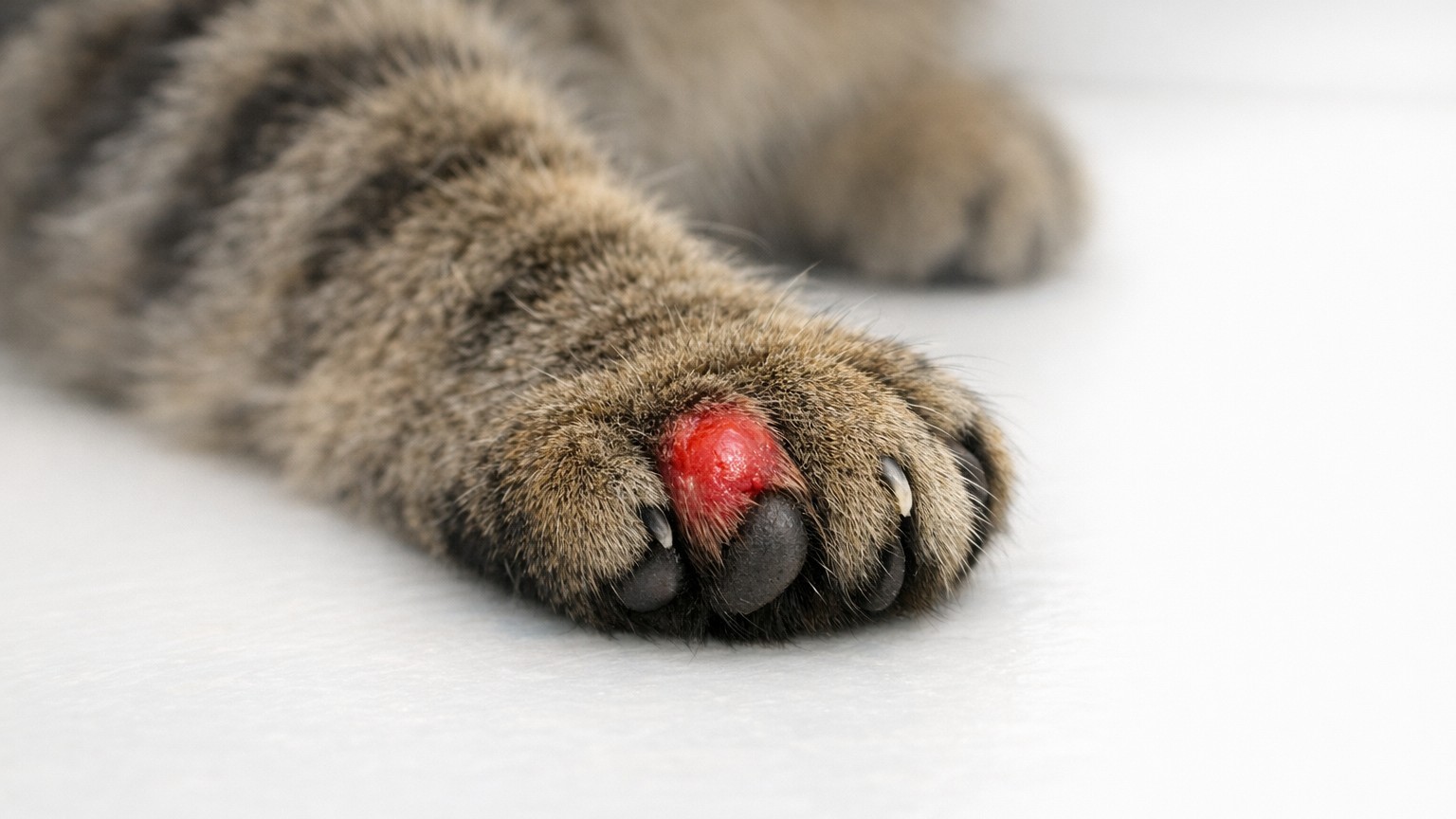
A small bump on a cat’s paw looks like almost nothing. A minor scrape, maybe a bit of mud caught in the fur, easy to brush off and forget about. But that innocuous-looking lump can be the surface sign of a rapidly escalating infection that, left untreated for even a few hours, can tip into sepsis. Paw abscesses are a genuine veterinary emergency, and the hardest part is that cats are biologically wired to hide how much they are suffering.
Key takeaways
- A tiny paw bump could hide a rapidly spreading bacterial infection that progresses to sepsis in hours, not days
- Cats are masters at hiding pain—the real warning signs aren’t always visible on the surface
- One critical mistake at home can turn a treatable abscess into organ damage and permanent complications
What’s actually happening under that bump
A cat abscess is a pocket of pus that forms beneath the skin when bacteria get trapped inside a wound. The cat’s immune system tries to wall off the infection by sending white blood cells to the area, and the resulting fluid collects into a swelling that grows over two to seven days. On a paw, the process tends to move faster than on fleshier parts of the body, because paw abscesses typically involve a foreign object, a thorn, splinter, or piece of debris stuck between the toes.
The most common cause of abscesses in cats is a bite or scratch wound, often the result of fights with other animals. Bacteria like Pasteurella multocida, commonly found in cat mouths, can easily infect these wounds. Here is what makes paw injuries particularly deceptive: because cats have so much fur around their paws, swelling isn’t always obvious right away. In many cases, their behaviour will give it away before you ever find the lump itself. What may begin as a small bump or mild tenderness can quickly become more serious, especially if hidden under fur or in less visible areas. Cats tend to hide pain well, so you might only notice subtle behaviour changes at first.
Typically, an abscess appears suddenly as a painful swelling that may be either firm to the touch or compressible like a water balloon. That “compressible like a water balloon” description is important. Many owners mistake the soft, fluctuant feel of an early abscess for a harmless cyst. It is not. That initial small swelling can balloon into a larger, more defined lump that feels either soft and squishy or firm to the touch. The area will almost certainly feel warmer than the surrounding skin because of the inflammation.
When “wait and see” becomes dangerous
Abscesses can lead to sepsis when bacteria enter the bloodstream and spread throughout the body. Signs include extreme low energy, pale gums, rapid breathing, and collapse. The window between “noticeable bump” and “systemic infection” is distressingly short. In another 12-24 hours, a cat bite abscess can progress to a fever, noticeable pain, redness and foul discharge.
The most concerning signs include fever (warm ears and paws), complete refusal to eat or drink for more than 12 hours, difficulty breathing, or extreme low energy where your cat won’t move. If you observe any of these alongside a paw lump, this is an emergency, ring your vet or an out-of-hours clinic immediately. Go in immediately if your cat shows trouble breathing, pale gums, inability to stand, refusal to eat or drink for more than 12 hours, swelling near the throat, or a high fever paired with severe lethargy.
In cats, some abscesses, particularly ones affecting the internal organs, can lead to sepsis and other serious health complications for your pet, so they require immediate veterinary attention. Deep tissue infections can also spread to nearby bones or joints, creating long-term damage that’s difficult to treat. A paw abscess left to fester is not simply an abscess anymore, it is a gateway infection.
What not to do before the vet appointment
The temptation to squeeze, lance, or poke a swollen paw is understandable. Resist it entirely. Squeezing or lancing a closed abscess at home is intensely painful for your cat, can push bacteria deeper into surrounding tissue, and risks re-sealing the wound around contamination. Never squeeze an abscess or use hydrogen peroxide or alcohol on the wound. These antiseptics damage the very tissue you are trying to protect.
Human pain medication is equally off-limits. Never give your cat human pain relievers. Acetaminophen (paracetamol) causes fatal liver damage in cats. Ibuprofen and naproxen cause kidney failure and stomach ulcers. While you are waiting to be seen, keep your cat calm and contained in a quiet, comfortable space while arranging veterinary care. Call the clinic before arriving to confirm their availability and receive any specific instructions.
Two tell-tale signs that something is wrong with your cat’s paw are that they won’t leave it alone, biting and licking the paw without relief, and that they won’t walk on it, causing them to limp or have uneasy footing. If your cat is doing either of these things, take that paw seriously. Watch for spreading redness beyond the initial area, increased swelling, or your cat becoming more lethargic or unresponsive. If your cat develops a fever, stops eating completely, or shows signs of pain like hiding or aggression when approached, the condition is likely worsening.
What treatment actually looks like
Your veterinarian will perform a thorough physical exam. They’ll gently feel the swollen area to confirm it’s an abscess, check its size and firmness, and look for any signs of an open wound. This hands-on check also gives them a good idea of your cat’s pain level, which helps them decide on the best approach for sedation and pain relief.
Abscesses are usually treated by draining and cleaning the wound and starting your cat on a course of antibiotics. Once the abscess is confirmed, the main goal is to get that infection drained. This procedure is painful, and it requires your cat to be completely still, so sedation or general anaesthesia is almost always part of the plan. This keeps your cat comfortable and stress-free while the vet team gets to work. Delayed or inadequate treatment may lead to chronically draining tracts in the tissue or even organ system compromise, so it is important to follow all treatment instructions from your veterinarian.
Recovery at home requires vigilance. A bit of thin, reddish-clear fluid is normal for the first day or two. If you see thick, yellow, or foul-smelling pus, that’s a sign to call your vet right away. A ruptured abscess still needs veterinary attention even if your cat looks better. The wound has to be flushed and cleaned to prevent it from re-sealing around contamination.
On the prevention side, cats that have not been neutered are more likely to get into tussles with other cats. Making sure your pet is spayed or neutered may reduce their risk of fighting and subsequent abscesses. Worth knowing too: bite wounds are the main cause of abscesses in cats, and other diseases such as feline leukaemia, feline immunodeficiency virus (FIV), and even rabies can be spread through a bite, which is one more reason a paw wound from a scrap with another cat should always be checked by a vet, even when it looks minor. A small bump is rarely just a small bump.
Sources : njvet.com | petwellbeing.com