
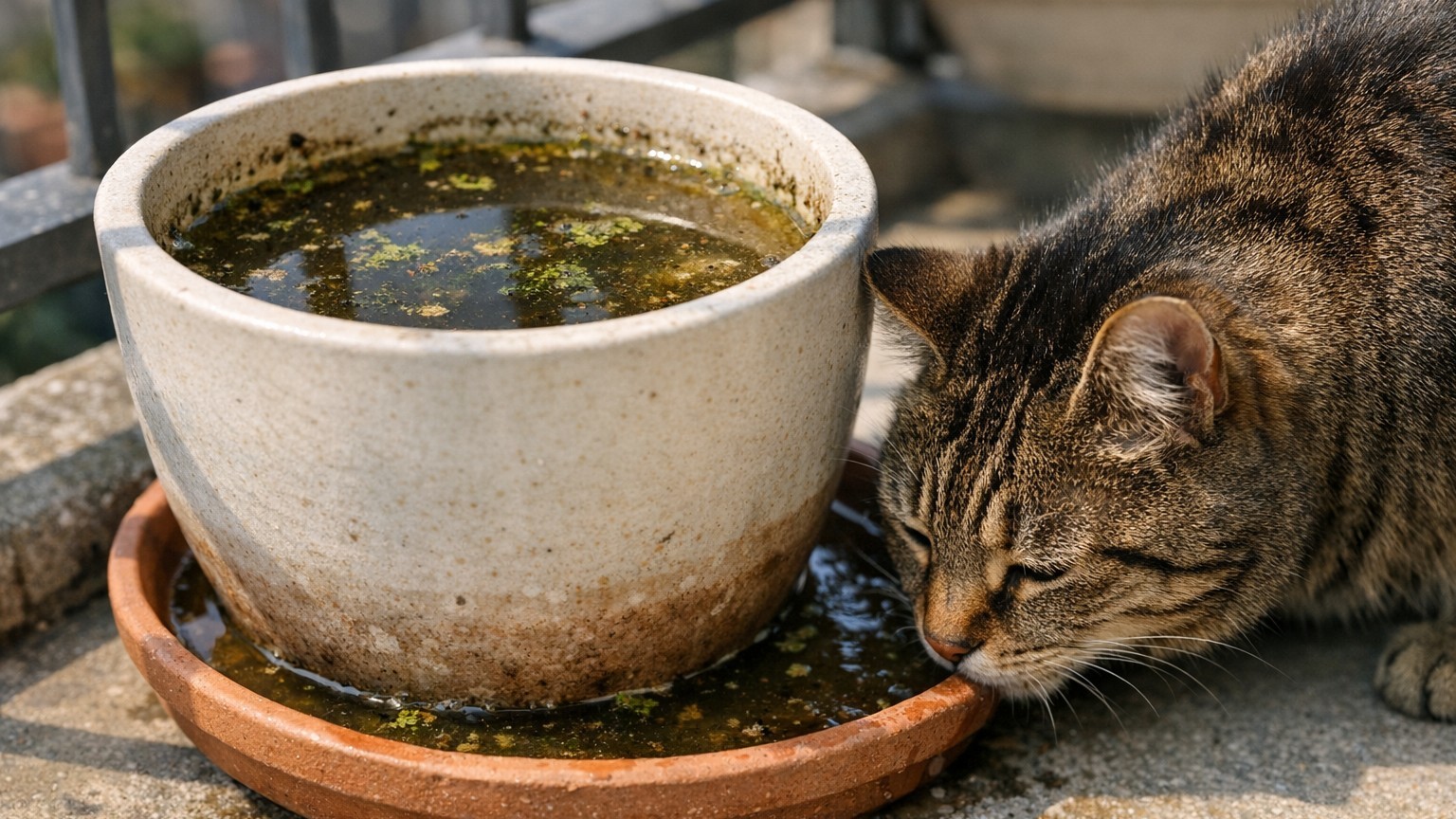
That brown, slightly murky water sitting in the plant saucer on your balcony may look like nothing more than a puddle after a good watering session. But a vet visit can quickly change that perspective. What drains through compost-rich potting soil and sits warming in the sun is a cocktail of fertiliser residues, soil bacteria, algae, and potentially parasites, none of which belongs in your cat’s digestive system.
Key takeaways
- Your cat’s instinct draws it to that ‘earthy-smelling’ plant saucer water over their clean bowl — but the reasons will shock you
- Brown plant drainage water contains invisible killers: bacteria that cause kidney failure, toxins that attack the nervous system, and fertilizer chemicals
- By the time symptoms appear, organ damage may already be irreversible — here’s how to stop it before it starts
Why cats seek out that murky saucer in the first place
This behaviour baffles many owners, especially those who refresh their cat’s bowl twice a day. The explanation, however, is surprisingly logical. Cats’ seemingly bizarre pickiness with water is a deeply ingrained survival instinct. Just like their wild ancestors, domestic cats have evolved to associate still water with potential danger, in the wild, a stagnant pool can be a breeding ground for bacteria, parasites and all kinds of nastiness, while flowing water is seen as cleaner and far less likely to cause illness.
Here’s the contradiction: a cat’s instinct tells it that the still, warm water sitting in a plant saucer smells interesting — full of earthy organic molecules, yet that same brain is wired to prefer moving water for safety. Cats will smell the microbes that plant water contains and be drawn to the earthy smell. The bowl indoors, by contrast, often sits right next to the food bowl. In the wild, cats instinctively avoid water sources near their “kill” to prevent contamination from decaying organic matter. Placing water within reach of food causes olfactory overlap, and the strong scent of proteins and fats in cat food can overwhelm the cat’s ability to “smell” the freshness of the water. So the balcony saucer wins by default, and your cat trots outside for a drink you’ve completely overlooked.
What’s actually in that brown water
Everything that is washed away from the soil, including fertilisers, bacteria, algae, fungi, and more, is contained in plant drainage water. That’s a long list, and each item carries its own risks.
Fertiliser residues are the most common concern for balcony plant owners. These fertilisers could easily wash into the plant saucer when the plant is watered. In dogs and cats, the toxic components of fertilisers are typically nitrogen, phosphorus, and potassium, which are poorly absorbed. Systemic clinical signs are rare but, when present, primarily relate to gastrointestinal irritation. So a diluted one-off encounter is unlikely to be catastrophic, but regular exposure, especially to more concentrated run-off, changes the calculation entirely. Ingesting fertiliser water can expose cats to harmful chemicals causing symptoms like vomiting, drooling, lethargy, or diarrhoea.
Far more worrying is what the bacteria can do. The soil is filled with germs, many of which are invisible to the naked eye. Some of them can be fatal to your cat, including the Leptospirosis-causing germs that can seriously sicken cats. Cats can get infected by bacteria in the genus Leptospira, and this should not be taken lightly because Leptospira can be transmitted to humans (zoonosis). There is no vaccine available for cats, as opposed to dogs. Stagnant surface water is where the Leptospira spirochete infection is most common, and these bacteria can survive in water for several months. Leptospirosis in cats in the UK is extremely rare, but the fact that the bacteria survive so long in stagnant water means a balcony saucer that collects rain, bird droppings, or traces of rodent urine from nearby ledges is not as innocent as it looks.
Then there is the algae question. Cyanobacteria (commonly called blue-green algae) can also grow in backyard fountains, pools, garden pots, birdbaths, or anywhere water is stagnant. Blue-green algae can produce powerful toxins. If your cat swallows these toxins, they can damage the liver, nervous system and kidneys, sometimes causing severe illness. Symptoms may develop within hours, and the outlook worsens once signs appear. The brown tinge in a summer balcony saucer that’s been baking in the sun? That’s precisely the environment these organisms love.
The kidney angle, what the vet actually found
Infected animals, including wildlife such as rats, mice, raccoons, and skunks, shed the Leptospira bacteria in their urine and can contaminate water. Kidney or liver failure can occur with infection, and severe infections can cause sudden bleeding problems, shock, and death. Cats’ kidneys are already one of their most vulnerable organs. Kidney disease is one of the most common causes of excessive thirst in older cats. Symptoms can include weight loss, vomiting, and poor appetite. Chronic kidney disease develops slowly, so monitoring water intake helps with early detection.
A cat that regularly tops up its hydration from a contaminated saucer, particularly one that contains fertiliser run-off or early algal growth — is quietly adding a low-level toxic load to organs that are already working hard. For the best prognosis, leptospirosis requires early treatment by a vet. If left untreated, it can lead to liver and kidney diseases. The insidious part is that the symptoms often mimic ordinary tiredness or a mild tummy upset. Fever, dehydration, lethargic behaviour, and a loss of appetite are possible symptoms of various bacterial illnesses. By the time a vet runs bloodwork and finds elevated kidney values, the exposure has already been going on for weeks.
What to do instead of the saucer
Empty the excess water from the plant saucer as soon as you can. Leaving stagnant water indoors or on a balcony invites many parasites. On a practical level, this means checking saucers after every watering session and tipping them out rather than letting them sit.
The longer-term fix is making your cat’s official water source more appealing than the balcony puddle. The reasons cats reject their bowl are well-documented: placement too close to food, plastic bowls that retain odours, and still water that smells flat. Cats can be finicky about the size and shape of the bowl, they might not like to get their whiskers wet or rubbed in the wrong way, so they may avoid bowls that are too narrow or deep. A wide, ceramic or glass bowl placed well away from the feeding area is a good start. A pet water fountain can be a great way to help increase your cat’s water intake, especially if they don’t enjoy drinking from a stagnant bowl — it’s also a perfect option for cats who prefer running water from the tap.
For the plants themselves, consider growing plants in hanging pots, a terrific idea for a pet-safe alternative because they lack a drip tray and are inaccessible to cats. If hanging pots aren’t an option, placing a small decorative barrier around the base of the pot takes about five minutes and removes the temptation entirely.
If you notice your cat drinking excessively, seeming lethargic, or going off their food, particularly after a summer of unsupervised balcony access, always consult your vet promptly. Bloodwork can reveal kidney stress before it becomes irreversible, and early intervention makes a significant difference. One detail worth knowing: antibiotic treatment usually helps animals recover from leptospirosis, but organ damage caused by the infection can be permanent. The balcony saucer is not worth the gamble.
Sources : kinship.com | oreateai.com