
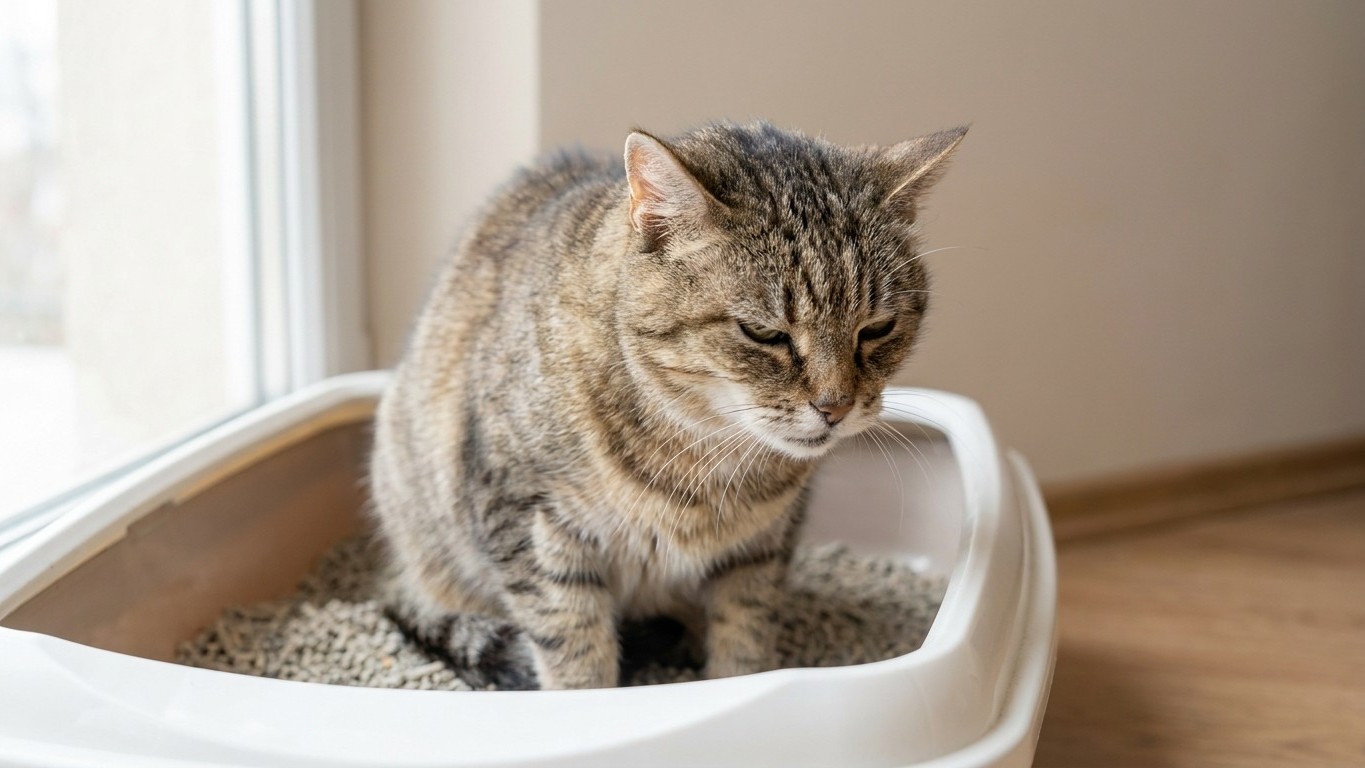
Most cat owners have been there: you glance at the litter tray and notice the evidence, sitting completely exposed, no scratch or scrape having been made to conceal it. The immediate reaction is usually mild irritation, perhaps a quiet accusation of pure feline spite. But vets and animal behaviourists increasingly point to something more medically significant lurking beneath this seemingly minor habit change. A cat that suddenly stops burying its waste is, quite often, a cat that is telling you something hurts.
Key takeaways
- A sudden change in litter burying behavior is your cat’s way of communicating pain or distress—not just being difficult
- Joint pain, arthritis, urinary infections, and gastrointestinal problems are among the hidden conditions vets say this behavior reveals
- Cognitive decline in senior cats can make them forget lifelong habits, signaling a condition most owners completely overlook
Why cats bury in the first place
In the wild, burying faeces helps cats mask their presence from potential predators or territorial rivals, reducing the chance of attracting unwanted attention and increasing a cat’s safety. This behaviour stems from when cats spent most of their time in the wild, hiding waste so that other nearby dominant cats don’t feel challenged, because even though cat faeces smells the same to humans, cats can tell the difference between their own waste and another’s. Domesticated cats inherit this deep-wired compulsion entirely intact. The litter tray simply becomes the modern stand-in for sandy soil or forest floor.
There is a social dimension to it too. In a multi-cat household, a cat that meticulously buries its waste is often sending a deferential message, “I am not a threat”, while dominant cats or those feeling territorially secure may choose not to cover their poop, leaving it as a marker. In the wild, big cat species leave their poop out and uncovered as a way of marking their territory, with the sight and scent of the faeces sending a signal to other cats that their space is off-limits. So yes, sometimes a cat not covering its waste is a status statement rather than a cry for help. The key word, though, is “suddenly.”
When it stops being a personality quirk
A lack of burying is only a real concern if it represents a sudden change. A cat that suddenly stops burying is often sending a clear signal, and this change can point to medical issues like arthritis causing paw Discomfort, or new stress in its environment. If you notice your cat has stopped covering their poop, a vet visit becomes important, in some cases, not covering up their stool can be the only indication of a health issue. That bears repeating: the litter box can be a diagnostic window. No other symptom. No limping. No vomiting. Just an uncovered pile.
In most cases, the cat finds it too painful to cover. Older cats that suffer from joint pain such as arthritis may stop covering because it hurts, and cats dealing with a paw or nail infection, or that have recently been declawed, may also avoid burying their poop. Think about the mechanics: covering waste requires a cat to crouch, shift weight, and scrape repeatedly, a surprisingly demanding set of movements for an arthritic hip or inflamed toe. As cats age, not covering their poop could be a sign of mobility or cognitive issues, and senior cats may simply find it difficult to dig in or move around the litter box comfortably.
Gastrointestinal problems add another layer entirely. Chronic constipation, diarrhoea, inflammatory bowel disease, or other gastrointestinal problems could make the litter box an unpleasant experience, resulting in this behaviour change. Sometimes cats who have a urinary tract infection or another condition causing painful urination may associate the litter box with pain and start avoiding it, or spending as little time as possible in the box, leaving poop uncovered in the process. The logic is brutally simple: if the act of being in that tray hurts, the cat’s goal is to get out as fast as possible.
The cognitive angle, often overlooked
One factor that rarely comes up in casual cat owner conversations is cognitive dysfunction. Cognitive dysfunction, similar to dementia in humans, can also affect older cats. They may forget the habits they’ve developed over the years or feel disoriented, causing them to abandon familiar routines like covering their poop. A cat that appears physically well but seems confused, vocalises more at night, or stares blankly at walls alongside the litter box changes may be showing early signs of feline cognitive decline, a condition that is genuinely underdiagnosed.
Stress deserves its own mention, because it is both common and commonly dismissed. Stress plays a huge role in feline behaviour, and changes in environment such as new pets, moving homes, loud noises, or even rearranged furniture can unsettle a cat. When stressed or anxious, some cats alter how they use the litter box, with not burying poop sometimes being an expression of distress or confusion about territory. Stress can disrupt normal behaviour in cats, and something as minor as a change in litter brand can throw a cat off.
What to actually do about it
Before assuming anything environmental, rule out the medical. Always. A cat that has changed this behaviour overnight warrants a conversation with your vet, particularly if the animal is over seven years old. The vet will assess for joint disease, gastrointestinal issues, urinary tract infections, and cognitive changes. Do not wait it out for weeks hoping it resolves.
If your cat gets a clean bill of health, there are practical steps worth trying. Aim to fill the litter box with at least three to four inches of litter, more is better for depth. Wrong type of litter can irritate a cat’s paws or nose, and a box that is simply too dirty can cause some cats to go in and out quickly with no covering involved. For older cats especially, consider using a low-sided litter box and ensuring easy access to it, particularly if mobility is an issue.
Make sure you have enough litter boxes for the number of cats in your house, the rule of thumb is to have one more litter box than you do cats. Having enough boxes should help cats feel less inclined to bicker over space or leave poop uncovered to mark territory. Location matters too. Place litter boxes in accessible locations, away from high-traffic areas, and keep them away from busy, loud, or intimidating places like next to a washing machine or in areas with heavy foot traffic.
One genuinely surprising thing about this behaviour: some cats may never have learned to cover their poop properly. Kittens learn much of their behaviour from their mother during the early weeks of life, and if a kitten is separated too early or isn’t properly socialised, they may not develop the instinct to cover. Without a mother cat or other adult cats to observe, they miss out on the chance to mimic this important behaviour. So a cat that has never covered, from kittenhood onwards, is a different story entirely from one that has buried dutifully for five years and then stopped. The change is the signal. The lifelong habit is just a personality.
Sources : chewy.com | petsbest.com