
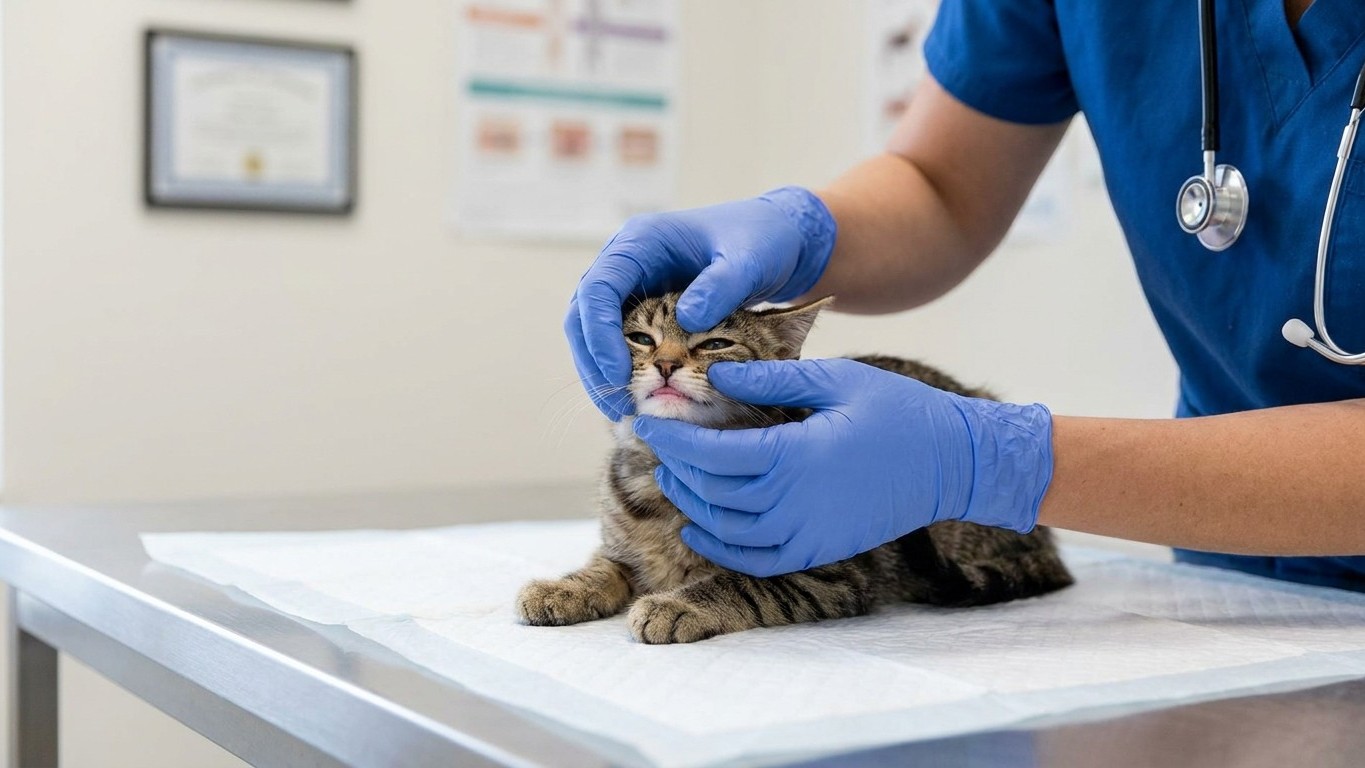
Reaching for a flea pipette the moment you spot fleas on a kitten feels like the obvious rescue move. But vets faced with a flea-ridden eight-week-old often put the pipette down and pick up something else first: a weighing scale, and a good look at the kitten’s gums. That’s because a tiny, eight-week-old kitten only has about a few tablespoons of blood in its entire body, and it doesn’t take a massive swarm of fleas to cause severe damage. Before anyone thinks about killing the fleas, the real question is whether this kitten has enough blood left to survive the day.
Key takeaways
- An eight-week kitten has only a few tablespoons of blood—enough for fleas to cause critical anemia
- Most over-the-counter flea treatments aren’t even licensed for kittens this young or small
- The wrong flea product can cause more damage than the fleas themselves
The gum check that comes before the flea killer
Fleas are obligate blood feeders, and a kitten this small simply doesn’t have the reserves to shrug off a heavy infestation the way an adult cat might. Fleas drink blood, and a heavy infestation can drain enough from a small kitten to cause anemia, which is exactly why flea problems in young kittens are treated as urgent rather than something to watch and wait on. A vet’s first move is almost always a physical exam: pressing on the gums to check colour and capillary refill, feeling for a weak pulse, checking how alert the kitten actually is. Severe flea infestations can lead to flea anaemia in kittens, with signs including lethargy, weakness and pale gums, and it’s important to seek urgent veterinary care if you notice these signs.
Only once that picture is clear does the conversation turn to which flea product to use, and at what dose. It sounds almost backwards, treating the consequence before the cause, but a kitten in the grip of anaemia can be tipped into a genuine crisis by the wrong intervention at the wrong moment. Vets will often recommend a quality diet with the proper vitamins and minerals to help the anaemia, and in severe cases the kitten may require a blood transfusion. That’s a world away from a five-minute pipette job at the kitchen table.
Why the pipette itself can be the wrong tool
Here’s the part that catches out well-meaning owners: most over-the-counter spot-on treatments simply aren’t licensed for a kitten this young or this small. Most licensed flea treatments are not safe for very young kittens, and the minimum age for topical spot-on treatments varies by product, with some usable from eight weeks while others aren’t licensed until twelve weeks or older. Weight matters just as much as age. Kittens under roughly 1kg may not tolerate standard doses of flea medications, and even products approved for older kittens may need adjusted dosages to prevent overdose.
Then there’s the ingredient trap that catches out far too many owners each year, especially those who reach for whatever’s already in the cupboard. A flea and tick preventive designed for dogs should never be used on a kitten or cat, because dog products often contain ingredients cats’ bodies can’t process, and even where the active ingredient matches, the concentration in dog products is likely much higher, risking poisoning. Products containing permethrins or pyrethrins should never go anywhere near a cat, since these ingredients are toxic to them. I’ve heard of more than one heartbreaking case where a half-used dog pipette, applied out of desperation, did far more damage than the fleas ever would have.
Vets sometimes reach for a different, faster tool entirely while they work out the safest longer-term plan. Capstar, an over-the-counter oral tablet containing nitenpyram, is labelled for kittens four weeks and older weighing at least two pounds, and starts killing adult fleas within about thirty minutes, making it useful for a sudden infestation. It’s a knockdown option rather than a preventative, buying time and killing the current burden of fleas without exposing an already stressed kitten to a full-strength spot-on before it’s ready.
What actually happens once the kitten is stable
Once the anaemia risk has been assessed and, if needed, treated, the flea conversation restarts properly. Vets generally recommend starting flea treatment when kittens reach eight weeks of age, since this ensures the kitten’s body is mature enough to handle the ingredients in flea medications safely. But age alone isn’t the whole story. Some flea treatments aren’t appropriate for kittens younger than eight weeks, while others aren’t appropriate under twelve weeks, so the product chosen has to match the kitten’s exact age and weight.
Fleas rarely travel alone, either. A kitten with fleas should also be checked and treated for tapeworms, which fleas carry. That’s usually rolled into the same appointment, alongside advice on the house itself, since the fleas biting your kitten are the minority; the eggs, larvae and pupae lurking in carpets and bedding are the majority. Fleas live in the environment far more than on the kitten itself, so bedding needs washing in hot soapy water and furniture and carpets need thorough vacuuming, or the infestation simply returns.
If you’re ever checking a kitten yourself before you can get to a vet, skip the guesswork and do the paper towel test: comb out some of the dark specks in the fur, dab them onto a damp white paper towel, and watch what happens. Those dark specks are flea dirt, and if they turn rusty red on the damp towel, that’s digested blood and a sure sign of fleas. It won’t tell you how anaemic your kitten is, but it confirms what you’re dealing with in under a minute, while you make that phone call to the surgery that matters far more than any pipette in your kitchen drawer.
Sources : petco.com | nexus-pets.com