
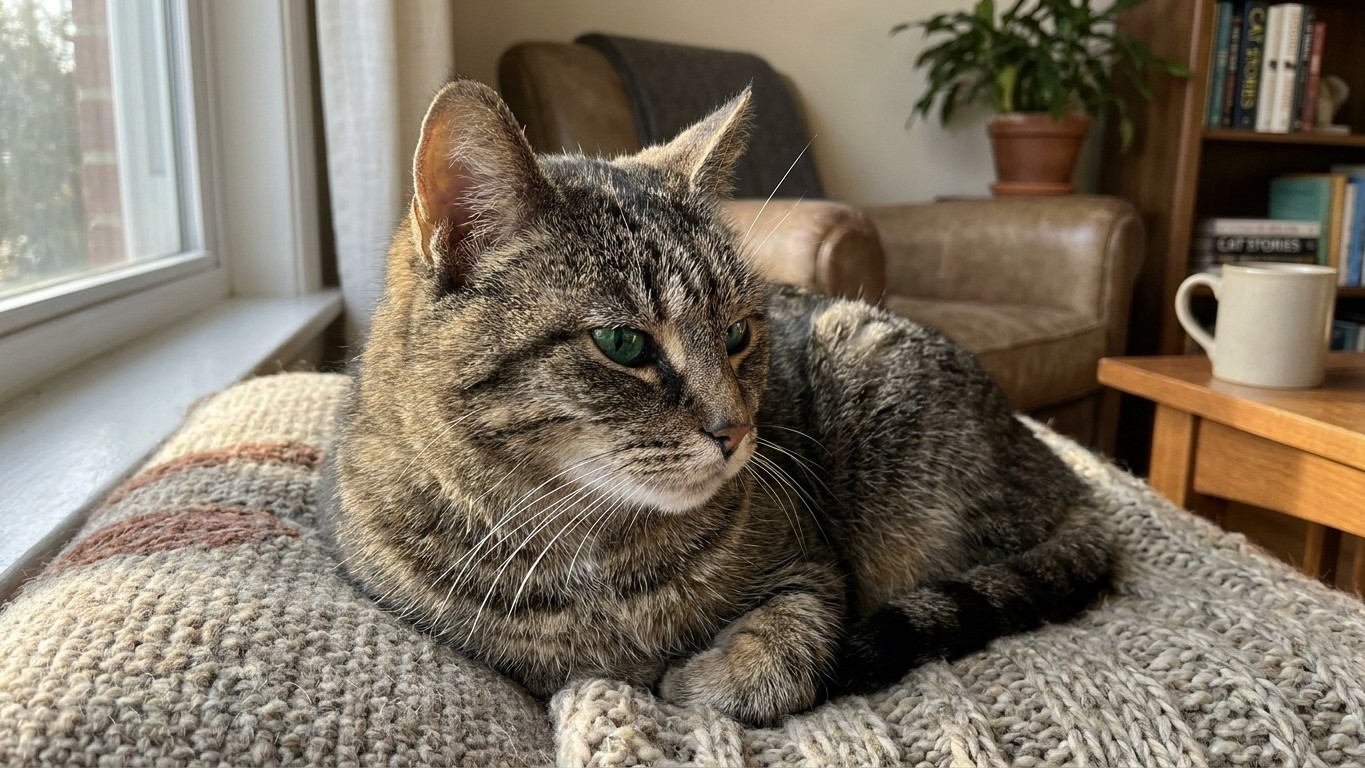
Eleven years old doesn’t sound old at all, does it? For a cat, though, that number translates to roughly 60 in human terms, which puts her firmly in her own retirement bracket. Cats are considered senior when they are 11 years old, which is about 60 in human years. That’s the sort of fact vets deliver gently, usually while running a hand along a cat’s ribs during a routine check-up, and it tends to land like a small shock for owners who still picture their pet as barely out of kittenhood.
What catches most people off guard isn’t the total, though. It’s how lopsided the maths actually is. Ask any vet nurse and they’ll tell you the first twelve months of a cat’s life do more heavy lifting than any other single year that follows.
Key takeaways
- The old ‘multiply by seven’ rule is a myth—the real maths is far more interesting and unequal
- A cat’s first year alone accounts for 15 human years, while the second adds 9 more
- Once cats hit 11, veterinary care shifts dramatically—and it’s not because they’re ancient
Why the first year counts for so much
Forget the old “multiply by seven” rule your parents probably told you. That figure was borrowed from dogs, and even for dogs it’s shaky. The widely accepted idea that one year of a cat’s life is equal to seven human years is actually a myth, which originates from the idea that one human year equals seven dog years, which is also a myth. The reality, thankfully, is better documented and rather more fascinating.
Veterinary bodies including the American Animal Hospital Association back what’s sometimes nicknamed the “15-9-4” rule. The first year sees 15 cat years accumulate, followed by nine more in year two, before the rate settles to roughly four cat years for every calendar year after that. Put another way: the first year of a cat’s life is equal to approximately 15 human years, the second year adds an additional nine human years, and after that each additional year is equal to about four human years.
Do the sums and an eleven-year-old lands at roughly 60, which is exactly why that surgery visit felt like such a wake-up call.
That first year alone is doing the work of a decade and a half in twelve short months. A kitten goes from blind, wobbly newborn to something resembling a moody teenager in less time than it takes most humans to finish secondary school. One vet interviewed by Daily Paws summed it up rather brilliantly: “The first year is the terrible twos and the teenage years in one year.” Skeletal growth, teeth coming through, hormonal surges if they’re not neutered early, personality forming, all of it compressed into one frantic sprint. After that, growth slows to more of a jog, then eventually a gentle stroll.
Spotting the clues without a birth certificate
Plenty of cats, particularly rescues, arrive without any paperwork at all, so vets rely on physical detective work instead. Teeth are usually the first port of call. Yellow tartar stains on a few teeth can suggest a cat is one or two years old, staining across all teeth points to somewhere between three and five, while missing teeth are usually a sign of a respectable senior between 10 and 15 years of age. The eyes tell their own story too, as the lens can help pin down age, with senior cats sometimes showing iris degeneration or a slight cloudiness developing over time.
None of this is exact science, mind. Genetics, lifestyle and sheer luck all play their part, which is why vets always treat these signs as clues rather than certificates.
What actually changes at 60-in-human-years
This is where the age chart stops being a fun bit of trivia and becomes genuinely useful. Major veterinary bodies now split feline life into clear brackets, and eleven sits right at a meaningful threshold. The kitten stage runs from birth up to one year, young adult from one through six, mature adult from seven to ten, and senior is classed as anything over ten. Once a cat crosses into that senior bracket, the advice on care shifts noticeably. Senior cats are prone to conditions like arthritis, kidney disease and hyperthyroidism, so regular veterinary check-ups and early detection diagnostic tests become genuinely important.
Frequency of vet visits should shift too. Senior cats between 10 and 15 years old should have checkups a minimum of every six months, while cats over 15 should be seen every four months.
None of this means panic. A super-fit eleven-year-old moggy can still act like a cat half her age, and plenty of vets will use their own judgement rather than sticking rigidly to a number. As Banfield Pet Hospital points out, a super healthy 11-year-old cat may be treated more like a “mature adult” than a “senior,” and it’s ultimately down to the owner and vet working together to make the best call. Still, the label is a useful prompt. It nudges owners towards watching for the subtler signs that cats are famously good at hiding, things like drinking slightly more water, a bit of stiffness after a long nap, or simply choosing the sofa over the windowsill more often than she used to.
Making the most of the years ahead
Here’s the genuinely cheering part. Eleven is no longer anywhere near the finish line. The average lifespan of a cat sits at around 12 to 15 years, with purebred cats averaging about 12.5 years and crossbred cats often reaching closer to 14, and plenty of well-cared-for cats sail comfortably past that. Indoor living helps enormously too, since indoor cats typically enjoy a longer lifespan because they avoid the dangers faced by cats who roam outside.
A senior cat diet, twice-yearly vet visits, keeping an eye on weight and joint mobility, and simply paying attention when something feels “off” can add genuinely good quality years, not just extra time on the clock. Next time someone tells you their cat just turned eleven, resist the urge to say “that’s not old.” In cat years, she’s already lived a full adult life and is settling nicely into her sixties, slippers and all.
Sources : cattybatty.blog | purina.com