
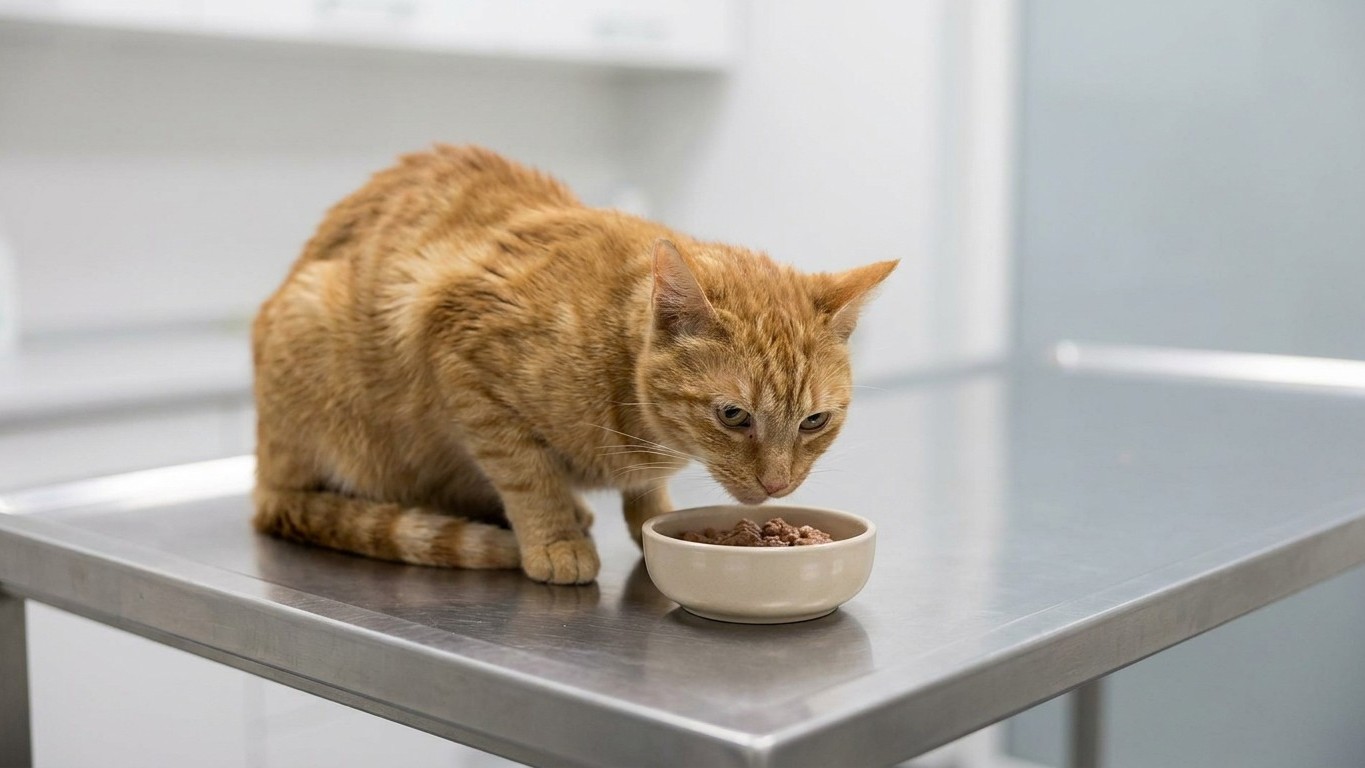
Two full bowls of food felt like the kindest thing in the world to offer a cat who’d clearly been starving for weeks. It very nearly killed him. What almost every well-meaning rescuer doesn’t realise is that refeeding syndrome, not hunger itself, is the biggest danger facing a severely malnourished cat in the first few days after rescue.
The condition sounds almost paradoxical. A cat who’s been deprived of food for weeks arrives skeletal, weak, barely able to stand, and the instinct is to get calories into him as fast as possible. But a critical complication is refeeding syndrome, a potentially fatal metabolic disturbance that occurs when food is reintroduced too quickly, and rehabilitating a starving cat is a delicate balancing act. The danger window is precise, too: a dangerous drop in blood electrolyte levels typically appears within 24-72 hours of feeding, and can have devastating consequences. Forty-eight hours in, right when everyone assumes the worst is over, the real crisis often begins.
Key takeaways
- A starving cat’s body undergoes radical metabolic changes—and suddenly feeding him normal meals triggers a dangerous chain reaction that can happen within 48 hours
- Phosphorus crashes, red blood cells fail, kidneys shut down, and the cat needs emergency blood transfusions—yet this complication is almost never anticipated by well-meaning rescuers
- The secret to survival isn’t generous bowls of food—it’s tiny portions, constant blood monitoring, and a patience most people don’t realize could be the difference between life and death
Why food becomes the enemy
During prolonged starvation, a cat’s body shifts into survival mode. Metabolism slows, organ systems run on minimal reserves, and the body starts burning fat and muscle instead of the carbohydrates it would normally rely on. The body is amazingly adaptable, and when it is deprived of food, metabolism slows down, decreasing the energy needed to run the body’s basic needs, and the functional reserve of most organ systems is reduced. Crucially, during starvation, the body shifts from using protein as the main energy source to using carbohydrates.
Feed that cat a normal, calorie-dense meal and everything reverses violently. The sudden influx of glucose triggers a surge of insulin, and that insulin drags essential minerals, phosphorus, potassium and magnesium, out of the bloodstream and into cells all at once. The increased intracellular requirements related to energy metabolism, as well as the sudden release of insulin, cause electrolytes, particularly phosphorus, potassium and magnesium, to leave the bloodstream and quickly reenter the cells. The result is a bloodstream suddenly starved of the very minerals the heart, lungs and red blood cells need to function.
Phosphorus is the real villain here. In response to anabolism and heightened by the release of insulin, cellular uptake of phosphorus and inorganic phosphates occurs, leading to hypophosphatemia, and phosphorus is required for the synthesis of ATP, DNA, RNA, proteins and glucose phosphorylation. Without enough of it circulating, red blood cells start to fail structurally. Phosphorus depletion leads to a reduction in erythrocyte ATP concentration, failure of actin and myosin, altered erythrocyte membrane lipids and consequently, hemolytic anemia. This isn’t a rare, freak reaction, either. In veterinary human medicine parallels, the pattern was first properly understood after a horrifying historical lesson: in the human world, starving people have died after suddenly gaining access to food, and not until the liberation of Holocaust victims in World War II did we finally realise that refeeding small amounts of food would prevent further disaster.
What this actually looks like in a rescued cat
A retrospective study of eleven cats treated for refeeding syndrome across four UK and international referral hospitals gives a sobering picture of how serious this gets. Eleven cats were identified, which had been missing for a median of 6 weeks, with a range of 3 to 104 weeks. Every single one lost dramatic amounts of body condition beforehand: mean percentage weight loss was 46% ± 7%. Once refeeding began, the electrolyte crash was near universal. Eight of 11 cats developed hypophosphataemia with a mean drop in phosphorus of -47%, and all cats were documented to be hypokalaemic.
The anaemia that follows can be severe enough to need transfusions. All cats became anaemic and seven cats required a blood transfusion. Kidneys take a hit too, with six cats developing acute kidney injury. One documented case involved a cat missing for twelve weeks who, after starvation-related weakness resolved, unexpectedly developed dangerously low blood sugar as a complication of refeeding, something researchers noted a complication common in people but not previously reported in a cat at the time. The good news buried in all this frightening physiology: cats with refeeding syndrome appear to have a good prognosis, but prolonged intensive care is required. In that same eleven-cat study, eight cats survived to discharge after a mean of 14 ± 4 days of hospitalisation.
The right way to refeed a starving cat
None of this means starving cats shouldn’t eat, obviously. It means how and how much Matters More Than speed. Veterinary guidance is consistent on the sequence: stabilise first, feed second, and feed small. Initial stabilisation may involve intravenous fluids to correct dehydration and electrolyte imbalances, alongside anti-nausea medication and pain relief where necessary. Only once that groundwork is laid does controlled feeding begin, and it starts painfully small by design. Controlled refeeding is the most crucial and potentially dangerous part of recovery, involving small, frequent meals of highly digestible, easily absorbed food, with the initial caloric intake very low and gradually increasing over several days or weeks. One documented recovery from hepatic lipidosis saw feeding begin at just a fifth of the cat’s calculated energy requirement, only reaching full intake after five carefully monitored days.
Blood testing throughout isn’t optional extra caution, it’s the whole point. The cat’s response to refeeding must be closely monitored, with regular blood tests necessary to track electrolyte levels and organ function, and the feeding plan adjusted based on progress and any signs of refeeding syndrome.
If you ever pull a cat out of a starvation situation, the instinct to fill him up feels like love, but resist it. Ring an emergency vet the same day, describe exactly how long the cat’s likely been without food, and let them run bloods before deciding on a feeding plan. Vets typically use recovery diets fed little and often rather than the two generous bowls that feel so satisfying to put down. That cat’s survival depends far less on how much food he gets in the first hour, and far more on how carefully his blood chemistry is watched over the following week.
Sources : tandfonline.com | pmc.ncbi.nlm.nih.gov