
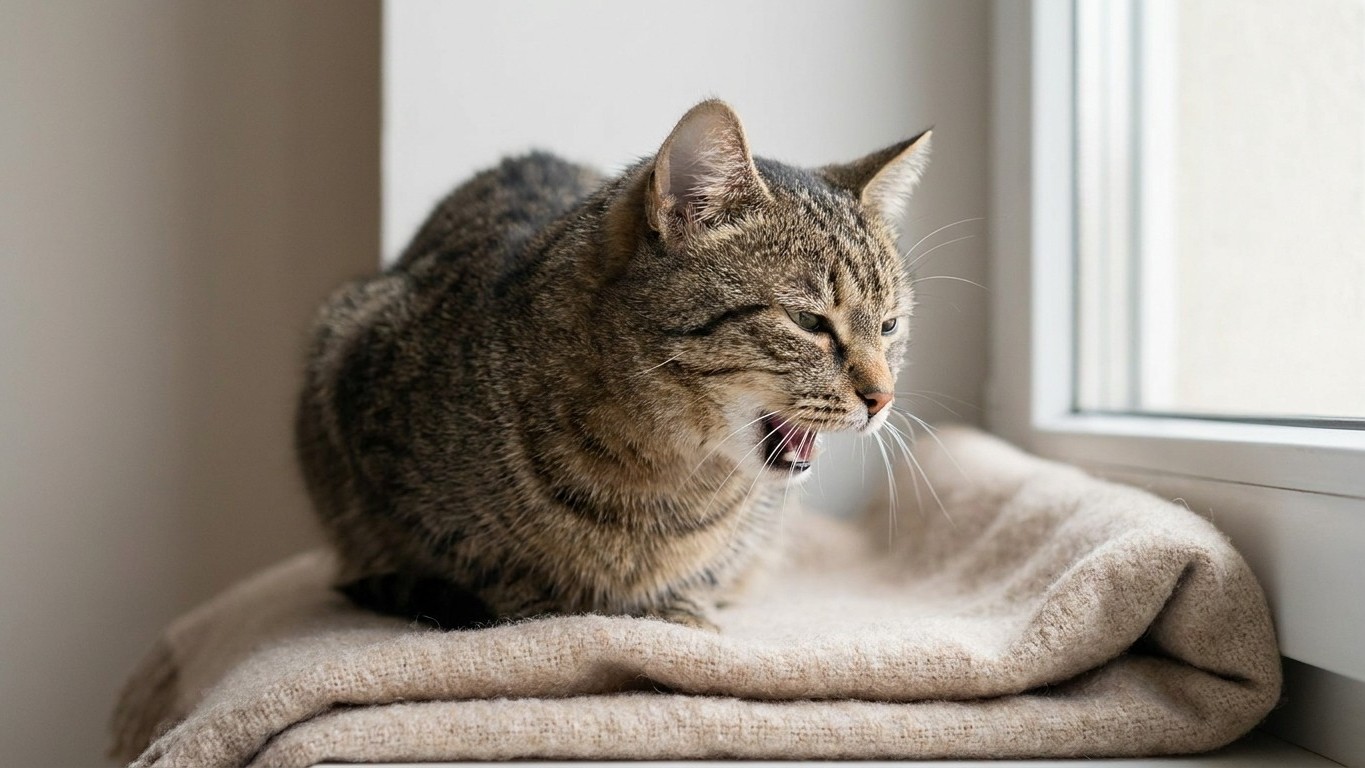
A cat coughing dry for weeks isn’t always about hairballs. Reach for the malt paste, wait for the retch and the little sausage of fur to appear, and you might be treating nothing at all while the real culprit sits quietly in your cat’s lungs. Lungworm infection is a relatively common and under-appreciated cause of chronic respiratory problems like coughing in cats. And the trigger often has nothing to do with grooming and Everything to do with what your cat gobbled up in the garden after a downpour.
Slugs and snails come out in force once rain has softened the soil, and that’s precisely when curious or hungry cats are most likely to pick one up, or eat something that already has. Aelurostrongylus abstrusus is a cat lungworm that is distributed throughout Europe, and wild felid species, such as the Eurasian lynx and the wild cat, are susceptible to infection. Domestic moggies are no exception, and Britain’s damp climate makes it a genuine year-round risk, not some exotic import.
Key takeaways
- What looks like a harmless hairball cough could be something far more serious hiding in your cat’s lungs
- A single rainy day in the garden might expose your cat to parasites that develop silently over weeks
- The standard treatments you’ve relied on could be masking a condition that worsens without proper intervention
How a slug ends up living in a cat’s lungs
The life cycle reads like something from a horror film, but it’s simply clever biology. An infected cat coughs up larvae, swallows them, and ultimately eliminates them in faeces. In the environment, snails and slugs ingest the L1 larvae, and inside these molluscs, the larvae develop into the infectious L3 stage. Your cat rarely needs to eat a slug directly, though some do. Far more often, infection arrives via a middleman.
Cats mainly become infested through ingestion of intermediate hosts, snails and slugs, but also paratenic hosts such as frogs, cockroaches, birds, or rodents. A mouse that nibbled a slug, a bird that pecked at one, even a lizard, can all pass the larvae straight on to your cat’s lungs once eaten. Free-roaming cats are the most affected, which makes sense given how much more scavenging and hunting opportunity they have compared with a cat that never leaves the sofa. That said, an indoor cat can get lungworm if they eat an infected rodent, snail, or slug that comes inside the house, but this is unlikely with good pest control.
Temperature matters too. The biological cycle in the intermediate host is influenced by environmental temperature, with a higher rate of larval development observed at warmer temperatures. That muggy, humid spell after summer rain, warm ground, damp air, isn’t just good slug weather. It’s good lungworm-development weather as well, which is exactly why cases tend to cluster after those conditions.
Why it looks exactly like a hairball, or asthma, or nothing at all
Here’s the frustrating bit for cat owners: the symptoms overlap almost perfectly with things we already worry about. Lungworms in cats can be tricky to diagnose because the symptoms can look like other diseases such as asthma, heartworm disease, bronchitis, and pneumonia. A dry, repetitive cough that produces nothing gets blamed on fur balls for weeks because that’s the familiar explanation, the one every cat owner has seen before.
The clinical picture ranges enormously. Signs range from moderate coughing with slightly increased breathing rates to severe, persistent coughing, labored breathing, and respiratory distress or failure, though infections with no visible signs can also occur. Some unlucky cats show almost nothing until the burden of worms is significant. Cats with fewer than 1,600 L3 larvae may show no clinical signs at all, while those infected with more than 1,600 can develop symptoms after around five weeks, typically chronic coughing, difficulty breathing, and weight loss.
It’s not just cats affected either. Related lungworm nematodes live in the bronchi and pulmonary tissue of European hedgehogs, which regularly eat slugs and snails and are highly susceptible to the resulting respiratory disease, pneumonia, and even death. If you’re seeing wheezy hedgehogs in the garden after rain, the same molluscs are likely responsible.
Getting a proper diagnosis, and why it’s worth the fuss
Because the symptoms mimic so many other conditions, guesswork isn’t good enough. Vets rely on specific tests rather than a stethoscope alone. Infection is confirmed by demonstrating the first-stage larvae in the faeces, which can be performed by faecal flotation, though morphological characteristics matter for accurate identification. Because shedding of larvae can be patchy, examination of fresh faecal samples within a 3-7 day period is recommended rather than relying on a single sample that might simply miss the larvae by chance.
Imaging helps build the full picture too. Radiography may reveal a diffuse interstitial pattern with focal peribronchial densities, and an alveolar pattern may appear in severe cases. Blood work often gives a clue as well, since haematology may reveal eosinophilia, a raised count of the white blood cells the body deploys against parasites.
The encouraging news is that treatment usually works well once the diagnosis is nailed down. If your cat has lungworms, the prognosis with treatment is usually excellent, though it depends on the amount of lung damage as well as the age and health history of the cat. Left untreated for too long, though, the outlook shifts. Kittens and cats with compromised immune systems are at the highest risk for developing issues, and chronic infections can cause significant inflammation in the lungs, leading to irreversible damage. In rare, severe cases the consequences go well beyond the lungs themselves. One reported case involved a kitten diagnosed with parasitic bronchopneumonia caused by A. abstrusus, complicated by severe pulmonary hypertension and right-sided congestive heart failure that led to the animal’s death. That’s an extreme outcome, but it illustrates why a “just a hairball” cough shouldn’t be left to run its course indefinitely.
Prevention leans heavily on limiting hunting and scavenging. Cats should not be allowed to hunt to prevent ingestion of the intermediate hosts, or more likely the transport hosts. For cats that simply won’t stop bringing home slimy trophies, having your cat’s faeces checked every six months for parasites is a good alternative, alongside a proper conversation with your vet about parasite control products that cover lungworm specifically, since not every standard wormer does. If your cat has had a dry cough for more than a week or two, skip the hairball paste and book the appointment instead. The stethoscope, and a stool sample, will tell you far more than guesswork ever could.
Sources : criticalcaredvm.com | wagwalking.com