
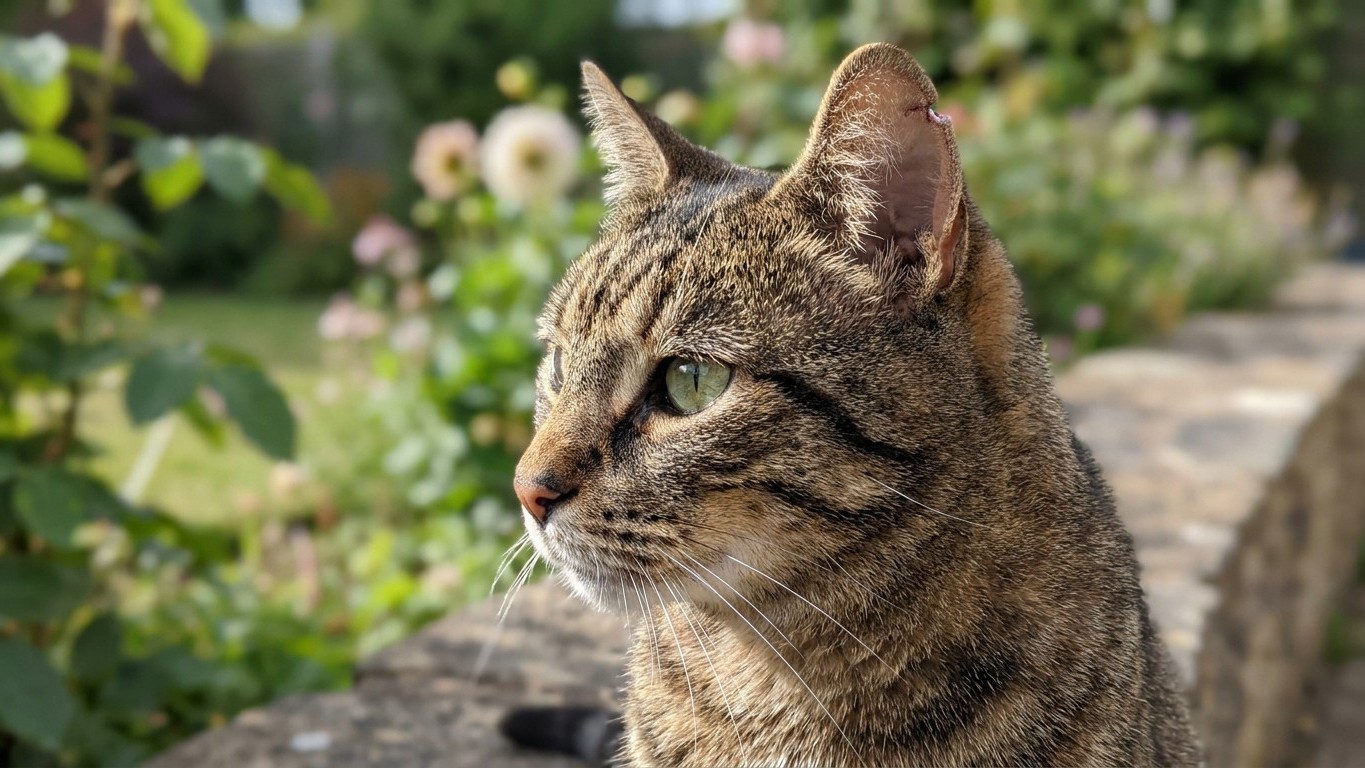
That tiny triangular nick in your neighbour’s rescued cats isn’t a battle scar at all. It’s called ear-tipping, and it’s the internationally recognised sign that a cat has already been neutered, vaccinated and returned to the streets as part of a Trap-Neuter-Return (TNR) programme. Far from being careless or cruel, your neighbour is following one of the most respected humane practices in modern animal welfare, and he’s almost certainly saving several cats from unnecessary stress by doing it.
Key takeaways
- A tiny ear notch signals something surprising about your neighbour’s rescue activities
- This practice originated in Britain decades before the rest of the world caught on
- One simple mark prevents an animal from undergoing unnecessary surgery twice
What that little notch actually means
The mark is deliberately simple: a small straight-line cut removing roughly a quarter of an inch from the very tip of one ear, done under general anaesthetic while the cat is already sedated for spaying or neutering. The RSPCA recommends the removal of part of the left ear by a straight cut, 6mm (1/4″) from the tip. Some branches describe a slightly larger margin. Eartipping, where 7-8mm of their left ear flap is removed whilst under anaesthetic, is an internationally recognised mark to show which cats have received treatment and so don’t undergo the stress of trapping again. Either way, the principle is identical across the country: one glance from a garden fence tells a rescuer or trapper everything they need to know, no chasing, no re-catching, no second anaesthetic required.
It’s worth distinguishing tipping from notching, because people often confuse the two. The ear notch looks like a small V cut out of the side of the ear, while the tip of the ear is removed in tipping. Rescue organisations across the world have largely abandoned the notch in favour of the tip for one practical reason. An ear-notch looks like a tear but is harder to identify because it could be mistaken for an injury from fighting. A clean, straight cut removing the very point of the ear reads unmistakably as surgical from twenty feet away; a jagged little V does not. That’s precisely why your neighbour’s cats all carry the same neat line rather than a ragged nick, and why nobody should mistake it for the aftermath of a scrap over territory or a female in season.
Why Britain got there first
This isn’t some imported American fad, either. The whole non-lethal management movement for feral colonies has surprisingly deep roots on this side of the Atlantic. The British were the first to accept the humane, nonlethal management of feral colonies. A committee of scientists and humane educators established a policy almost three decades ago. That early groundwork fed directly into organised feral cat neutering here, with dedicated charities forming specifically to tackle colony management through sterilisation rather than culling. Even the wider TNR method itself traces back to British soil. Trap–neuter–return, the roots of which extend to 1950s England, introduced a new method to manage unowned, free-roaming or feral cat populations without lethal means, one that has since spread to multiple countries around the globe. So when your neighbour turns up with another notch-eared moggy, he’s part of a lineage that started in this country decades before “TNR” became a recognised acronym.
Why this matters more than a cosmetic detail
The real value of ear-tipping isn’t just tidiness, it’s welfare at a population level. A neutered cat can never contribute to another litter of unwanted kittens, and the visible mark prevents well-meaning rescuers from trapping the same animal twice, subjecting it to needless sedation and surgery it’s already had. There are knock-on benefits too, and they’re not trivial. Neutering cats, as well as stabilising the population, stops fighting, yowling and other noise associated with mating, the foul odour caused by males spraying to mark territory disappears, and the cats, no longer driven to mate, roam much less. The cats themselves are healthier and less likely to spread feline diseases, while rodent control is maintained by the cats’ continued presence. that fixed colony down your street is quietly doing pest control for free while causing far less nuisance than an unmanaged, breeding one would.
Compare this to the alternatives that rescuers tried and rejected before settling on the ear tip. Collars sound sensible until you consider the risks. Eartags can cause infections, fall off, or tear a cat’s ear, while collars could get too tight as cats grow, get caught on something and injure the cat, or just fall off. Tattoos are equally impractical for a wild animal you can’t easily handle. Tattooing is not effective because the tattoo is not visible until cats are trapped and anesthetized. Against all of these, a visible surgical mark performed once, painlessly, under the same anaesthetic as the spay or neuter itself, wins on every measure of practicality and welfare.
What to actually do if you spot one
If you come across a cat with this mark yourself, in your garden, behind the bins, wherever, the guidance from welfare charities is consistent: leave it be, unless it looks genuinely unwell or injured. It’s already done its bit for local cat welfare and doesn’t need rescuing from itself. If you’re feeding a colony and a newcomer turns up without the tell-tale notch, that’s your cue to contact a local TNR group or your nearest RSPCA branch rather than attempting to trap the animal yourself with no experience of humane traps or aftercare. And if you’re ever unsure whether a mark on a cat’s ear is a tip, a notch, or an actual injury, that’s exactly the kind of judgement call worth leaving to a vet. A quick check can rule out infection or a genuine wound that needs treating, something a torn ear from a real fight often does. Your neighbour’s growing gallery of notch-eared rescues isn’t eccentricity. It’s quiet, unglamorous conservation work happening one back garden at a time.
Sources : cat-world.com | petcareshed.com.au