
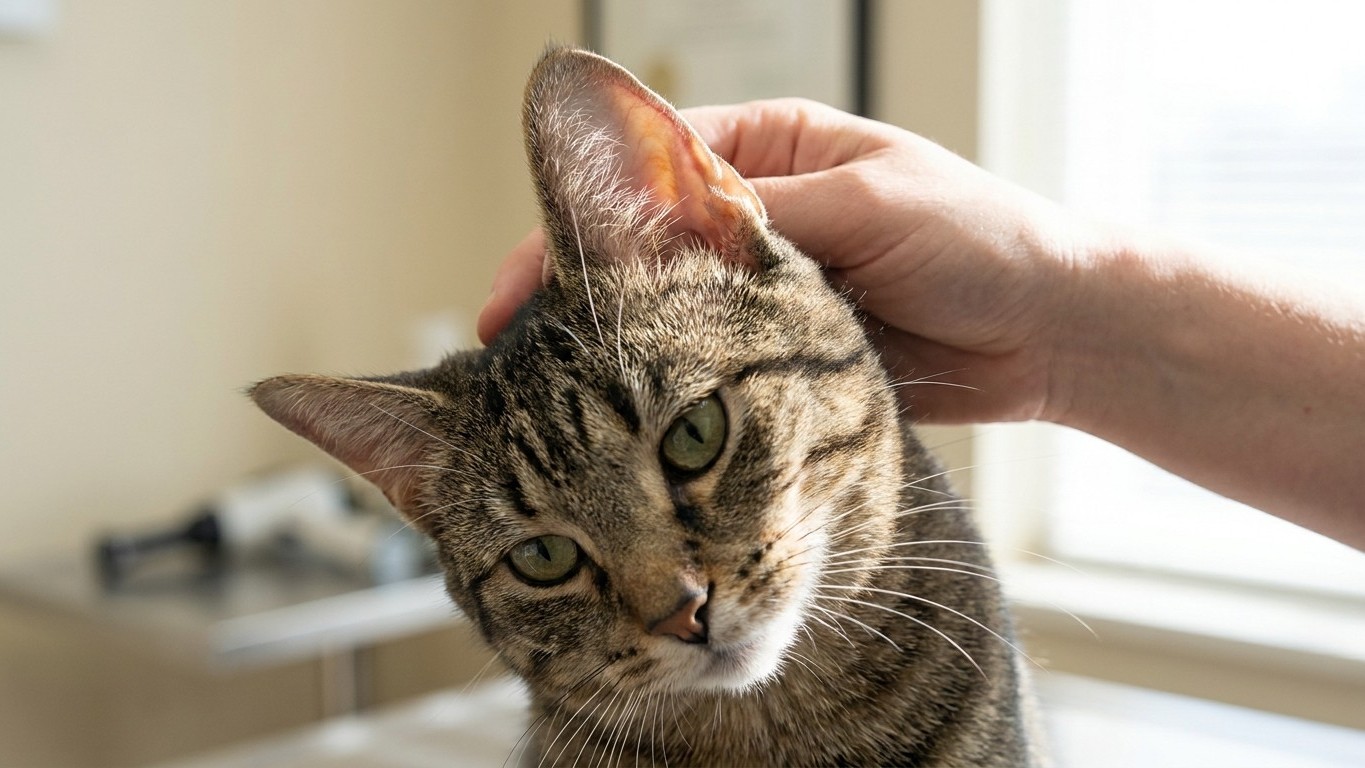
Doubling up on a flea pipette because a cat won’t stop scratching is one of the most understandable mistakes a cat owner can make, but it’s also one that misses the point entirely if the itching has nothing to do with fleas at all. If you spot orange-brown, gritty debris tucked into the folds of your cat’s ears rather than fleas or their droppings on the skin, you’re very likely looking at ear mites, a completely different parasite that no spot-on flea pipette is designed to treat at that dose or frequency.
Key takeaways
- What looks like persistent flea scratching could actually be microscopic ear mites leaving behind distinctive debris
- Doubling up on flea pipettes doesn’t solve the problem and risks serious overdose symptoms in cats
- A five-minute vet visit with an otoscope reveals the truth—and prevents weeks of suffering and misguided treatment
Why more flea treatment doesn’t touch the real problem
Scratching is a maddeningly nonspecific symptom. It can mean fleas, but it can equally mean allergies, skin infections, or ear parasites, and cats are frustratingly bad at pointing to exactly what’s bothering them. Reaching for a second pipette out of frustration feels proactive, but vets are firm that this isn’t how these products work. Reapplying early isn’t recommended unless the product label or a vet specifically says it’s safe, because doubling up can increase side effects and risk overdose. The medication is dosed by weight and formulated to last a set number of weeks, so an extra dose doesn’t make it stronger or faster, it just adds more chemical exposure than your cat’s body is built to handle.
The symptoms of overdosing are genuinely unpleasant to witness. Using too much flea medicine can cause overdose signs such as drooling, vomiting, skin irritation, tremors, weakness, or seizures. One veterinary product datasheet lodged with the UK’s own regulator is blunt about the limits here too: in the absence of additional safety studies, the product should not be repeated at intervals of less than 4 weeks. Cats aren’t small dogs, either, and their liver processes certain compounds far less efficiently, which is why vets tend to react strongly whenever a double dose comes up. Cats are exquisitely sensitive to flea medication and this can really harm them.
What that orange dust actually is
The clue was there in the ear folds all along. Ear mites, scientifically Otodectes cynotis, are microscopic parasites that live inside a cat’s ear canal, feeding on earwax and oils, creating irritation and inflammation. They’re invisible to the naked eye, but the mess they leave behind absolutely is not. Ear mite infestations have a characteristic dark, thick, smelly “ear gunk,” which consists of ear wax and debris, containing live mites, dead mites, mite eggs, and dried blood. That’s the coffee-ground look so many cat owners describe, and it’s genuinely distinct from ordinary wax, which is light brown and smooth in texture.
Don’t assume the colour has to be dark brown or black, either, which is where a lot of confusion creeps in. Symptoms of ear problems in cats include pawing at the ears, sensitivity to touch, and a large amount of cream coloured, orange, dark brown, or black wax. So that orange dust sitting in the folds isn’t some odd variant of normal wax at all, it’s a strong signal that mites have set up camp. Left alone, this isn’t just a cosmetic issue. Over time, untreated ear mites can damage the ear canal and eardrum, leading to chronic ear disease. In more advanced cases, this can progress to rupture of the ear drum and hearing loss.
Telling mites apart from a simple infection
Because bacterial and yeast infections can produce discharge that looks superficially similar, guessing at home only gets you so far. Some bacterial or yeast ear infections produce similar discharge, so confirmation of the presence of ear mites by your cat’s veterinarian is important for proper treatment. A vet doesn’t need to send anything off to a lab to get an answer quickly, though. In many cases, your veterinarian can use an otoscope to directly visualise the mites in your cat’s ear, and if there’s any ambiguity, they’ll use a microscope to positively identify the mites. It’s a five-minute appointment that saves weeks of guesswork and, frankly, saves your cat from unnecessary discomfort.
One detail that catches a lot of owners off guard is just how contagious these mites are. Cats get ear mites from coming into close contact with another animal who has them, and ear mites are highly contagious and spread quickly among housemates, including other cats and dogs. If you’ve got more than one pet under one roof, and one of them is head-shaking and scratching, it’s worth checking the others too rather than assuming the problem is contained to a single cat.
What actually helps, and what to do next
Treatment for ear mites isn’t complicated once it’s correctly diagnosed, but it does need a targeted product rather than a general flea pipette. Vets typically prescribe anti-parasitic medication to kill mites, and because the eggs and mites can linger in fabric, it’s also important to treat all pets in the household and wash bedding and toys to prevent re-infestation. Cleaning the ear itself matters too, since the first step is to clean out the ear and remove the buildup of wax and mites that has accumulated, though this is best done under veterinary guidance so you don’t push debris further down the canal or damage a sensitive eardrum.
If you’ve already doubled up a flea dose before spotting the ear debris, don’t just wait and see how things go. Call your vet with the product name and your pet’s current weight for next-step guidance and mention the ear symptoms in the same conversation, since they’ll likely want to examine both issues at once. As for prevention going forward, a monthly weigh-in for your cat (weight can shift more than owners expect, especially in kittens and seniors) keeps your dosing accurate, and a quick fortnightly peek into the ear folds with a torch costs nothing and catches mites long before the itching starts driving anyone to reach for an extra pipette.
Sources : dialavet.com | 4furbaby.com