
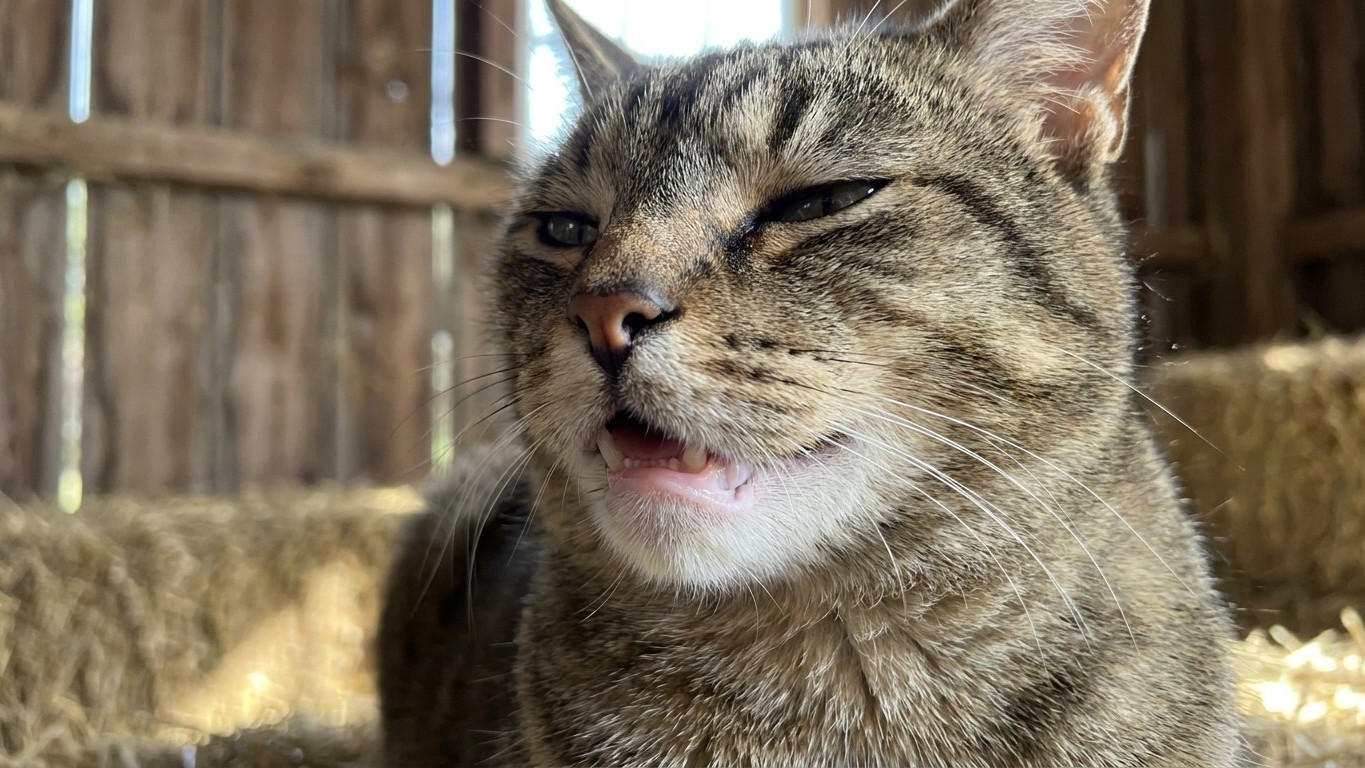
A cat with pale gums and not a scratch on him is not a lucky cat. It’s a cat with a hidden crisis, most likely internal bleeding, and every hour without a vet makes the odds worse. For a barn cat who’s spent two years hunting mice with no trouble at all, the timing of this sudden collapse points straight at the very prey he’s been so good at catching.
Pale or white gums signal that the blood isn’t carrying enough oxygen around the body, either because there aren’t enough red blood cells left (anaemia) or because the blood itself won’t clot properly and is leaking away somewhere the owner simply can’t see, inside the chest, the abdomen, or between muscle layers. No bite mark, no limp, no obvious injury doesn’t mean nothing happened. It often means the damage is happening on the inside, which is precisely why this kind of case frightens vets more than a visible wound ever would.
Key takeaways
- A cat can accumulate lethal doses of rodent poison over months without showing any obvious symptoms
- Pale gums with zero visible injuries point to internal bleeding, but the cause could be poison, parasites, or infection
- The window between crisis and recovery is dangerously narrow—waiting even one day can be fatal
The mouse he ate might have been the poison
Barns and stables are exactly the environments where rodenticides get used most heavily, and that raises the risk of what vets call secondary or relay poisoning. Outdoor cats and cats that live around farms, stables, or vineyards that use rodenticides are at higher risk for secondary poisoning, especially if they continually consume a diet of rodents. The mechanism is almost elegant in its cruelty: anticoagulant rodenticides cause excessive bleeding by interfering with vitamin K1, which is needed for the body to make certain clotting factors that allow blood to clot and help to control bleeding, and decrease vitamin K1 to levels that are too low to produce the needed clotting factors, resulting in uncontrolled bleeding.
A cat doesn’t need to nibble bait pellets directly for this to happen. Secondary rat poisoning in cats occurs when a cat eats a rodent that has already ingested poison, a route of exposure that surprises many owners, and outdoor cats, barn cats, and even indoor cats that catch mice inside the home face this risk, since rodents may carry toxin residues in their bodies that transfer into the cat’s system. The good news, if there is any, is that a single poisoned mouse rarely does the damage on its own. Secondary poisoning is rare because a cat would need to eat many rodents that died from the poison, and it typically occurs after an animal eats several rodents killed by rodenticide over time. Two years of steady hunting in a barn where bait has been laid, however, gives plenty of opportunity for that slow accumulation to build up quietly until one morning the clotting factors simply run out.
Anticoagulants aren’t the only chemical culprit either. Some Nordic veterinary researchers investigating cats poisoned by alpha-chloralose, another substance sometimes used against rodents, specifically studied possible secondary poisoning by cats consuming poisoned mice, alongside the metabolism and excretion of the compound in feline urine. The lesson is the same whatever the poison: a working barn cat effectively becomes an unintended tester of every substance put down for pest control on that property.
Rodenticide isn’t the only suspect
A vet presented with a pale, wound-free barn cat won’t jump to poisoning alone, and neither should we. Blood parasites picked up from fleas and ticks, common hazards for any cat that roams outdoors and tussles with wildlife, can quietly destroy red blood cells over weeks or months. The primary cause of feline infectious anaemia is the bacterium Mycoplasma haemofelis, which spreads through blood-sucking parasites like fleas and ticks, and fights between cats that result in bites can also transmit the bacterium. Crucially, this disease can smoulder unnoticed for a long time. The anaemia experienced by a cat may be mild and may not cause any obvious signs, and many cases go undetected, with some subclinical cats remaining long-term carriers that spread the disease to others. A dip in immunity, an unrelated illness, even the stress of a hard winter in a barn, can be enough to tip a hidden, low-grade infection into a full anaemic crisis, gums turning pale almost overnight with no wound anywhere to explain it.
This is exactly why vets reach for a full blood panel rather than guessing. A reticulocyte count shows whether the body is desperately trying to replace lost red cells, a PIVKA test checks specifically for rodenticide-related clotting failure, and PCR testing can pick up haemoplasma infections that a basic exam would never catch. Distinguishing a chemical emergency from an infectious one changes the treatment entirely, one calls for vitamin K and possibly a transfusion, the other for antibiotics such as doxycycline.
What to actually do this morning
Pale gums in a cat are always an emergency, full stop, no waiting to “see how he does today”. Get him to a vet immediately, and mention every detail: the barn access, the mouse-hunting habit, whether you know of any bait being used on the property, any recent flea or tick exposure. That history genuinely shapes which tests get run first and how quickly a diagnosis, and treatment, can begin.
If poisoning turns out to be the cause, there is real hope when treatment starts fast. Cats presented for treatment before the onset of symptoms have a good prognosis, though the prognosis is poor when treatment is delayed until after the onset of clinical signs. That single fact is worth repeating to anyone who manages a working farm cat: this isn’t a “wait until Monday” situation.
Longer term, the fix isn’t keeping a mouser away from mice, that rather defeats the point of having him. It’s making sure whatever pest control gets used on the property never leaves poisoned rodents lying around for him to find. Bait stations that are properly secured, checking sheds and barn corners for dead mice and clearing them promptly, and asking whoever supplies the rodenticide exactly which active ingredient they’re using, all make a genuine difference. Some farms have switched to trapping in the areas cats patrol most, saving the chemical bait for spots the resident hunter can’t reach. It’s a small adjustment that lets a good barn cat keep doing his job without paying for it with his own blood.
Sources : justcatcafe.com | ncbi.nlm.nih.gov