
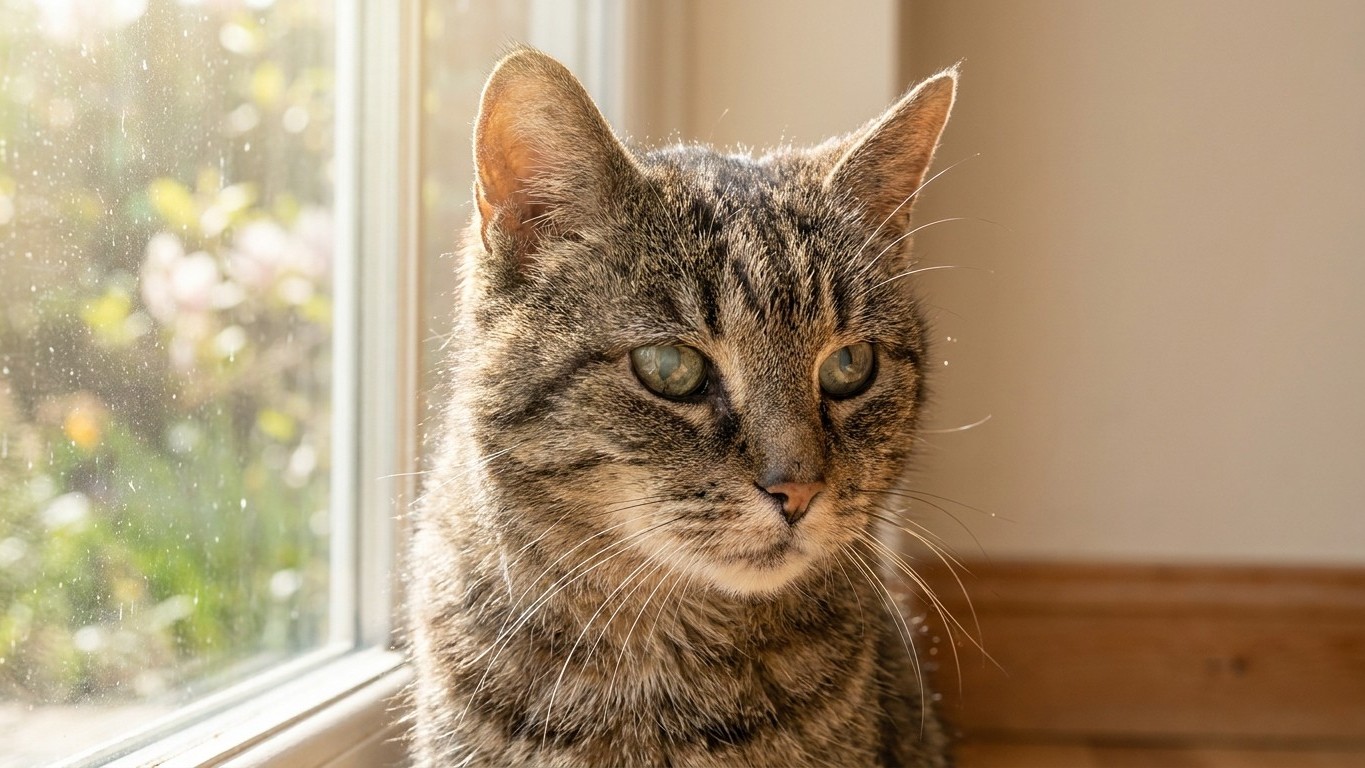
Your cat started doing something new this April. Maybe it’s meowing at the wall at 2am. Maybe it’s drinking more water than usual, sitting hunched by the radiator, or suddenly grooming its belly raw. You’ve probably shrugged it off as a seasonal quirk, a change in the spring light, a passing mood. But vets are increasingly flagging these quiet, easy-to-dismiss behavioural shifts as some of the earliest warning signs of serious conditions, disorders that are eminently treatable when caught early, and devastating when they’re not.
The cruel irony of living with a cat is that cats are stoic creatures. In the wild, showing weakness could make them vulnerable to predators, so they learned to hide signs of illness, and this instinct remains strong even in our homes. Which means that by the time you notice something is obviously wrong, the problem has often been brewing for weeks or months.
Key takeaways
- Cats are masters at hiding illness—by the time you notice something obvious, the problem has been brewing for weeks or months
- A specific cluster of spring behaviors (unusual meowing, water intake changes, hunched posture) is now on vets’ radar as critical early warnings
- One treatable condition mimics dementia so perfectly that many cats are misdiagnosed—and the actual solution is just a blood test away
The “new behaviour” that owners keep dismissing
Spring shifts in light and temperature do cause some cats to become more active or restless. But there’s a specific cluster of changes that vets are flagging right now, and the most commonly missed is a change in vocalisation. Many underlying medical conditions can lead to increased vocalization. Because cats instinctively hide discomfort, sound changes are often one of the earliest signs that something is wrong. A cat that was previously quiet and is now yowling at night, demanding food insistently, or making unusual guttural sounds isn’t being dramatic. It’s communicating the only way it knows how.
Health problems are among the most common causes of sudden vocal changes. Illnesses that alter hormones, increase blood pressure, affect the heart, cause pain, or impact the nervous system can all make cats more vocal. Hyperthyroidism is particularly notorious for this. Hyperthyroidism is one of the most common endocrine diseases in older cats. The thyroid gland produces excessive hormones, speeding up metabolism and causing restlessness, increased appetite, weight loss, and frequent vocalization. Cats with hyperthyroidism often meow more at night and seem unable to settle. Many owners assume they’ve simply got a more demanding cat on their hands. They haven’t.
Hyperthyroidism is the most common hormonal disorder in older cats, typically caused by a benign thyroid tumour that leads to an overactive metabolism. The disease is treatable, cats afflicted with hyperthyroidism usually develop a variety of signs that may be subtle at first but become more severe as the disease progresses — which is precisely why catching it during that quiet, early phase matters so much.
The disorder most owners won’t catch in time
Beyond hyperthyroidism, there is another condition that the veterinary community is paying more attention to: feline cognitive dysfunction syndrome (CDS). Think of it as the cat equivalent of Alzheimer’s, and it is considerably more common than most owners realise. Cognitive dysfunction syndrome is an established condition in cats that shares many similarities with human Alzheimer’s disease, where cognitive decline ultimately results in dementia.
Behavioural changes in aged pets often appear before other signs of illness and can be useful early indicators of a decline in health and welfare. There are many potential causes of these behavioural changes, as diverse as cognitive dysfunction syndrome, hypertension, hyperthyroidism, pain commonly associated with osteoarthritis, and separation anxiety. The problem is that all of these conditions can look remarkably similar on the surface, a cat that seems “a bit off”, and only thorough veterinary testing can differentiate them.
The specific behaviours to look out for in CDS are captured by the acronym VISHDAAL. VISHDAAL describes the behaviours seen in cats with CDS: excessive Vocalisation, alterations in Interactions such as increased affection, changes in the Sleep-wake cycle, House-soiling, Disorientation, alterations in Activity levels, Anxiety, and Learning and memory changes. In practice, this might look like a cat staring at the kitchen wall, forgetting where its litter tray is, or suddenly wanting to be on your lap at all hours when it previously preferred solitude. The most common behavioural changes reported by owners include increased social time with owners, aimless wandering, and staring into space, followed by altered appetite and changes in the sleep/wake cycle.
A 2025 study published in MDPI examining over 500 senior cats found that more than half of the cats had at least one disease diagnosed (54.6%), with the most prevalent conditions being osteoarthritis (18.9%), chronic kidney disease (12.3%), and hyperthyroidism (8.9%). These are not rare conditions, they’re happening in living rooms across Britain right now, quietly and without drama.
Why spring is the moment owners finally notice
There’s a practical reason why April tends to be when owners finally register that something has changed. After months of winter, when cats sleep more and are generally less active, the longer days bring a contrast. A cat that was masking illness through winter lethargy suddenly seems more noticeably “off” against the backdrop of spring energy. Changes can happen over a period of days, weeks, or months, or they can just pop up from one moment to the next. Sudden or abrupt changes are easier to notice. Long-range changes add up over time, usually so slowly we don’t catch them until they’ve made some significant progress.
The signs to take seriously right now include: sudden aggression such as hissing or biting without clear reason; litter box issues including avoiding the box, straining, or frequent trips with little result; appetite changes such as a sudden increase or decrease in food intake; excessive vocalisation especially at night; withdrawal or hiding in unusual spots; changes in grooming such as overgrooming to the point of bald patches or neglecting grooming altogether; and mobility problems such as limping, stiffness, or reluctance to jump.
Kidney disease adds another layer of complexity. Larger litter box clumps and a dull coat are quiet changes that are easy to dismiss, but they can be the earliest signs of kidney disease, one of the most common health challenges in ageing cats. And the timeline on kidney disease is particularly unforgiving: chronic kidney disease tends to progress slowly, often going unnoticed until nearly 70% of kidney function is gone.
What to actually do, right now
The single most useful thing you can do is keep a brief daily log. Keep detailed notes about symptoms, including eating, drinking, and behaviour changes, sharing this information with your vet helps them make an accurate diagnosis. You don’t need a spreadsheet; a note in your phone will do. The pattern matters more than any single incident.
For cats over seven, bloodwork becomes essential. Routine bloodwork and urinalysis, especially for cats over seven years old, can reveal early signs of organ dysfunction long before symptoms appear. Through training and experience, veterinarians may notice subtle signs that a cat is developing a health problem, which is one of the main reasons why veterinary experts recommend twice-yearly wellness examinations for the average adult cat. Annual is the minimum; twice a year for any cat over ten is strongly advised by most vets.
Don’t wait for the obvious. If the behaviour is severe, unusual, or associated with physical changes, contact your veterinarian promptly. Waiting and seeing is never a good idea with cats, as your cat could be quite sick before you notice anything. The very thing that makes cats so self-possessed and independent, that deep instinct to never show weakness, is the thing that makes them so vulnerable to late diagnosis. The earlier a health issue is found, the more options there are for treatment. Cats diagnosed early with kidney disease, diabetes, or thyroid imbalances can live many more healthy years with proper management.
One final thing worth knowing: some behaviours that look like cognitive decline are actually masking treatable conditions entirely. The hunger associated with hyperthyroidism can lead to symptoms often associated with feline cognitive dysfunction, cats will vocalize for food when experiencing that disorder. As these signs stem from a treatable hormonal imbalance, managing the thyroid condition often resolves the dementia-like symptoms. what looks like an ageing brain might simply be an overactive thyroid gland — something a blood test and the right medication can fix. That is worth picking up the phone for.
Sources : pmc.ncbi.nlm.nih.gov | rvsvet.com