
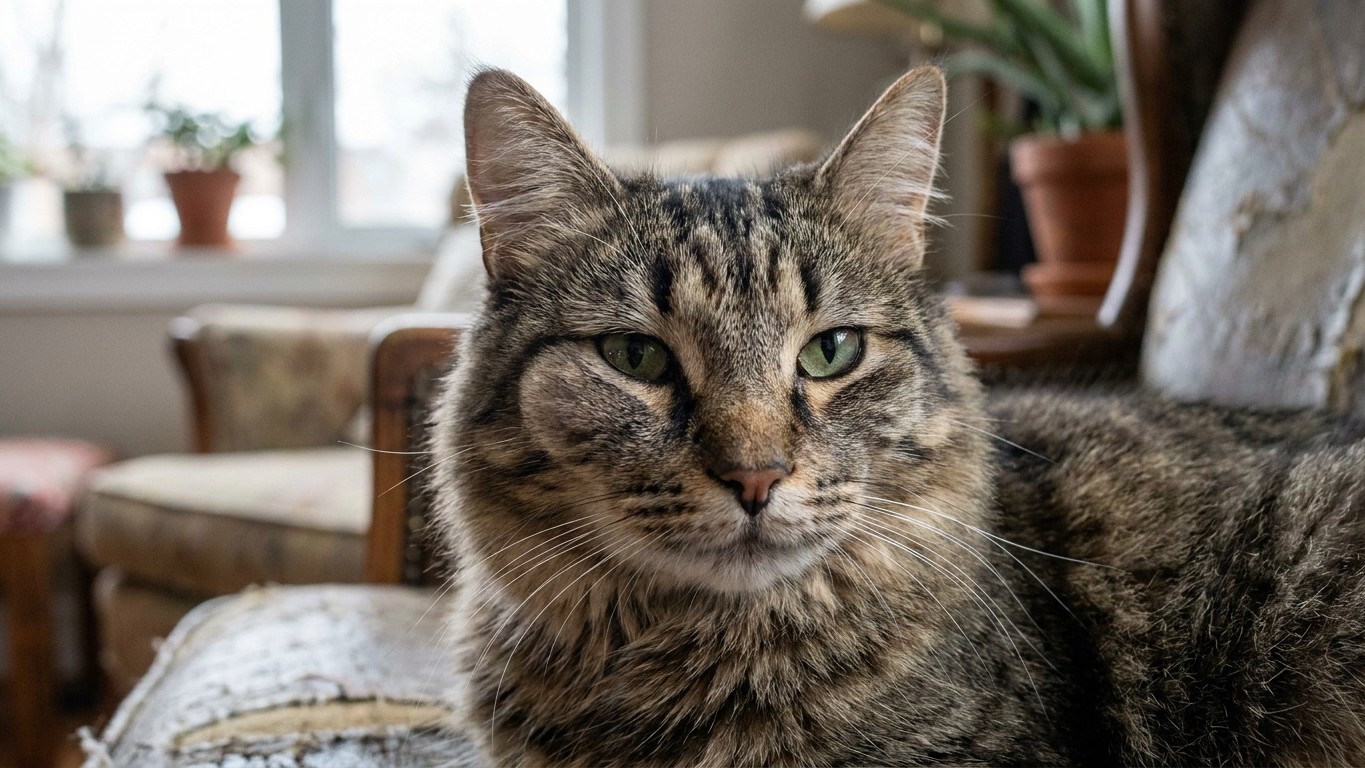
A puffy-faced cat trotting back through the cat flap is one of those sights that stops you cold. The face looks subtly wrong, rounder, softer, one cheek slightly ballooned, and your brain takes a second to catch up with what your eyes are seeing. This is May, the garden is full of life, and your cat has almost certainly just had a close encounter with something in the undergrowth that stung back.
Key takeaways
- Facial swelling from insect stings can trigger anaphylaxis within hours—some cats have less than 120 minutes before it becomes life-threatening
- The difference between bee and wasp stings changes everything about treatment: one leaves a venom-pumping stinger, the other can strike repeatedly
- Your first actions at home in those critical minutes could mean the difference between a quick recovery and an emergency hospital stay
May is prime time for stings, and your cat’s face is the first target
Insect bites and stings are most likely during the spring, summer and early autumn. May sits right at the peak of that opening window. Bees and wasps become active from around April through to October, and by mid-May, wasps are emerging in force, queens waking up, searching for food and suitable spots to start building their nests. Those nests, critically, are often hidden at ground level. You may come across a nest on the ground, in long grass, hedgerows or a compost heap. A cat rustling through a flower bed doesn’t stand a chance of spotting one before it’s too late.
Most cats get bitten or stung on their face or a paw, because they’re usually trying to catch the insect that bites or stings them. That instinct to bat at a buzzing thing, to poke a curious nose into a tuft of grass where something is humming — it’s pure cat, and it almost always ends with the face taking the hit. In most cases, owners won’t actually see the stinging happen. Instead, you may notice your pet suddenly shaking or pawing at their head, or find they have a swollen face all of a sudden.
There’s also a crucial difference between the two main culprits. When bees sting, they often leave a tiny stinger embedded in the skin that continues to secrete venom. A bee’s stinger can continue pumping venom into the wound for up to three minutes after the sting occurs. Wasps, by contrast, leave nothing behind, but they can sting multiple times, and they don’t need much provocation to do it.
When a swollen face becomes a two-hour emergency
Fortunately, most stings and bites only cause mild symptoms and can be managed at home. A slightly puffy cheek, some pawing at the face, a bit of grumbling, that’s the usual story, and it typically settles within a few hours. The problem is that you cannot always know, in those first minutes, which category your cat falls into.
Some cats, like some people, may experience a severe and dangerous allergic reaction, anaphylaxis, to the venom in insect stings. This usually occurs within the first hour, but may develop over several hours. This is the scenario that makes vets urgent. If you notice severe swelling around the face or neck, which could affect the airways, contact the vet immediately. Other signs include hives or a severe rash, rapid swelling around the affected area, rapid breathing or difficulty breathing, vomiting, diarrhoea or collapse.
The face and throat location is what makes this genuinely time-sensitive. Swelling can restrict breathing if your cat has been stung on the face, head or neck. Cats with allergies, multiple stings, or stings to the mouth or throat need urgent care, but they can recover well if they receive treatment quickly. That last clause is everything. Speed is the only variable you can control.
If an allergic reaction is confirmed, the veterinary response goes well beyond a simple antihistamine. In addition to antihistamines, the vet may give your cat corticosteroids or epinephrine, and may administer intravenous fluids to stabilise your cat and oxygen to help respiration. The length of the hospital stay depends on how quickly the cat responds to therapy, but expect to leave your cat at the hospital for one or two days.
What to do in those first critical minutes at home
Stay calm, your cat reads your energy, and a panicked owner makes a stressed patient worse. First, check for a stinger. Quickly and calmly remove the sting using a credit card, or something like it, to scrape it out, taking care to scrape from below the venom sac. Don’t squeeze or pull the sting out, as this may cause more venom to be released. Tweezers are the wrong tool here — they compress the venom sac rather than dislodging it cleanly.
Once the stinger is out (or if there isn’t one, meaning a wasp was the likely culprit), apply a cold compress. Place a cold, damp cloth on the affected area to soothe the skin and reduce swelling. Alternatively, you could use an ice pack covered with a tea towel, but only if your cat is comfortable with you holding it on them. If you’re fairly certain it was a bee sting, a simple home remedy of bicarbonate of soda paste, one teaspoon of bicarbonate of soda mixed with one teaspoon of lukewarm water — may help ease symptoms, as bee venom is acidic. For a wasp sting, dab a spot of vinegar onto the affected area with a small wad of cotton wool to help neutralise the sting, since wasp venom is alkaline.
Whatever you do, don’t treat your pet with over-the-counter human medications without speaking to your vet first, as they may contain ingredients that are toxic to cats. Antihistamines can help reduce swelling, but you should contact your vet before giving your cat any medication, your vet will advise if an antihistamine is appropriate, and ensure you are giving the right drug and dose. This isn’t bureaucracy; some human formulations contain additives that are seriously dangerous to cats.
Then watch. Signs of a severe or allergic reaction can still appear up to 24 hours after a sting. Put your cat somewhere quiet and enclosed, a bathroom works well, where you can sit with them and monitor without them disappearing under a bed. If symptoms escalate, including severe swelling, weakness or pale gums, your cat may be experiencing anaphylaxis. Seek emergency treatment immediately.
Sharing a garden with bees and wasps, without the drama
The temptation after a scare like this is to declare war on every pollinating insect in the postcode, but that would be both futile and ecologically catastrophic. Some bumblebees nest above the ground, in piles of dead leaves or dry tussocky long grass, the very habitat a cat finds irresistible. Knowing this, you can manage risk rather than eliminate it.
If your garden attracts lots of bees, supervise your cat when they go outdoors to make sure they don’t swat or eat the bees. If they show an interest, try distracting them with a suitable toy instead. The best plants that attract bees and are also safe for cats include catmint, buddleia and nasturtiums, all of which can be placed away from dense undergrowth where nests are more likely to be lurking. And if you find a nest in the garden, do not attempt to move it yourself — call the local authority or a beekeeping association for advice.
One fact worth tucking away for future reference: once the danger has passed and your cat returns home, the vet may prescribe an Epi-Pen for use in future insect stings if your cat is confirmed to have a serious allergy. It’s not routine, but for cats that have already had one severe reaction, being prepared for a second encounter is simply good sense. Always consult your vet about what emergency plan is right for your specific animal.
Sources : towcester-vets.co.uk | companionlife.co.uk