
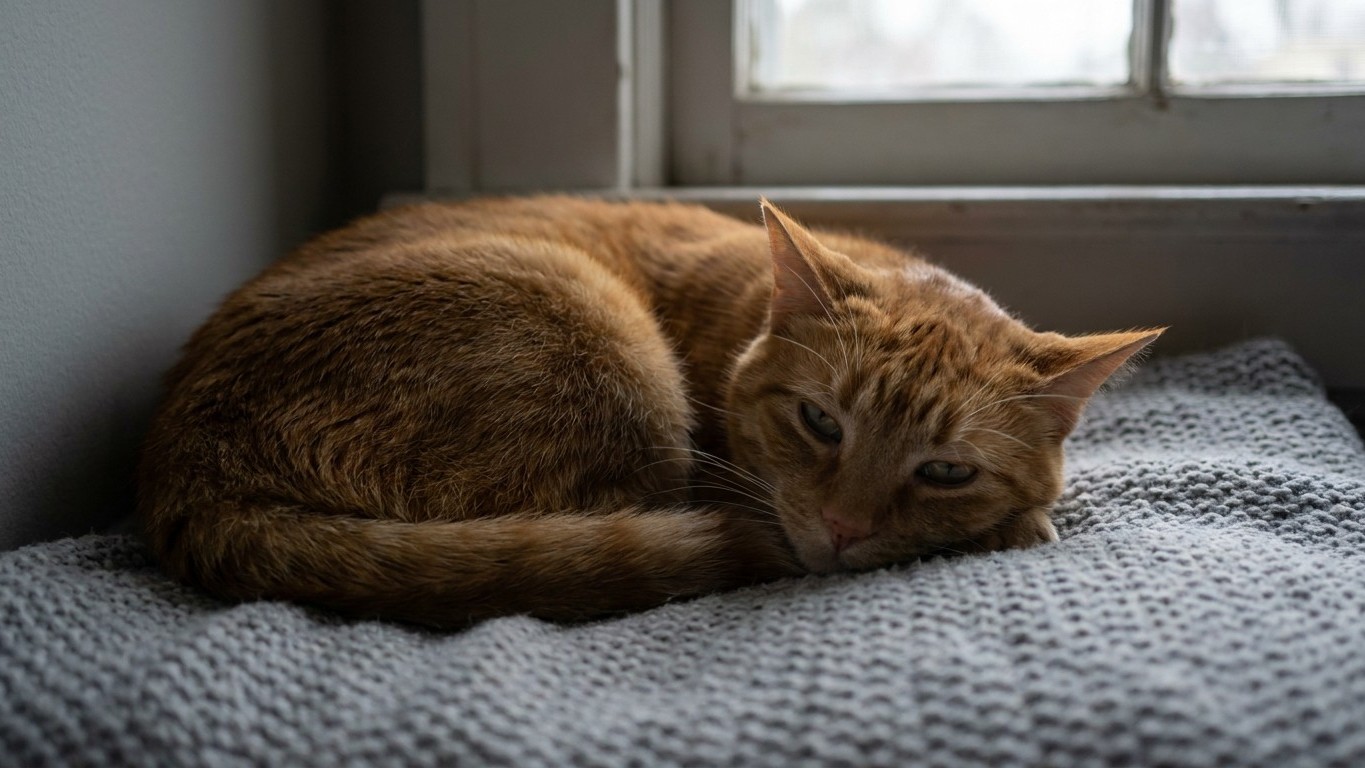
Cats are among the most stoic creatures on the planet, and that quality, endearing as it is, makes them genuinely difficult to nurse. A cat curling up in a particular spot looks, to most owners, like the very picture of contentment. But vets see something different: a behaviour that can signal early illness, chronic pain, or the quiet beginnings of conditions that go undetected for months.
Cats have evolved to hide signs of illness and pain, and in the early stages of illness, often the only thing an owner may notice is that their cat has become quiet and withdrawn. That withdrawal frequently takes the form of settling into a single, seemingly “favourite” spot, and it’s the one change that most owners dismiss as a personality quirk or a sign of aging. The problem, as vets frequently point out, is that by the time the behaviour becomes impossible to ignore, the underlying cause has often already progressed.
Key takeaways
- Cats hide pain as an evolutionary survival instinct, making it nearly impossible for owners to spot illness until it’s advanced
- A cat’s ‘favorite’ curling position often signals joint pain or arthritis, not comfort — and the subtle postural differences matter enormously
- Osteoarthritis affects up to 90% of cats over 12 years old, yet remains drastically underdiagnosed because owners mistake behavioral changes for normal aging
Why Cats Hide Pain in the First Place
The tendency cats have to disguise their discomfort is believed to be an evolutionary holdover from their days in the wild, where illness or injury would paint a target on their back to nearby predators, and would also put them in danger of being bullied or abandoned by their group. Although today’s domestic cats generally don’t need to worry about becoming prey, they may view other pets in the house, or even other people, as competition for resources. Whether driven by a deeply ingrained instinct or by overprotective feline logic, they mask their symptoms to avoid losing out.
Cats don’t usually cry out when they are in pain; you have to rely on more subtle signs such as hiding away. They not only hide pain from their owners, but unfortunately often from vets too, making it all the harder to properly diagnose. This creates a frustrating cycle. Unfortunately, this means that pet owners often do not realise something is wrong until a problem has become serious. Vets frequently see feline patients suffering from late-stage disease and have to deliver heartbreaking news to their owners.
The real cruelty of it is the gap between perception and reality. Even the most attentive and loving pet owners often don’t know there is a problem until it becomes quite severe. Cats tend to hide their symptoms, making it challenging to care for them properly while sick or hurt. By the time a cat shows signs of distress, whatever problem they are dealing with has usually reached an advanced state.
Reading the Position: Comfort vs. Pain
Here’s the detail that most owners get wrong: a cat curling up is not automatically a healthy sign. The position matters enormously. A pain-free cat will usually sleep soundly, often curled up in a ball. But more rigid or less relaxed sleeping positions could be a sign of pain. Other cats may not move at all, or may pretend to be asleep when they’re hurting.
Cats naturally sit in a “loaf” position with their paws tucked beneath them, so it can be hard to tell when this posture crosses into something concerning. The difference comes down to specific details. A healthy, relaxed loaf has all four paws hidden underneath, the head held upright, ears facing forward, and soft or slow-blinking eyes. The body looks loose and comfortable. A painful version of this position looks different in subtle but important ways, the front paws stay visible rather than fully tucked, the body appears hunched rather than rounded, and the head drops low. You may also notice a tense body, dilated pupils, and ears that flatten or rotate outward.
A cat that consistently sleeps in a tight, hunched loaf with eyes partially open may be experiencing pain. Cats who suddenly switch from relaxed, sprawling positions to tense curling in hidden locations could be signalling illness or stress. The location shift matters as much as the posture. With some cats, the only change may be that they start to sleep in a different place to usual, they may start seeking heat, spending more time under a radiator, or beginning to refuse to use the cat flap, preferring to wait for you to open the door. That kind of detail, easy to chalk up to “getting lazier,” is worth taking seriously.
The Arthritis Problem Nobody Talks About
The most common reason a cat curls tighter and moves less? Joints that hurt. Osteoarthritis is considered the primary source of chronic pain in cats, affecting well over a quarter of the feline population. The numbers are, frankly, startling. This condition is very common in older cats, affecting an estimated 70 to 90 percent of cats over 12 years of age, though it can begin earlier, with studies suggesting around 60 percent of cats over 6 years old already showing signs.
Reports have regularly highlighted that osteoarthritis is largely underdiagnosed and difficult to manage in cats. Part of why it slips through the net is that in the early stages, clinical signs are usually subtle, intermittent, and insidious before becoming permanent in severe stages, and crucially, lameness and stiffness do not appear to be the primary clinical signs of osteoarthritis in many cats, possibly linked to their agility and their tendency to hide pain to protect themselves.
In the absence of lameness, it is often behavioural changes, such as alterations in jumping activity or stair use, reduced mobility, increased rest, isolation, and aggression — that prompt veterinary consultations. However, owners frequently perceive these behavioural changes as normal for an aging animal, which may contribute to the underdiagnosis of feline osteoarthritis despite its prevalence. A 2025 peer-reviewed narrative review in a veterinary journal confirmed this remains an active and pressing challenge in feline medicine.
Cats are masters of hiding discomfort and pain, so often won’t show the obvious signs you might expect. They restrict their activity to stop themselves having to use their sore joints, meaning they don’t tend to show the same signs of arthritis as other animals. That restriction, that quiet withdrawal to a low, warm spot, is precisely what owners interpret as their cat “slowing down with age.”
What to Actually Watch For, and When to Act
The most useful thing any cat owner can do is build a mental baseline of their cat’s normal behaviour. Any divergence from that baseline is the signal. Sometimes the earliest signs involve small changes in daily routine, perhaps your cat is sleeping in new places, grooming less frequently, or suddenly avoiding favourite spots. These aren’t random. They’re communication.
Cats in pain often combine hiding with changes in posture, appetite, grooming habits, or movement patterns. You might spot stiffness when they stand up, hesitation before jumping, or reduced interest in being touched. Recent research also showed that ear position is an indicator of pain levels, perky, upright ears suggest a comfortable cat, whereas tense ears flattened towards the head can be a sign of pain.
Grooming changes are another underrated clue. If a cat is in discomfort they will often move less, sleep more, and groom less, resulting in a dull or lacklustre coat. Sometimes overgrooming one specific area of the body may indicate discomfort in that particular region, this can be the only visible sign in cats suffering from cystitis, for example, where they overgroom their belly leaving the fur thin or even bald.
A cat who is hiding and not eating, showing reduced energy, vomiting, experiencing diarrhoea, or having changes in litter box habits should be evaluated. Weight loss, changes in grooming, or a noticeable shift in personality are also important clues. If your cat has been hiding for more than a day or two and you notice changes in appetite, energy, or behaviour, it is best to schedule an appointment with your vet.
One practical tip from vets that many owners overlook: if your cat is showing changes in mobility, try to video them going up stairs or jumping down from a chair to show your vet, as cats may not demonstrate many signs in the veterinary clinic. That thirty-second phone clip could be the most useful thing you bring to a consultation.
One thing that should never happen, regardless of what you suspect: never give your cat human pain relief such as paracetamol, as this is incredibly toxic to them. Even giving your cat another animal’s medication can have potentially fatal side effects. The treatment options for feline pain have improved considerably in recent years, but they require a proper diagnosis first. Only your vet can provide that.
There is one more thing worth knowing, purely because most owners find it counterintuitive. Cats in pain will still purr. Even though cats also purr when they’re content, purring can be a sign of severe pain. The cat curled up in the corner, purring softly, may not be as peaceful as they appear. It’s one of the most deceptive signals in the animal kingdom, and the one most worth remembering next time your cat settles into that “favourite” spot.
Sources : ludingtonanimalhospital.com | petsfursturgentcare.com