
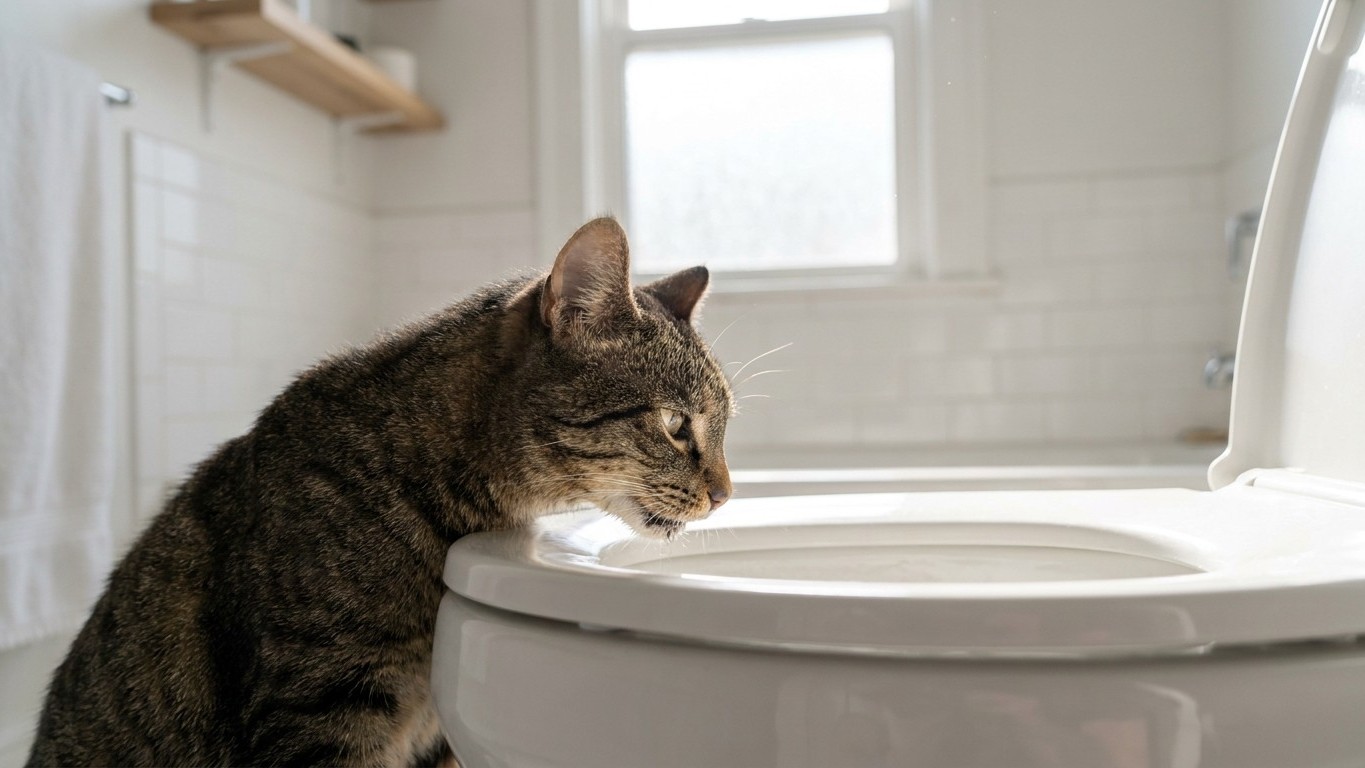
Toilet bowl water sits several degrees cooler than a stagnant bowl left out on the kitchen floor, which is exactly why so many cats develop a taste for it once the temperature climbs. But when that bowl has been treated with a bleach-based block or tablet, every lap your cat takes carries a dose of chemistry that most owners never think to question.
I’ll admit I used to think it was a bit gross but essentially harmless, my own tabby has form for it during warm spells. Then a vet friend walked me through exactly what’s dissolved in that water, and it changed how I clean my bathroom for good.
Key takeaways
- Why toilet water becomes dangerously attractive to cats during heatwaves
- What bleach blocks are actually doing inside your cat’s body with every sip
- The simple, low-tech solutions vets recommend to keep your cat safe all summer
Why cats head straight for the toilet when it’s hot
This isn’t random feline weirdness. According to a certified Fear Free animal trainer quoted by PetMD, the toilet water is colder and fresher than their water bowl, and if a pet’s water bowl is lukewarm or stagnant, the toilet water may appear as an enticing option that’s cooler and fresher. During a Heatwave, when a cat’s usual bowl has been sitting in a warm kitchen for hours, that porcelain bowl with its cooler, deeper reservoir genuinely looks like the better drink. It’s also worth flagging that persistent thirst can sometimes point to something medical rather than just heat. Veterinary toxicologist Dr Renee Schmid notes that seeking out unusual water sources like the toilet bowl could be a sign of an underlying health issue, since excessive thirst in cats and dogs can be associated with conditions such as diabetes, poisoning, and kidney disease. If your cat suddenly develops an obsession with the toilet that wasn’t there before, it’s worth mentioning to your vet at the next check-up, heatwave or not.
What’s actually happening in the bowl with every lap
Here’s where the bleach blocks come in. Whether it’s a cistern tablet or a rim-hanging block, the goal of the product is to keep releasing active chemical with every flush, and that means the water sitting in the bowl between flushes is never truly “clean” water, it’s a low but constant chemical solution. As one veterinary toxicology piece explains, bleach gel cleaners that cling under the rim are particularly concerning for pets because they release cleaning agents with every flush, maintaining a constant chemical concentration in the bowl water, and that’s exactly what your dog is drinking from. Swap “dog” for “cat” and the physics is identical.
The chemical itself is sodium hypochlorite, and its behaviour in a cat’s body is dose-dependent. The ASPCA’s own poison control centre lists sodium hypochlorite as a “moderate” toxin for pets, and at household dilutions it’s “unlikely to be life-threatening” but can cause vomiting, diarrhoea, and mouth or throat irritation. That’s the reassuring part. The less reassuring part is what happens with repeated, heatwave-driven exposure, several laps a day, every day, for a week of hot weather, rather than one accidental sip. A cat drinking from a freshly-dosed bowl day after day is topping up a low-grade chemical exposure that a single incident wouldn’t cause.
There’s a second, often Overlooked danger: the concentrated tablet itself, not just the diluted water. A veterinary commentary on VIN points out that although the blue water from the toilet bowl isn’t a huge issue, should the pet ingest or lick the tablet itself we could see chemical burns in the mouth and throat from the alkaline corrosive compounds in the concentrated tablet. Cats that bat toys into the bowl, or paw at a half-dissolved block out of curiosity, are at genuinely higher risk than one simply drinking the surrounding water.
Spotting trouble and knowing when to worry
The signs to watch for are fairly consistent across veterinary sources: drooling, pawing at the mouth, vomiting, lethargy, or visible irritation around the lips and gums. In most cases, a cat that drinks bleach diluted in toilet water will start drooling profusely within minutes, which is actually a reassuring early warning sign rather than something to panic over immediately. Most cats that have licked bleach off the floor or their paws or drunk bleach water out of the toilet will respond to decontamination measures and feel better within 45 minutes to an hour.
The advice on what to do at home is fairly universal too, though I’d stress none of this replaces an actual phone call to your vet. Offering a small amount of milk or water can help dilute residual chemical in the mouth and stomach, but you should never induce vomiting, since bringing corrosive liquid back up a second time through the throat only compounds the damage. If you’re ever unsure, ring your own vet or, in the UK, contact the Veterinary Poisons Information Service via your vet practice. Genuine emergencies, breathing difficulty, collapse, or a cat that’s chewed a solid tablet rather than just lapped water, need a same-day vet visit, not a wait-and-see approach.
Breaking the habit for the rest of summer
The fix is refreshingly low-tech. Small Door Veterinary’s advice is blunt: pet-proofing by keeping toilet bowl lids closed and securing cleaners in cabinets will help keep your pet safe from these dangers. Beyond that, tackle the actual reason your cat is drawn there in the first place. A shallow ceramic bowl left in direct sun turns lukewarm within an hour; move it somewhere shaded, refill it more often During a Heatwave, or invest in a pet water fountain, which keeps water moving and noticeably cooler than a static bowl. Ice cubes dropped into the water bowl work surprisingly well too, and most cats find the novelty entertaining rather than off-putting.
If you’re set on keeping the toilet spotless without the risk, citric acid or enzyme-based cleaning tablets are worth a look. Unlike bleach, citric acid is used as a food preservative and flavour enhancer in enormous quantities globally, including in pet food, and is Generally Recognized As Safe by the FDA, with the concentration in bowl water from a citric acid tank pod roughly equivalent to very mildly acidic lemon water. It won’t stop a determined cat from having a nose around the bathroom, but it does mean the worst-case scenario during your next heatwave is a slightly damp cat, not a trip to the emergency vet.
Sources : dialavet.com | petco.com