
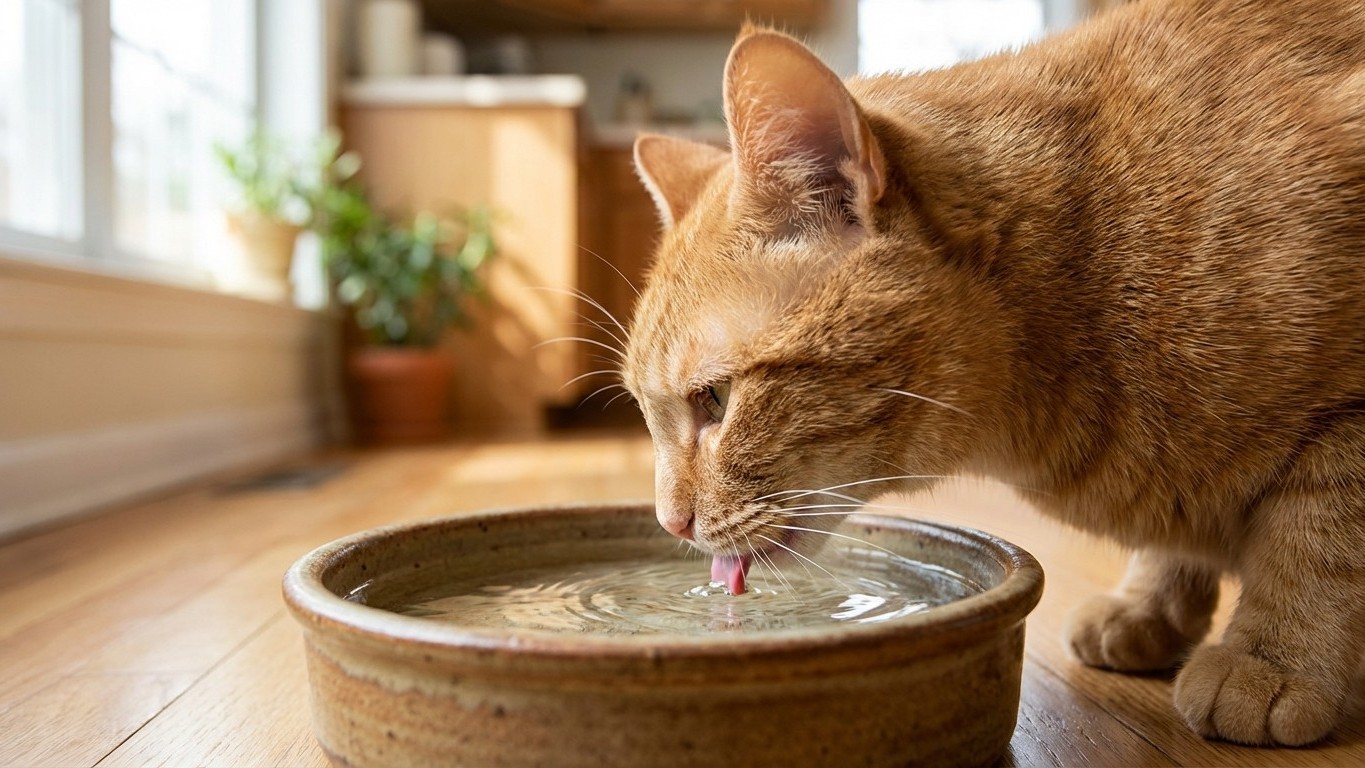
Spring arrives, temperatures creep upward, and your cat starts visiting the water bowl more often. Easy to write off as seasonal thirst, right? The problem is that warmer weather provides the perfect cover for something far more serious, and vets are seeing owners miss the Warning Signs precisely because they assume the season explains it.
As the weather starts to warm up, a cat’s water requirements naturally increase. But cats are very adept at masking signs of illness, and often it is only subtle changes in behaviour, increased drinking among them, that are early indicators of serious disease. Spring is, in short, the season when a medical red flag is most likely to be dismissed.
Key takeaways
- Vets are seeing a hidden epidemic of serious disease masked by spring’s warm weather
- Three specific conditions disguise themselves as innocent seasonal thirst in cats
- The early warning signs appear when your cat seems perfectly fine—and that’s what makes them easy to miss
The difference between seasonal thirst and a symptom
Cats may drink more water when it’s hot outside, and this should go immediately back to normal once it cools off again. That’s the key phrase: immediately back to normal. When cats become too hot, they drink more water to help stay cool. If the excess water intake only occurs on very hot days, or if the problem only lasts a day or two, it’s safe to assume there’s nothing to worry about. Pay close attention, however, for any signs that your cat is still drinking too much water after a couple of days.
Diet is another innocent culprit worth ruling out first. Wet food is approximately 80% water. If your cat eats exclusively wet food, you may rarely see them drink from a bowl. Conversely, cats on a dry kibble diet (which is only 10% water) will naturally visit the water bowl much more frequently to compensate. If you’ve recently switched your cat from wet to dry food, that uptick in drinking is likely benign, but watch it over the following weeks.
The genuinely worrying scenario is the one where nothing has changed: same food, same season, same activity levels, and yet the water bowl needs refilling more than it used to. A sudden, unexplained increase in water intake (polydipsia) is often the first silent sign of illness, even if your cat is eating and acting normal otherwise. That last part is what catches people out. A sick cat, particularly one in the early stages of a metabolic condition, can appear completely fine on the surface.
The three conditions that hide behind a water bowl
The most common causes of increased thirst and urination in cats include chronic kidney disease, hyperthyroidism and diabetes mellitus, all diseases of geriatric cats that can co-exist in an individual cat. Understanding how each one operates helps explain why early detection matters so much.
Chronic kidney disease (CKD) is the most prevalent threat. The prevalence of CKD increases with age, estimated at 20–50% in cats over 10 years of age. In the UK specifically, CKD may affect 30–40% of cats over 10 years of age, and renal disease was the most common cause of mortality in cats aged five years and older in a UK study, being the cause of death of over 13% of cats at a median age of 15 years. The mechanism is straightforward but insidious: an increase in drinking is often the first thing you notice, as it is a response to increased urine output, failing kidneys lose the ability to concentrate urine. The kidneys are essentially leaking water they can no longer hold onto, and the cat drinks to compensate. Kidney disease is one of the most common and serious diseases seen in cats — it is manageable but not curable, which is why early detection is necessary to instil therapies that help slow its progression.
Hyperthyroidism is the second major player. This condition, caused by overproduction of thyroid hormones, commonly affects middle-aged and older cats. It increases metabolism and can lead to increased thirst and urination, along with weight loss despite increased appetite. There’s one curious clue that many owners overlook: a cat may be suddenly acting like a kitten again despite being an older cat. That burst of apparent energy isn’t a happy rejuvenation, it’s the thyroid running the body at overdrive, causing the kidneys to receive more blood flow than they can handle, resulting in increased urine excretion and consequently increased thirst.
Diabetes mellitus rounds out what vets sometimes call the “big three.” Diabetes is another serious cause of increased thirst and urination in cats, involving an inability to regulate blood sugar. Most cats diagnosed with diabetes are overweight. When blood glucose rises above a certain threshold, glucose spills into the urine and acts as an osmotic agent, dragging water with it. The kidneys cannot reabsorb enough fluid, leading to persistently high urine production despite increased water intake. On the positive side, unlike dogs, some cats may be able to go into remission from diabetes if managed appropriately, which is yet another reason to catch it sooner rather than later.
How to tell if your cat is actually drinking too much
The challenge with cats is that they’re constitutionally secretive. By evolution, they are hardwired to hide pain and illness to avoid becoming prey. The early stages of kidney disease and diabetes often present only as increased thirst and urination. By the time the cat starts “acting sick”, vomiting, becoming lethargic, hiding — the disease may have advanced significantly.
So you need to become a quiet observer. Cats who drink in excess of 100 millilitres of water for every kilogram of body weight are considered polydipsic. A practical way to check: allow your cat only one source of water and subtract the amount left in the bowl after 24 hours from the amount you put in originally. Then watch the litter tray. Increased drinking leads to increased urination, look for significantly larger urine clumps or a wetter-than-usual litter box to confirm the issue.
Beyond the water bowl and litter tray, pay attention to the fuller picture. Other signs worth noting alongside increased drinking include changes in appetite (eating noticeably more or less), unexplained weight loss, a cat that sleeps more than usual or seems unusually subdued, and any vomiting or loose stools. Most cats are very good at covering up illnesses, so increased thirst could be the first sign you notice. On the breed front, it’s worth knowing that Persians, and occasionally Himalayans and British Shorthairs, can be prone to a hereditary condition called polycystic kidney disease, which can cause mid-life kidney problems, so owners of those breeds should be particularly vigilant.
What to do, and what the vet will look for
Any cat that is drinking more than usual should be seen by a vet, particularly if your cat is drinking over 100ml per kg of body weight daily. Even if you cannot measure the amount of water drunk, tell your veterinary team if you see your cat at the water bowl more often. Never withhold water in an attempt to “test” the behaviour, this can worsen dehydration in a cat that is already struggling.
Your vet will most likely recommend pathology tests requiring a blood and/or urine sample. A general blood profile can provide information on kidney and liver enzymes, glucose levels and also assess the health of the red and white blood cells. Further blood tests can be run to assess thyroid hormone levels. Bringing a urine sample along to the appointment is also helpful, urinalysis checks how well the kidneys are concentrating urine and looks for glucose or bacteria.
Kidney disease is manageable but not curable, which is why early detection is necessary to instil therapies to help slow progression. Twice-yearly to yearly blood work, depending on the age of your cat, is recommended to help detect early kidney damage. For cats already diagnosed, proper management can slow its progression and keep your cat Comfortable for months to years after diagnosis.
One thing worth knowing as the years go on: in UK cats diagnosed with CKD, weight loss and polydipsia (excessive drinking) were the two most commonly reported signs at diagnosis. Polydipsia wasn’t a late symptom, it was often the very first. Spring may be the season of new beginnings, but for a cat with brewing kidney disease or an overactive thyroid, extra trips to the water bowl are the body’s way of quietly asking for help.
Sources : ladynpet.com | vetbilim.com