
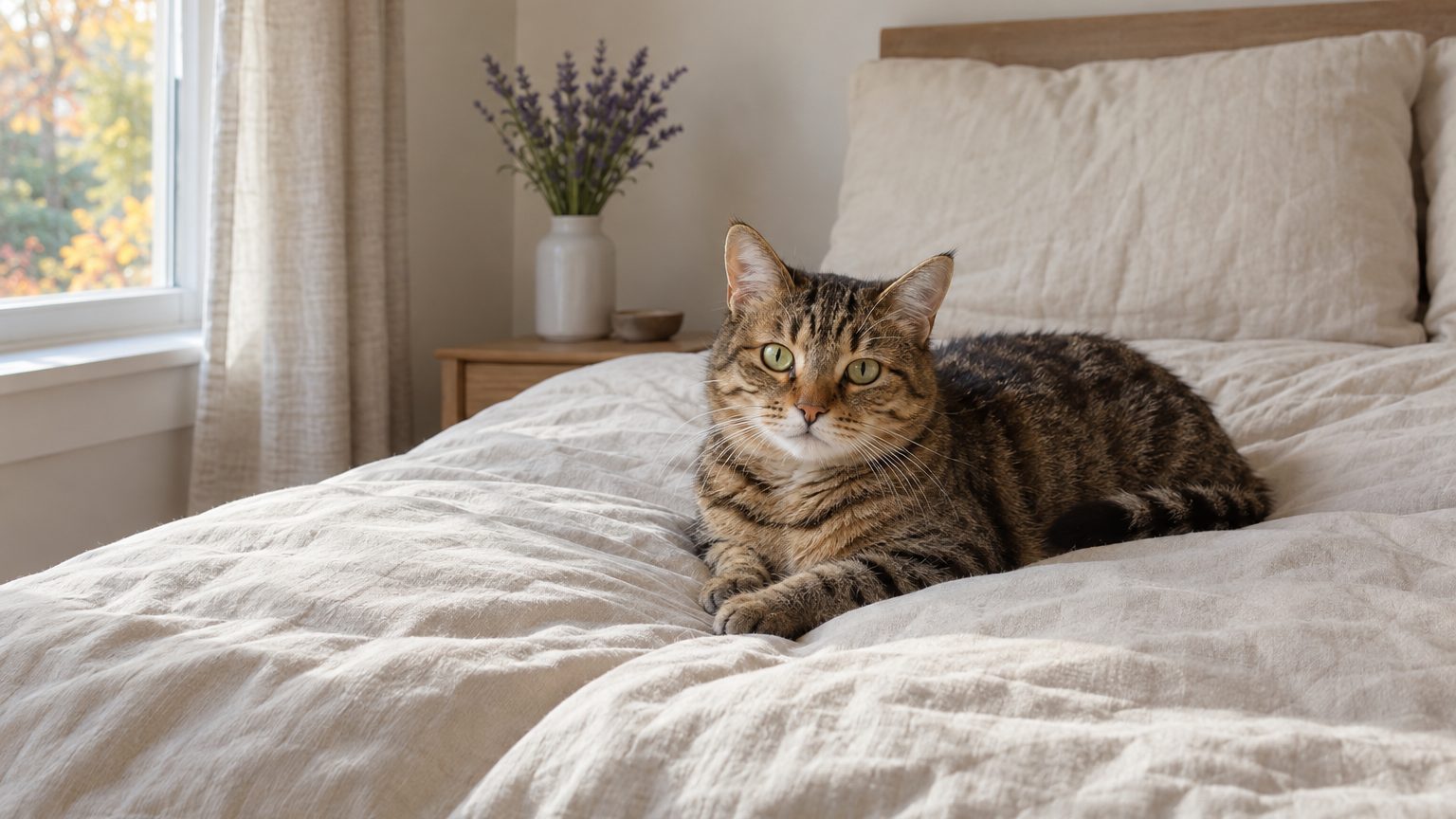
Yes, lavender is toxic to cats, though the risk depends heavily on the form it takes. A sprig nibbled in the garden is a minor worry, while a few drops of essential oil on a cat’s coat is a genuine emergency.
The oil is the real danger, not the purple flowers.
The ASPCA lists lavender as toxic to cats, dogs and horses, and names linalool and linalyl acetate as the compounds responsible. Both occur in the flowers, leaves and stems, but in small amounts compared with what sits in a bottle of essential oil. The plant is simply a diluted version of the same chemistry.
- The essential oil is far more dangerous than the lavender plant itself.
- Cats process terpenes like linalool very slowly, so toxins linger in their bodies.
- Diffusers, pillow sprays and dog products containing essential oils are common sources of exposure.
Why cats cope so badly with lavender’s chemistry
Cats lack much of the liver machinery that other mammals use to clear certain compounds. They have a shortfall in glucuronidation, a process that attaches a sugar-like molecule to a substance so the body can flush it out in urine. It is the same gap that makes paracetamol so dangerous to cats, and why a dose harmless to a person can be life-threatening to them. Terpenes such as linalool lean on that pathway, so they can linger in a cat’s system far longer than in a dog’s or yours.
Mild exposure tends to show up as drooling, vomiting, lethargy and a sudden lack of interest in food. Heavier exposure can bring wobbliness, tremors and laboured breathing. Liver damage is the quiet risk, because it can build for days before anything looks obviously wrong.
Cats also swallow whatever lands on their coat.
Grooming occupies a large share of a cat’s waking hours, which turns skin contact into ingestion within minutes. A spritz of pillow spray on a duvet where the cat sleeps, or a drip from a diffuser onto the worktop, ends up in the gut as well as on the skin. That double route, absorbed through the skin and swallowed during grooming, is why vets treat oils on fur so seriously.
The plant in your garden and your vase
A cat that chews a lavender leaf may drool or vomit, and many recover without treatment, though that is a judgement for your vet rather than for you. Plenty of cats dislike the smell and steer clear of lavender beds altogether. Gardeners sometimes claim it works as a cat deterrent, which I would file under folklore rather than strategy. Dried lavender is a different matter, because sachets and wheat bags are concentrated, tempting to chew and, if swallowed in quantity, can cause a gut blockage on top of the toxicity.
Mixed bouquets deserve a second look. If a lavender stem sits alongside lilies, the lilies are the bigger threat, since even pollen licked from the fur can cause kidney failure in cats.
Essential oils and the products to avoid
Essential oil is lavender boiled down to its most potent fraction, so a small bottle represents a large quantity of plant material. Nothing about that concentration is gentle for an animal that cannot process it well.
“Natural” on a label says nothing about safety for cats.
Several everyday products carry the same risk, and some are easy to overlook:
- Active diffusers, especially ultrasonic ones, which release fine droplets that settle on surfaces and fur. A cat shut in a small room with one running has no way to escape the exposure, and cats with asthma or other airway problems are at greater risk.
- Room, linen and pillow sprays, particularly when used on bedding or cat beds.
- Massage oils, bath products and human or dog shampoos used on a cat.
- “Natural” flea and tick remedies made with essential oils, which are not a safe substitute for a licensed veterinary product.
- Scented candles, wax melts, floor cleaners and some fragranced litters.
Dog products deserve a special mention, because many owners with both species assume that what suits the dog suits the cat. It does not. A spot-on or shampoo made for dogs can contain ingredients cats cannot tolerate, and essential oils are only one of them.
If your cat has been exposed
Move the cat away from the source and into fresh air, then ring your vet straight away, or an out-of-hours emergency clinic if it is evening or a weekend. Keep the product and its packaging to hand so you can read out the ingredients. Do not try to make your cat vomit, and do not scrub the coat with improvised remedies before taking advice. Your vet can contact the Veterinary Poisons Information Service for guidance if the product is unusual.
Waiting to see whether symptoms appear is a poor plan. Signs can be delayed, and early treatment gives the liver the best chance.
For a lavender-loving household, the safest compromise is keeping lavender outdoors in pots or borders, skipping the diffuser, and choosing unscented products. One last label tip: linalool is one of the fragrance allergens that cosmetics and many cleaning products must list in the UK, so scanning an ingredients list for it will show you where lavender-type chemistry hides even in products that never mention lavender.