
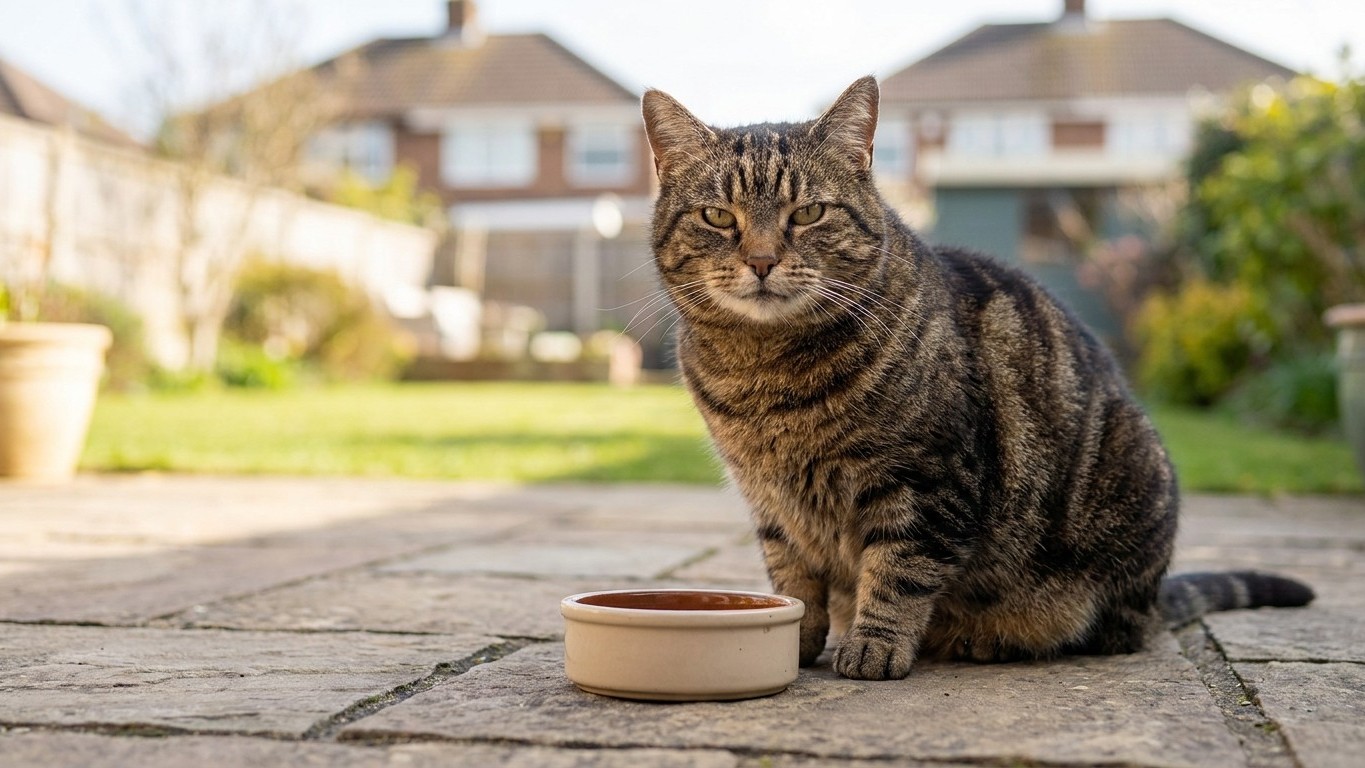
A whole year of kitchen scales, food diaries and carefully measured kibble, and the reason my tabby, Bramble, wouldn’t shift her extra padding was sitting three doors down the street. At her annual check-up, the vet nurse mentioned, almost in passing, that she’d seen Bramble tucking into a bowl on a neighbour’s patio. The mystery of the stubborn scales finally made sense: I’d been feeding a perfectly calculated diet to a cat who was topping it up with a second, third or even fourth breakfast elsewhere.
Key takeaways
- She measured every kibble for 12 months, yet her cat stayed stubbornly overweight
- A vet casually mentioned seeing her cat eating at a neighbor’s house—the puzzle piece she never expected
- Over a third of UK cats are obese, and owners have no idea what their pets eat outside their homes
The obesity epidemic hiding in plain sight
Cat obesity is not a niche worry. Vets estimate that over a third of cats in the UK are overweight, putting them at risk of health problems such as diabetes, cystitis and arthritis. The PDSA’s Big Weigh In campaign in 2024 weighed over a thousand pets and found 45% were overweight or obese, which was 46% of dogs and 43% of cats. What struck me most wasn’t the percentage itself, it was how invisible the problem is to owners. 82% of pet owners said they were unaware of their pet’s body condition score, the simple hands-on method vets use to judge whether an animal is carrying too much weight regardless of what the scales say.
That’s the trap I fell into. I trusted the number on my kitchen scale and assumed the maths would always add up. It doesn’t, not when your cat has a social life you know nothing about. Most overweight cats are simply just eating too much, and the old “eat less, move more” formula really does work, but only if you actually know the full tally of what’s going in.
Why your cat might have a secret second (or third) dinner
Cats are wanderers by nature, and plenty of them are opportunists when it comes to food. Several studies following the movements of cats using GPS trackers have shown that some cats will regularly visit neighbouring properties, according to a Cats Protection spokesperson. Friendly neighbours, often without any bad intention, will happily put a saucer of milk or a handful of biscuits down for a charming visitor who turns up looking hungry and adorable. British cats are facing an obesity crisis, and friendly neighbours aren’t helping.
What surprised me researching this was how normal the behaviour is on both sides of the fence. Wider research into people feeding free-roaming animals found that nearly a third of people fed cats outside their own neighbourhood, and just over a third fed them right in front of their homes, showing just how casually extra meals get handed out to cats that clearly already belong to someone. A cat doesn’t wear a sign saying “already fed, thanks”, so it gets treated like a stray in need of a top-up.
Vets are quick to point out, though, that neighbours rarely carry the blame alone. Pet obesity probably isn’t caused by overzealous neighbours; in practice it’s probably overwhelmingly from being overfed at home, where owners are just simply not aware their pets are obese or that they’re feeding them too much, says vet Daniella Dos Santos. In my case it was both problems stacked on top of each other. My portions were correct for a cat living on my food alone. They were far too generous for a cat also enjoying a buffet on next door’s patio.
Multi-cat households add another layer of chaos
If you’ve got more than one cat at home, the maths gets messier still. Two in five of the UK’s pet cats live with one or more other cats, and shared bowls or free-feeding stations make it almost impossible to know which cat ate what. Cats are naturally solitary eaters descended from the African wildcat, and forcing them to share a feeding space can trigger one cat guarding the bowl while another sneaks extra portions, or simply wolfing food down out of anxiety. Separate, quiet feeding stations for each cat aren’t just about weight control either; they reduce tension between housemates who’d rather not dine together in the first place.
Getting an honest picture of what your cat actually eats
Weighing food is genuinely useful, but only when it captures the whole picture. A few practical steps closed the gap for us. Chatting to neighbours, however awkwardly, revealed exactly who’d been slipping Bramble treats and why. A microchip-activated cat flap stopped her wandering into other kitchens uninvited. And a simple collar tag reading “already has a diet, please don’t feed me” did more good than a year of precise weighing ever could alone.
Regular weigh-ins matter too, and not just the ones done at home. 20% of owners weigh their cat regularly now, up from 17% in 2020, which is progress, but a body condition score check from a vet nurse catches what bathroom scales can’t: the sneaky pad of fat over the ribs that a determined neighbour’s cat biscuits can build, one uninvited bowl at a time. If your cat’s weight won’t budge despite your best efforts, don’t just recalculate the portions. Ask around the street first. The answer might be closer than you think, quite literally three doors away.
Sources : besjournals.onlinelibrary.wiley.com | partridgepractices.co.uk