
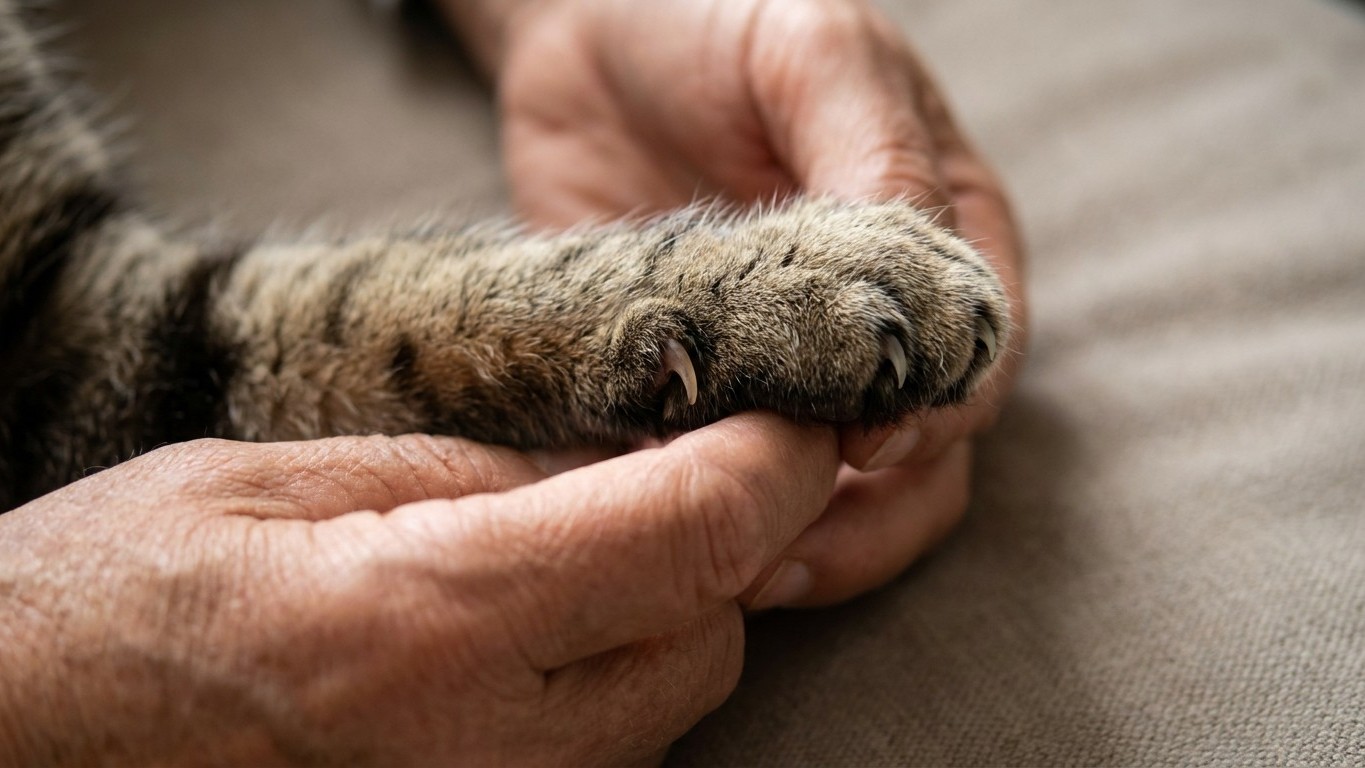
Front paws only, once a month, for years, seemed like a sensible compromise: enough to blunt the tips that were shredding the sofa arm, not so often that the cat hated me for it. Then one Tuesday she stopped putting weight on her left front paw, and the culprit turned out to be a claw I’d never once picked up during any of those “monthly trims”, the dewclaw, tucked up on the inside of the leg like a thumb, quietly curling into her own flesh.
Key takeaways
- Cats have a fifth ‘thumb’ claw on each front paw that never touches the ground—and most owners forget it exists
- Senior cats are especially vulnerable because arthritis and reduced mobility prevent natural claw wear and self-grooming
- One overlooked claw can curve inward and puncture a cat’s paw pad, but a two-minute inspection could prevent the whole ordeal
The claw that never touches the ground
Cats typically have 18 claws in total, with five on each front paw and four on each hind paw. The inner, shorter claw on the front paws is called a dewclaw. Every other nail gets filed down naturally through scratching, climbing, or simply padding across the kitchen floor. The dewclaw doesn’t get that luxury. Unlike the other claws, dewclaws don’t usually touch the ground while walking. However, they still play a role in climbing and grabbing. Since they don’t wear down naturally, dewclaws need regular trimming alongside the other claws to prevent them from getting overgrown and uncomfortable.
I’d been so focused on the four claws splayed out and visible whenever she stretched her paw across the arm of the sofa that I’d genuinely forgotten the fifth one existed, set higher and angled inward, easy to miss if you’re not deliberately checking for it. These are the “thumb” claws on the inside of your cat’s front paws. They don’t contact the ground and never wear down through walking or scratching, so they need consistent trimming. Left alone, the outcome is grimly predictable: if a cat’s nails grow too long, they can start to curve and may puncture their footpads, leading to discomfort, mobility issues and infections.
Why senior cats are especially at risk
My cat is fourteen. That single fact, it turns out, explains almost everything that went wrong. Age plays a major role. Senior cats are less active, so their claws don’t wear down through normal movement. Their nails also tend to thicken, become more brittle, and shed their outer layers less effectively as they get older. The vet who eventually treated her put it plainly: overgrown claws in an older cat are rarely down to laziness on the owner’s part. In older cats, overgrown claws are rarely simple oversight. They are frequently a biomechanical consequence of arthritis, reduced mobility, and diminished self-maintenance capacity.
There’s also a medical dimension I hadn’t considered. According to the Cornell University College of Veterinary Medicine’s CatWatch Newsletter, cats with diabetes, hyperthyroidism, and arthritis are all more likely to develop thick, long nails that can become ingrown. Arthritis doesn’t just slow a cat’s step, either. Cats with arthritis may stop grooming their paws effectively. Reduced grooming often contributes to nail problems. A stiff shoulder or sore hip means less scratching, less stretching, less of that instinctive nail maintenance cats normally do without any help from us.
By the time I noticed her limp, the damage was already done. In cats, an “ingrown nail” usually means the claw has overgrown into a tight curve and is now contacting the paw pad. Pressure becomes irritation. Irritation can become puncture. And puncture can become infection or an embedded claw. Cats are stoic creatures, and mine had apparently been managing quiet discomfort for who knows how long before the pain tipped over into an obvious hobble. This can give discomfort to your cat although cats will rarely show it.
What the vet actually did, and what I should have been doing
The treatment itself was, thankfully, straightforward. They’ll look at the ingrown nail and clip it if necessary, as well as clean out the wound and treat any infection. A course of oral or topical antibiotics may be administered in severe cases or as a preventative measure against more serious infections. No drama, no lasting damage, just a course of antibiotics and a rather sheepish owner. But it’s not something to attempt yourself once things reach that stage: if you’re tempted to cut at home, please don’t. In advanced loops, the claw tip can be near irritated tissue, and a sudden movement can cause a tear or deeper puncture.
Since then, the whole routine has changed. Every single claw gets checked, back paws included, and the frequency has crept right up. Most cats need their nails trimmed every 4 to 6 weeks, though senior cats or cats with fast-growing nails may need trims every 2 to 3 weeks. One groomer’s rule of thumb has stuck with me since: any curled or discoloured claw deserves attention long before it becomes an emergency, because what matters most is pad contact plus time. A claw that touches the pad today can puncture later, even if it looks “small.”
If your cat is getting on in years, don’t wait for a limp to tell you something’s wrong. Gently press each toe pad to pop the claw forward, dewclaws included, and look for the pale pink “quick” running through the centre. Anything curving back on itself or looking thick and opaque needs sorting sooner rather than later, and any sign of swelling, discharge or reluctance to put weight on a paw is a job for the vet, not the kitchen table. It’s a two-minute check that costs nothing, and it’s rather more pleasant for everyone than a trip to the vet’s for a claw that’s dug in where you least expected it.
Sources : elpaseoanimalhospital.com | cats.com