
Permethrin, the active ingredient in most dog-only spot-on flea treatments, is a nerve poison for cats. Their liver lacks the enzyme needed to break it down safely, so instead of clearing the chemical within hours, a cat’s body lets it build up in the bloodstream until it starts attacking the nervous system. The dose of permethrin given to even small dogs is enough to poison a cat because the cat is missing an enzyme in the liver that would metabolise it effectively, so permethrin builds up in the bloodstream and causes symptoms that can lead to death. If you’ve just done this, put the kettle down and read on, because the next few hours matter enormously.
This is one of the most common accidental poisonings vets see in UK practices, and it happens for an entirely understandable reason: dog and cat flea pipettes often look almost identical, sit in the same drawer, and get grabbed in a hurry. permethrin is safe to use on dogs, but is extremely poisonous for cats, and it’s found in a number of different flea products for dogs, including spot-on treatments, shampoos, sprays and flea collars. The tragedy is that this isn’t a grey area or a “sensitive cat” issue. It’s a straightforward biological mismatch between species.
Key takeaways
- One ingredient in dog flea treatments transforms into a deadly nerve poison when it touches a cat’s skin
- The first signs are subtle—excessive licking and drooling—but what comes next escalates within hours
- The difference between life and death comes down to how fast you act in the first critical window
Why a dog’s treatment turns toxic on a cat
Dogs shrug off permethrin because their bodies process it through two chemical pathways cats simply don’t have working properly. There are two metabolic processes that cats are not very good at: glucuronidation and ester hydrolysis, both of which are needed for pyrethrins to be safely eliminated by the body, and cats are unable to do this. Think of it like a car designed to run on unleaded suddenly being filled with diesel. It’s not that the fuel is bad; it’s that the engine simply isn’t built to handle it.
Once absorbed through the skin, the chemical attacks the nervous system in stages. Permethrin is highly toxic to cats, it affects their nervous system, first causing it to become over sensitive (twitching/seizures) and then causing paralysis. This isn’t a slow, mild reaction. If your cat’s symptoms are not treated, this toxicity may lead to seizures and death within a few hours. That timeframe is exactly why speed matters more here than with almost any other accidental poisoning I write about.
The hours after: what actually happens to your cat
Onset isn’t always instant, which lulls owners into a false sense of security. After exposure to concentrated permethrin spot-on products, cats can start to show signs of poisoning within a few hours, though sometimes signs may not appear for up to 72 hours. Early on, you might just notice your cat licking obsessively at the application site, drooling more than usual, or seeming unsettled. The first signs are often related to your cat licking the product, causing profuse salivation due to the bitterness of the product, along with nausea and vomiting in cases of hypersensitivity.
From there, things escalate quickly and unmistakably. Common symptoms include tremors, facial and ear twitching, muscle spasms, uncoordinated movements, and seizures. Some cats develop a raised body temperature from constant muscle activity, and in a minority of cases the effects go further still. While less common, there have been cases of cats having difficulty breathing and blindness occurring from tick prevention medication. Watching a normally composed, elegant animal reduced to full-body tremors within your own living room is genuinely distressing, and it’s an image that sticks with anyone who’s been through it.
Here’s the sobering statistic that puts this whole situation into perspective: this isn’t a poisoning with a guaranteed happy ending. From recorded cases, anywhere between 10% and 40% of poisoned cats may die or need to be euthanised because of the severity of the poisoning. The variation in that range comes down almost entirely to one factor: how quickly the cat was decontaminated and got proper veterinary care.
What to do right now, not tomorrow
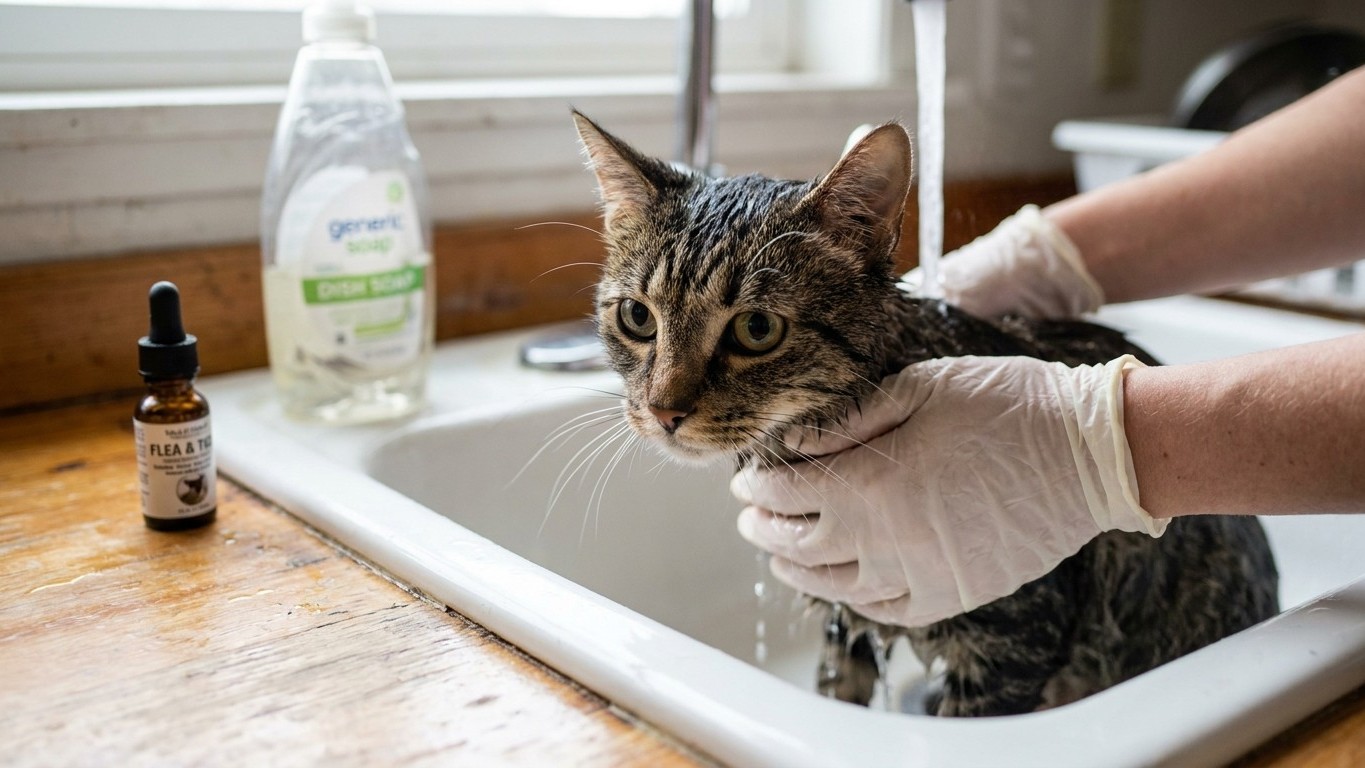
If you’ve just realised your mistake and your cat is still behaving normally, you have a window, but it’s a narrow one. If this is caught quickly, within a few minutes of application and the cat is not showing any symptoms, you can bathe the entire cat in liquid dish soap up to three times back to back to remove the product and then call your veterinarian for further assistance. Ordinary pet shampoo won’t cut it here; the oily base of these treatments needs proper degreasing. Wash the flea and tick product thoroughly off their coat using a mild dish soap and lukewarm water, since pet shampoo won’t work as the medication is too oily.
But if your cat is already twitching, drooling heavily, or showing any neurological signs, stop trying to bathe them and get in the car. If your cat is already showing signs and symptoms of permethrin poisoning, or you are unable to bathe your cat safely, skip these steps and seek Veterinary treatment immediately. There’s no home remedy or over-the-counter antidote that substitutes for professional care at this stage. There is no known antidote for permethrin toxicity in cats, so treatment mainly consists of supportive care to treat the neurological signs and symptoms. That typically means anti-seizure medication, intravenous fluids, and sometimes intensive monitoring for a day or two. Your cat will likely need to be admitted for treatment, which may include washing off any remaining permethrin, anti-seizure medication if they’re having seizures, medication to stop further damage, and a fluid drip to keep them hydrated. Bring the packaging with you; the exact product and concentration genuinely helps the vet plan treatment.
The one piece of good news is that speed really does change outcomes. Cases of permethrin poisoning that are caught early, and treated quickly tend to have a good outlook. Cats who reach the vet before seizures set in generally do far better than those whose owners waited to “see if it settles down”.
Making sure it never happens twice
Prevention here isn’t complicated, it’s just about breaking the habits that lead to this mix-up in the first place. Keep dog and cat treatments in physically separate places, never in the same drawer or bag, and always double-check the packaging before you apply anything, even if you’ve done it a hundred times before. Always refer to the product label and look for the “for use on dogs only” icon, as many flea and tick products contain permethrin but are only authorised for use on dogs. If your household has both a dog and a cat that groom each other or share a sofa, this matters even beyond the pipette itself. For households with dogs and cats, use spot-on products that do not contain permethrin to avoid accidental exposure, or keep pets apart until the dog’s treatment has dried, preventing mutual grooming or sleeping next to each other.
One detail that surprises a lot of cat owners: even a treated dog can poison a nearby cat without a drop of product ever touching her directly. Contact with a dog who has been treated with permethrin less than 12 to 24 hours before, a cat grooming a dog where the spot-on was placed, or simply lying on furniture where a treated dog had been sitting can all cause exposure. If you’re ever uncertain which product is which, ring your vet practice before you apply anything. It takes two minutes and it’s free advice that could save a much longer, far more frightening trip to the emergency vet later that same evening.
Sources : medvet.com | animalemergencyservice.com.au