
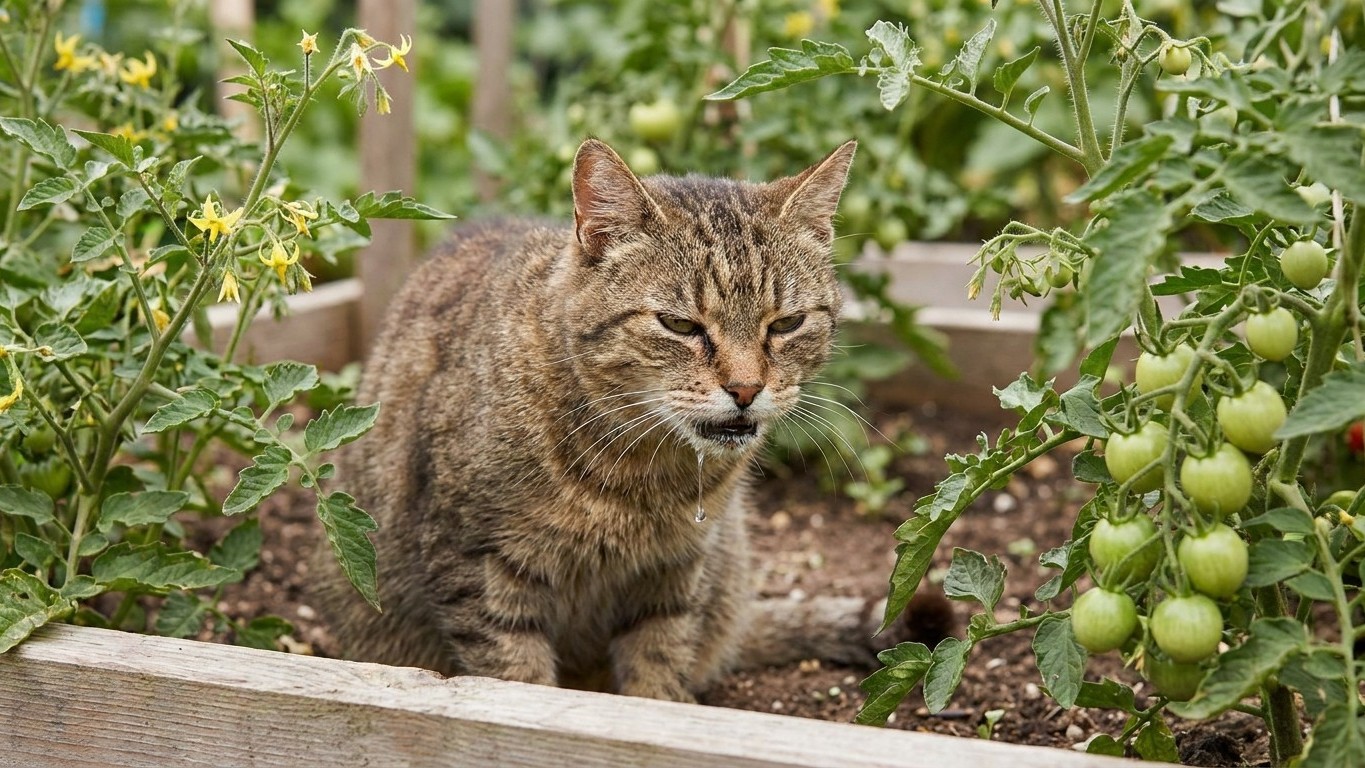
Tomatine and solanine, two glycoalkaloids found in every part of the tomato plant except the ripe red fruit, are the culprits behind a wave of drooling, appetite loss and lethargy in cats every summer. Toxicity: Toxic to Dogs, Toxic to Cats, Toxic to Horses. Toxic Principles: Solanine. Clinical Signs: Hypersalivation, inappetence, severe gastrointestinal upset, depression, weakness, dilated pupils, slow heart rate; ripe fruit is non-toxic. If your cat has spent July prowling the tomato bed as an outdoor diversion, and has suddenly gone off his food with a wet chin, this is very likely what’s happened. It’s a scenario that plays out in gardens across Britain more often than most owners realise, and the good news is that it’s rarely life-threatening, though it absolutely warrants a phone call to your vet.
Key takeaways
- A cat casually grazing tomato foliage all month can accumulate enough toxin to trigger serious symptoms—but why does one bite of ripe tomato from your salad never cause problems?
- Dilated pupils and depression mean emergency vet visit, but how can you tell if your sluggish cat is just being lazy or actually poisoned?
- Physical barriers protect your crop, but there’s a hidden nightshade danger lurking in most vegetable gardens that poses an even greater risk
Why a fruit we all eat safely can make a cat drool
The tomato belongs to the nightshade family, alongside potatoes, aubergines and peppers, and the plant produces these alkaloids as a natural chemical defence against predators. The alkaloids interfere with acetylcholinesterase activity in the nervous system and disrupt cell membranes in the gastrointestinal tract. Concentrations differ wildly depending on which part of the plant your cat has been nibbling. Green tomatoes contain significantly higher concentrations of tomatine, up to 5 to 10 times more than ripe fruit, and unripe fruit is moderately toxic, while leaves, stems, and flowers carry the highest concentration of tomatine and solanine. That’s why a cat wandering through the foliage all month, brushing past leaves, occasionally taking an exploratory bite, builds up exposure in a way that eating one ripe tomato from your salad never would.
What’s reassuring is the maths involved. Compared to other risky household substances, tomatoes are barely poisonous. Tomatine, the toxic substance, is only found in concentrations around 5% in leafy parts of the plant, and solanine is typically found in less than 1% concentration in unripe fruits. A cat would genuinely have to graze quite persistently through July, which fits the classic “chewed all month” pattern many owners describe, to accumulate enough of the toxin to trigger symptoms. It’s a bit like nibbling on chilli flakes: one flake does nothing, a spoonful over weeks starts to add up.
Spotting the signs and knowing when to worry
Drooling and refusing food are textbook opening symptoms, but they’re rarely the whole picture. According to the ASPCA, cats intoxicated by solanine may hypersalivate, lose their appetite, have a slower heart rate, or experience extreme gastrointestinal upset, depression, weakness and dilated pupils. Vomiting and diarrhoea often follow within hours, though timing varies considerably. First symptoms can appear as early as 2 to 6 hours, but the full extent of poisoning signs often develops only after 12 to 24 hours. That delayed onset is exactly why so many owners only connect the dots days into a slump, looking back at “all July” of quiet garden wandering and realising it wasn’t harmless at all.
A dilated pupil or a noticeably sluggish cat pushes this from “keep an eye on him” into genuine emergency territory. As one vet-reviewed source puts it plainly: “If your cat begins to appear depressed or develop dilated pupils, this is a medical emergency.” The severity scales with size and quantity, which is worth remembering if you have a kitten or a particularly small cat pottering about the vegetable patch, since a smaller body has far less capacity to buffer the same dose of glycoalkaloid than a chunky twelve-pound tom.
Once you’ve noticed the drooling, resist the urge to play amateur vet. Keep your cat away from water until you reach your vet, as the solanine could have a foaming effect if agitated by water. Don’t attempt to induce vomiting at home; that’s a job for a professional, and doing it wrong can cause more harm than the original problem. A proper veterinary assessment might involve bloodwork or simple observation, and if your vet confirms tomato poisoning, they might attempt to induce vomiting using a hydrogen peroxide solution, with activated charcoal also commonly used. There’s no dedicated antidote, so treatment is about supporting the body while it clears the toxin, keeping your cat hydrated and comfortable until the nausea passes.
Keeping the garden a safe playground, not a hazard
None of this means you need to dig up every tomato plant in a fit of guilt. Cats generally aren’t drawn to nightshade foliage in the first place. It is pretty rare for a carnivorous cat or dog to seek out a smelly, leafy plant like a tomato, since this classic garden crop is not nearly as attractive as fragrant catnip or blood meal fertilisers. Bored or curious cats, especially ones left to entertain themselves in a garden with little else going on, are the ones who end up sampling something they’d normally ignore.
A few practical tweaks reduce the risk without sacrificing your crop. Physical barriers work best, since determined cats are surprisingly hard to deter with smell alone:
- Ring your tomato plants with tomato cages or a low chicken-wire fence rather than leaving stems exposed at cat height
- Offer a dedicated patch of cat grass elsewhere in the garden as a legitimate chewing outlet
- Remove fallen unripe fruit promptly, since windfalls are often what gets nibbled first
Here’s a nuance worth remembering next time you’re tidying the greenhouse: potato plants carry the very same solanine, often in higher concentrations in green, sprouting tubers than in tomato foliage, so if you grow both crops side by side, your cat’s summer hazard list is longer than the tomato bed alone. Anyone growing an allotment with mixed nightshades might want to give both patches the fencing treatment, not just the one that made headlines this July.
Sources : dialavet.com | wagwalking.com