
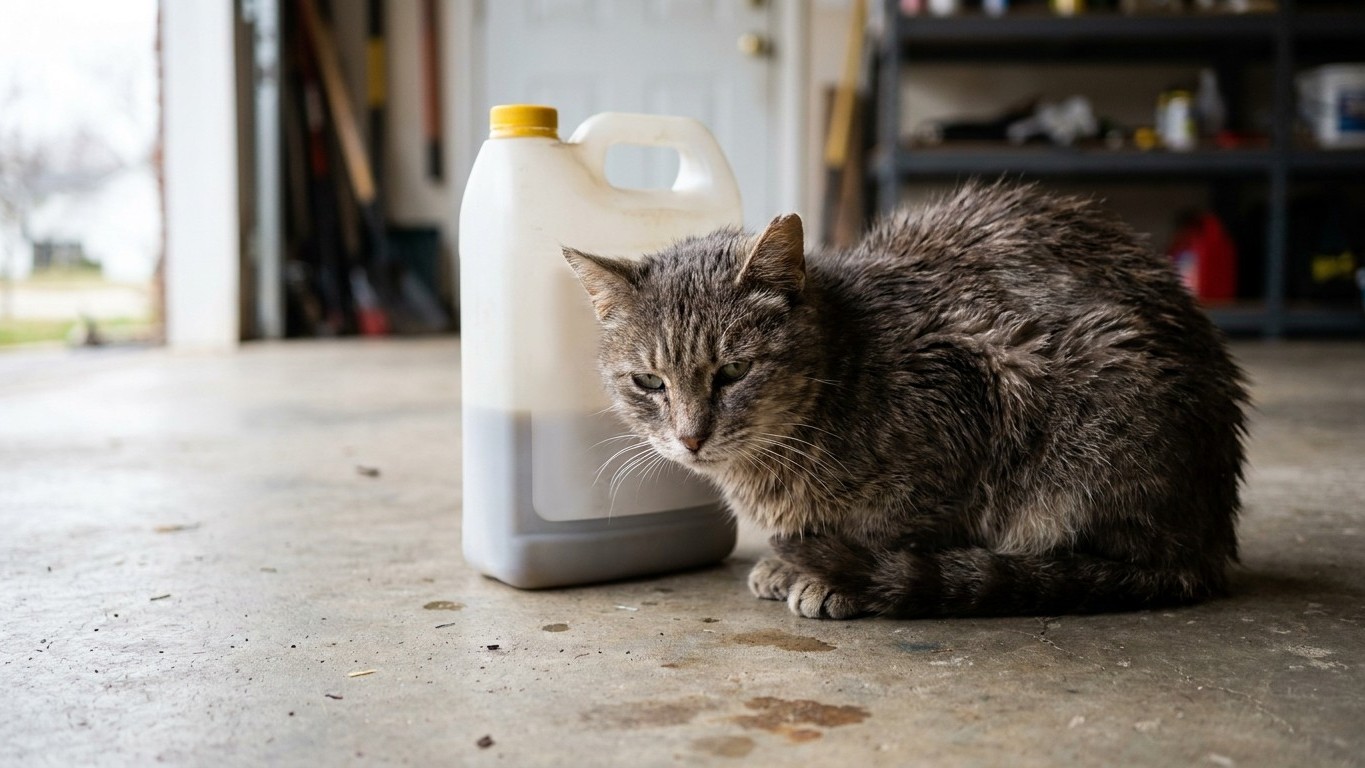
A teaspoon. That’s roughly all it takes to kill a cat. The minimum lethal dose of undiluted ethylene glycol antifreeze in cats sits at around 1.4ml per kilogram, which works out to just over a teaspoonful for an average 4kg moggy, and a cat could easily consume this much by briefly lapping a spilt puddle of antifreeze from a garage floor. By the time you notice him licking his paws, groggy and unsteady on his feet, the chemical has often already done its damage. This is the grim reality behind one of the most common and most preventable winter tragedies in British gardens and garages.
Key takeaways
- Just 1.4ml of ethylene glycol per kilogram of body weight is lethal to cats—roughly a teaspoonful
- Symptoms appear deceptively mild at first, then vanish temporarily before catastrophic organ failure sets in
- The treatment window is brutally narrow: reach a vet within 2-4 hours or survival odds plummet dramatically
Why a few sweet drops can be lethal
Ethylene glycol, the active ingredient in most antifreeze, is almost designed to trick a cat into drinking it. It’s a colourless, odourless and sweet-tasting main component of antifreeze, and although cats don’t taste sweetness the way we do, they can still be tempted to drink it. Worse still, the liquid has no colour, looks like water, and has minimal taste, so a thirsty cat may drink it without hesitation, mistaking it for a puddle left after rain.
The paw-licking scenario in a scenario like this one is depressingly common. Cats are also prone to licking the chemical off their coat if it is spilled onto them accidentally, and if there is a spillage, a cat might walk through it and a quick groom of paw or fur with a tiny bit of antifreeze can poison them. A jug stored casually beside a pool cover, with a slow drip nobody noticed, creates exactly this kind of trap. Once swallowed, the chemical doesn’t linger politely in the stomach. Once consumed, ethylene glycol gets rapidly absorbed into the body and starts to cause severe damage to the kidneys, nervous system and other vital organs.
The cruel three-stage timeline
What makes this poison so devastating is how it deceives owners into thinking their cat is recovering. Early signs of antifreeze poisoning in cats appear between 30 minutes and eight hours after ingestion, typically starting with wobbliness, sickness, and a drunken gait. Then comes the cruellest twist: between 12 and 24 hours after ingestion, your pet may appear to recover from the immediate symptoms, only to worsen again as the ethylene glycol works its way through his body. Many owners breathe a sigh of relief at exactly the wrong moment, believing the danger has passed.
It hasn’t. Severe acute kidney injury occurs between 24 and 36-plus hours, with symptoms including severe depression, lack of appetite, vomiting, diarrhoea, drooling, halitosis, seizures and collapse. The statistics from this phase are stark: in one report involving 25 cases, 96% of those affected died. Speed is genuinely everything here, because ethylene glycol is absorbed quickly in the intestines, so intervention within 2 hours of ingestion is critical to positive outcomes, and once Neurological symptoms develop, inducing vomiting is no longer safe and the prognosis is very poor.
Vets do have a treatment window, and it involves an unexpected household item. Cats will be given intravenous fluids to support the kidneys, and either ethanol or a drug called fomepizole, which work by blocking the chemical route of ethylene glycol-induced kidney damage. That ethanol often arrives in a very familiar form. The most commonly used antidote in cats is ethanol, frequently in the form of vodka, which stops the poison being broken down in the cat’s body into the more toxic forms that cause kidney damage. But this only helps if the vet gets there fast enough. If the cat can reach the vet within 3 to 4 hours of ingesting the ethylene glycol, it may be treated with an antidote or a drug that can counteract the effects of the poison. Beyond that window, the odds fall away quickly, which is exactly why many cats do not recover, as it’s not always obvious that they have had access to antifreeze until it’s too late.
Garage-proofing before the cold sets in
This isn’t a rare, freak accident. PDSA treated nearly 40 cases of antifreeze poisoning in 2023, and cats are particularly susceptible to this. Vet nurse Nina Downing explains why cats bear the brunt of it: cats are often outdoors unsupervised, unlike dogs, so although the fluid is equally toxic to both species, antifreeze toxicity is more frequently seen in cats as owners don’t see them drink it. There’s also a legal dimension worth knowing about, since poisoning cats can constitute a criminal offence under the Animal Welfare Act 2006, with a maximum penalty of up to 6 months imprisonment and/or a £20,000 fine, which underlines just how seriously this hazard is taken even when it’s accidental.
The good news is that prevention doesn’t require anything technical, just discipline about storage. Keep antifreeze in clearly labelled, robust, sealed containers away from pets and their environment, clean up spills immediately no matter how small, and ensure pets can’t access the area until it’s clean and safe. An open jug parked beside a pool cover for months on end, in a space cats can wander through freely, is precisely the kind of low-level risk that feels harmless until it isn’t. Checking your car matters too, because you should check your car regularly to make sure it isn’t leaking water coolant, and be careful with storing, using and disposing of antifreeze and water coolant.
If you’re weighing up alternatives for the garage this winter, there is one genuinely useful swap. Where antifreeze must be used, restricting the cat’s access to where it is used or stored, or choosing a pet-safe alternative such as propylene glycol, is advisable. It’s not entirely risk-free, since propylene glycol is less toxic than ethylene glycol but still poisonous to cats, causing acidosis as well as liver and kidney damage, but the margin for error is considerably wider. And if the worst ever happens, don’t wait to see if symptoms settle down: don’t wait for symptoms to develop, the quicker they get help, the better their chance of survival. A phone call to your vet costs nothing. A day’s delay can cost everything.
Sources : petmd.com | vetster.com