
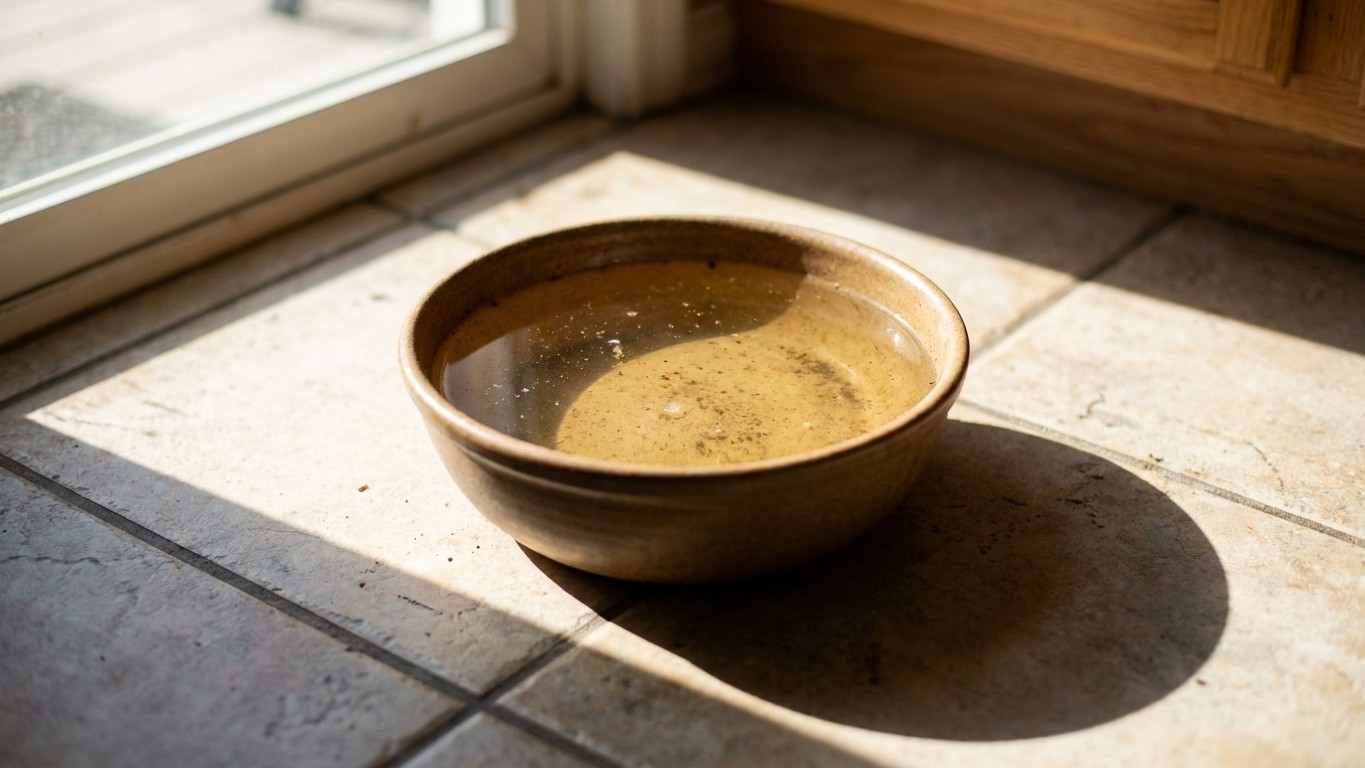
A brimming bowl looks like enough water for a lifetime. It isn’t. Left in a warm kitchen for three summer days, that same bowl becomes a soup of bacteria, algae and biofilm long before day three arrives, and a cat or dog drinking from it can end up with anything from a stomach upset to a serious infection. This is precisely the scenario that sends pets into emergency vets every August: owners who assumed “full bowl plus dry food” equals “sorted for the weekend.”
The maths simply doesn’t work. Cats who eat dry food that you can make readily available may be left on their own for 24-48 hours as long as fresh water is accessible, but beyond that time frame, water may get too dirty to drink and the litter box full. Charities are even more cautious. Most cats will be ok if they are left for the day or overnight, but the maximum amount of time you should leave them alone is around 12 hours, and this shouldn’t be done regularly. A vet quoted on the subject put it bluntly: “They should never be left alone for more than twelve hours, as they require daily care such as cleaning, water, food, and social interaction.” Three days blows straight past every one of those thresholds, no matter how generous the bowl looked on the way out the door.
Key takeaways
- What happens to ‘clean’ water when it sits undisturbed for just 24 hours
- The specific bacteria and toxins that can hide in different bowl materials
- Why heat, not hunger, is often the real danger in an empty August house
The bowl itself turns against them
Here’s the bit most owners never consider: the water doesn’t need to run out to become dangerous, it just needs to sit still. When you fill your dog’s water bowl, the water may look crystal clear, but within hours, it can become a breeding ground for bacteria. Warmth speeds everything up. When water sits in a bowl for twelve or twenty-four hours, it becomes a stagnant pond on a miniature scale, and without movement or filtration, the bacteria have all the time they need to colonize the surface. A university study that tracked this over a fortnight found the growth was relentless: bacteria formation was studied over a period of 14 days, and as expected, the study saw consistent growth of bacteria over the two week period, with plastic bowls containing the most bacteria at the 14 day mark and stainless steel the least. Oddly, ceramic came off worst in one respect: the ceramic bowls were found to contain the most harmful bacteria including MRSA and salmonella.
Then there’s the algae, which loves exactly the conditions a locked, empty house provides in August: stagnant water is a primary contributor to algae growth, because when water sits in a bowl for extended periods it becomes a breeding ground for microorganisms, and if the bowl is placed in a sunny area, the warmth accelerates the growth process. Some of that algae isn’t merely unpleasant. Some algae produce toxins that, if ingested, can lead to gastrointestinal issues, lethargy, or even more severe health problems, and even non-toxic algae can harbour bacteria or other pathogens. The pathogens themselves read like a rogues’ gallery: a layer of biofilm harbours harmful bacteria such as Salmonella and Escherichia coli, which can cause severe stomach upset including vomiting and diarrhea. This is exactly why a cat coming home from three unattended days sometimes isn’t dehydrated at all, but violently ill from the very water meant to sustain her.
Heat, not hunger, is often the real killer
August makes everything worse. A shut house with no ventilation traps heat for days, and pets can’t regulate their temperature the way we can, particularly flat-faced breeds, elderly animals, or anything with a thick coat. Combine that with a litter tray that’s overflowing by day two and food that’s either finished or gone stale, and you have a welfare crisis building quietly while the owner is on a beach two hundred miles away. Cats are stoic. They rarely show distress in an obvious way, which is exactly why so many owners believe, wrongly, that “no fuss” means “no problem.”
What the law actually expects of you
This isn’t just poor practice, it’s potentially a legal matter. The Animal Welfare Act 2006 places a legal duty of care on owners or keepers to provide for their animals’ welfare needs. Those needs are specific: freedom from hunger and thirst means providing fresh, clean water and the right amount of food, and freedom from discomfort means animals should be protected from extreme weather conditions, with a suitable, clean, dry resting area available at all times. Ignore that duty and the consequences are real. The Animal Welfare Act 2006 introduced tougher penalties for neglect and cruelty, including fines of up to £20,000, a maximum jail term of 51 weeks and a lifetime ban on some owners keeping pets. Abandonment specifically falls under this same section: the duty applies when a person abandons an animal for which he is responsible, and anyone who leaves an animal without taking reasonable steps to ensure it is capable of fending for itself will commit an offence. A three-day absence with no checks, no matter how well-intentioned, sits uncomfortably close to that line.
Cheaper than you’d think
The irony is that avoiding a sitter to save money rarely saves much at all once you weigh it against a vet bill for gastroenteritis or worse. Prices are far more modest than the “sitter” stereotype suggests. The average cost of a cat sitter in 2025 is £13.74 for a 30-60-minute visit, and a single daily drop-in is usually enough for a healthy adult cat. Catteries aren’t the expensive option either: the average cattery cost per night in the UK is £15.01. Even a proper overnight house sitter comes in at roughly the price of a takeaway: the average overnight pet sitting rates in the UK sit at £36.74. Ask a neighbour, split costs with a friend doing the same for you, or book a single daily drop-in rather than paying for round-the-clock presence you may not need.
If you do ever find yourself needing to bridge a shorter gap, swap that “full to the brim” bowl for two or three bowls dotted around cooler rooms, ideally stainless steel rather than plastic or ceramic, since it retains the least bacteria of the three materials over time. It won’t replace a proper check-in for anything longer than a day, but it buys a little grace while you sort out something better than an empty house and a prayer.
Sources : lancasterpuppies.com | yoojo.uk