
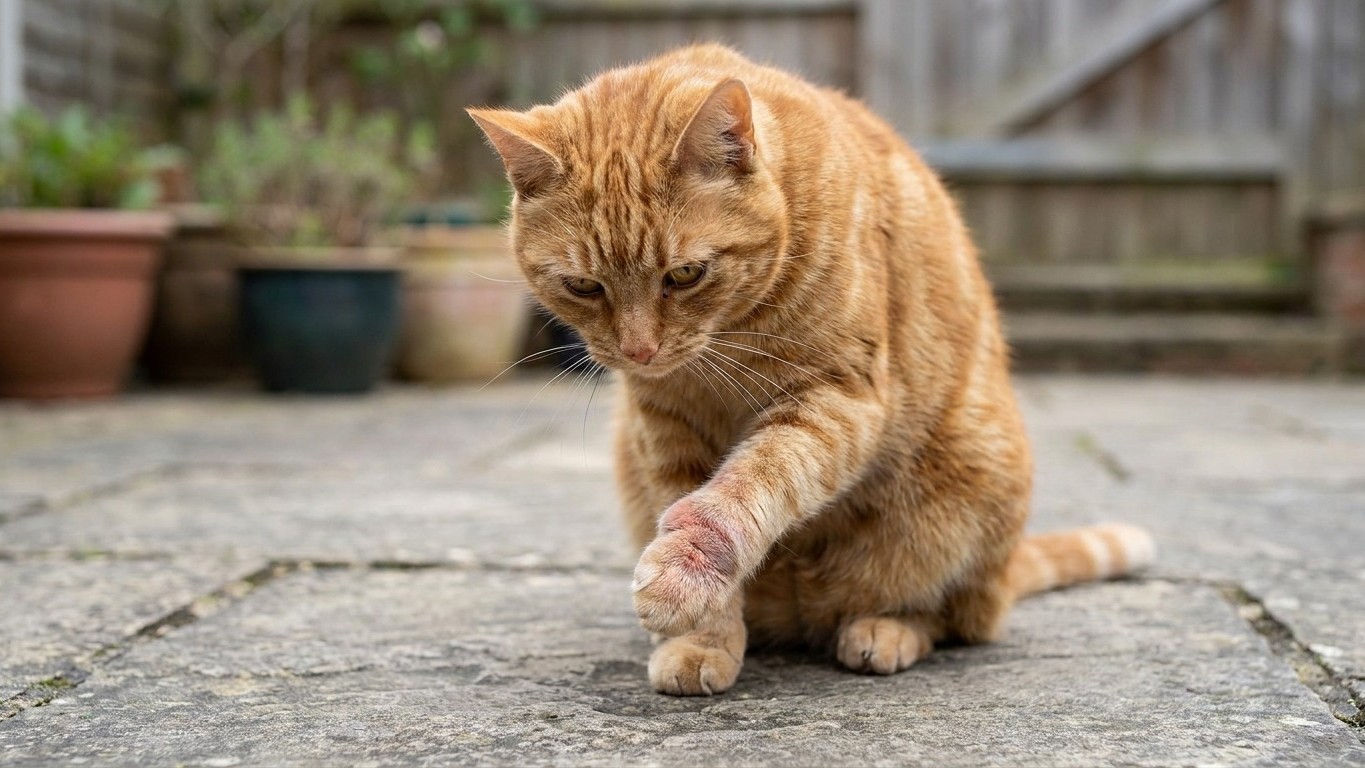
Finding your cat limp on the patio, one paw swollen to twice its normal size, is the kind of moment that makes your heart stop. The question your vet asks first — “Has your cat been outside recently, and could they have had a fight with another cat?” — lands like a punch to the gut. Because the answer determines not just how they treat the paw, but whether your cat may have been exposed to something far more serious.
Key takeaways
- A swollen paw from a cat bite can hide a dangerous abscess that’s been brewing for days without visible signs
- Your vet asks about fights because cat bites can transmit FIV—a serious virus spread primarily through bite wounds with no licensed UK vaccine
- The hidden danger: cats hide pain so well you might miss early symptoms until infection becomes life-threatening
Why a Swollen Paw is Never Just a Swollen Paw
A cat bite is the most common cause of a swollen paw. A cat is often bitten on the paw by another cat during a fight, and this becomes infected, creating an abscess which causes swelling and pain. The insidious thing about cat bites is how they work biologically. The bacteria on the teeth or claws are effectively injected into the resulting wound. A cat’s skin tends to heal rapidly, sealing the wound and trapping the bacteria under the skin, where they then proliferate in a pocket, the abscess. So by the time you see a swollen paw, the injury itself may have happened a few days earlier, with no visible wound to tip you off.
Cats instinctively hide pain to avoid appearing vulnerable to predators and potential rivals. This deeply ingrained behaviour is a survival mechanism designed to protect them in the wild and persists even in domestic environments. A cat found limp on a patio is a cat that has reached the point where concealing the pain is no longer possible. That matters. By the time the limpness is visible to you, the infection has usually been brewing for at least 48 hours.
It often takes two to four days for an abscess to develop, so before you see the swelling, you may notice other symptoms. Subtle signs, a cat eating a little less, sleeping more, being slightly touchier than usual — often go completely unnoticed. Abscesses form quickly and may be difficult to detect in their early stages. What may begin as a small bump or mild tenderness can quickly become more serious, especially if hidden under fur. Cats tend to hide pain well, so you might only notice subtle behaviour changes at first.
The Question That Makes Your Stomach Drop (And Why It Matters So Much)
The vet’s first question about potential fights with other cats is not small talk. Bite wounds are the main cause of abscesses in cats, and other diseases such as feline leukemia and feline immunodeficiency virus (FIV) can be spread through a bite. This is the part that genuinely worries vets, and rightly so. FIV is thought to affect around 4% of cats in the UK. It has many similarities to the human immunodeficiency virus (HIV) which causes AIDS in humans, but FIV only affects cats and is not a risk to human health.
The virus does not frequently contaminate the cat’s environment as it cannot survive for long outside the cat, but one bite from an infected cat can be enough to transmit infection. That single sentence explains why a vet’s face changes when you confirm an outdoor cat has been in a fight. The primary method by which a cat acquires FIV is through bite wounds from other FIV-positive cats. Outdoor cats are at greatest risk, especially unneutered males who are more likely to get into fights. There is currently no licensed FIV vaccine in the UK, which makes prevention, through neutering and limiting fights, the only real tool available.
A vet might recommend testing for FIV or FeLV, as these can be spread by cat bites or scratches, alongside a needle sample to confirm pus within the swelling and general blood tests to check the overall health of your cat. Unless the problem is obvious, the vet may also need to run diagnostic tests including a complete blood cell count, a blood chemistry panel, a urinalysis, and tests for common infectious diseases like feline leukemia and feline immunodeficiency virus. It can feel like overkill for a puffy paw, but it absolutely is not.
What Actually Happens at the Vet, and What to Expect Next
Abscesses are usually diagnosed by a physical exam. The vet will likely palpate all over the cat’s body, take their temperature, and get a thorough history about their exposure to other cats and the outdoors. The physical examination tells much of the story. If you feel heat coming from your cat’s paw, or one paw is hotter than the other, it could mean an infection is present and you need to make an appointment with your vet immediately. Any signs of pus, foul odours, or discharge need to be treated as soon as possible.
Treatment depends on how far the infection has progressed. Treatment may include anti-inflammatories to reduce pain and inflammation, and antibiotics for the infection, though these are not always necessary, and your vet will advise. If your vet is able to drain the abscess, your cat will immediately feel more comfortable. If you keep the area clean, the infection should start to clear and fully heal within a week or so. For a straightforward case caught early, the recovery can be almost startlingly quick. With veterinary treatment, a typical cat bite abscess might take seven to ten days to fully heal.
If left untreated, abscesses can lead to serious complications like systemic infection or tissue damage. Cat abscesses can quickly progress from minor swellings to serious infections requiring emergency care. Watch for fever, increasing pain, spreading redness, or lethargy as signs to seek immediate veterinary help, not tomorrow, now.
It is worth knowing that if there is a visible cause such as bleeding, swelling, or the limb is hanging in a strange way, don’t wait 24 hours, call your vet immediately to prevent infection or a worsening condition.
Reducing the Risk Before It Happens Again
Neutering is the single most effective step any outdoor cat owner can take. Spaying or neutering cats reduces fighting behaviour and decreases the risk of bite-related abscesses. Neutering reduces the risk of fighting between cats and is therefore one of the most effective means of reducing the risk of transmission of FIV. Beyond that, keeping vaccinations current is non-negotiable for outdoor cats. While FeLV cannot be treated once a cat carries the disease, it is possible to prevent infection by vaccination. FeLV vaccination is advisable for all cats that can go out or have contact with cats that go outdoors.
Regular paw inspections, maintaining a clean environment, proper nail care, and prompt attention to injuries can help prevent paw swelling. Get into the habit of running your hands gently along your cat’s legs when they come in from outside, not obsessively, just as part of saying hello. Cats are extraordinary at masking injury, and a few seconds of contact can catch something that would otherwise fester unseen for days.
One thing many owners don’t realise: even indoor cats are not completely immune. Cat bite abscesses are a common problem in outdoor cats, but they also occur in strictly indoor cats. Even play-biting between friendly housemates can result in an abscess requiring varying levels of treatment. The patio scenario is more dramatic, but the biological process is exactly the same when two indoor cats have a rough play session that goes a little too far.
Sources : veterinaryinternalmedicinenursing.com | wagwalking.com