
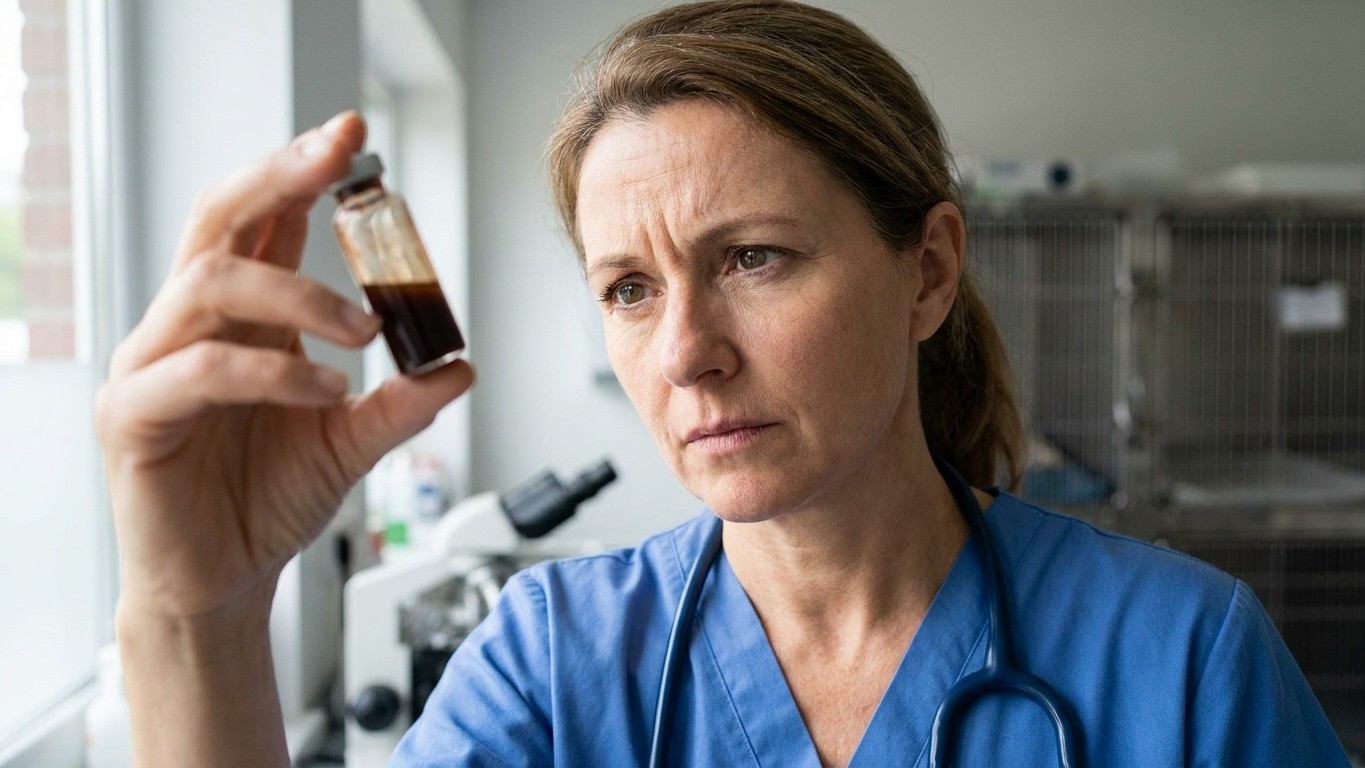
Half a paracetamol tablet is all it takes to push a cat’s red blood cells into crisis. Within hours of ingestion, the haemoglobin inside those cells begins converting into a completely different molecule, one that can no longer carry oxygen properly and turns the blood a strange, chocolatey brown. That’s exactly what a vet explained to one worried owner after their limping cat received a well-meaning dose of human painkiller. The story sounds like a one-off mishap. It isn’t. It’s one of the most common, and most preventable, poisoning emergencies seen in UK veterinary practices.
Key takeaways
- A single half tablet of paracetamol can trigger a cascade of blood cell destruction in cats within hours—something that barely affects humans
- The cat’s liver lacks a critical enzyme, causing toxic buildup that transforms red blood cells and turns blood literally brown
- Minutes matter: early treatment with activated charcoal and an antidote can save a cat’s life, but waiting for symptoms to appear can be fatal
What Actually Happens Inside the Blood
The mechanism is almost elegant in its cruelty. Paracetamol poisoning in cats is based on the formation of the toxic metabolite NAPQI, which, if detoxification is insufficient, leads to liver cell necrosis, methemoglobinemia, and oxidative stress. Cats can’t clear this metabolite the way humans and dogs can, because cats are particularly at risk due to their deficient glucuronidation pathway. Put another way: the liver enzyme that safely mops up paracetamol byproducts in us barely exists in cats.
The visible result is startling. The haemoglobin in their red blood cells becomes changed to methaemoglobin which is much less effective at oxygen transportation, and brown rather than red. Vets sometimes describe drawing blood from an affected cat and watching it come out the wrong colour entirely. In one documented case at Cornell University’s veterinary college, an eight-year-old male neutered domestic shorthair cat presented to an emergency hospital for vomiting and lethargy, was panting, hypothermic and had cyanotic mucous membranes, and when the veterinarian drew blood, it was brown in colour, indicating methemoglobinemia. A blood smear from that same cat told an even starker story: a blood smear evaluation with methylene blue stain revealed Heinz bodies on 80-90% of the red blood cells. Heinz bodies are clumps of damaged haemoglobin, essentially the visible wreckage of cells that have been chemically attacked from the inside.
Timing matters enormously here. Signs of toxicity from acetaminophen may develop within 1-4 hours of ingestion, and red blood cell changes can occur within 4-12 hours. Left unaddressed, the consequences escalate. Anaemia and haemoglobinuria are caused by intravascular haemolysis of red blood cells, while icterus results from both lysis of red blood cells and hepatic necrosis. Some cats develop visible swelling too. Some cats develop swelling in the face, paws, and forelimbs several hours after ingesting acetaminophen. In the worst cases, death from methaemoglobinaemia can occur roughly a day and a half after ingestion, which is precisely why “wait and see” is never the right approach with this drug.
Why a Cat’s Body Reacts So Differently to Ours
It genuinely surprises people how big the species gap is. We think of paracetamol as one of the gentlest medicines in the cabinet, something we hand out to toddlers with a temperature. For people, paracetamol is a mild painkiller, but for cats, it is extremely toxic, because cats can’t break it down to a safe metabolite as people and dogs can, and so toxins are produced that cause serious damage to their liver and red blood cells. The scale of sensitivity is almost hard to believe: even just part of a single tablet can cause severe toxicity and death in cats.
This isn’t a fringe accident either. Cats might be exposed to paracetamol accidentally after eating or drinking some form of it, or it may be given to them to treat pain by owners who are unaware of how dangerous the drug is. I’ve spoken to enough vet nurses to know this pattern repeats itself constantly: a cat limps after jumping off a fence, the owner reaches for the same tablet that soothes their own headaches, and within hours they’re driving to an emergency clinic. The Vets Now emergency network sums up the temptation perfectly, describing the instinct many owners feel when their cat comes in having had a scrape and they think, ouch, where are the painkillers, but paracetamol will do a lot more harm than good.
Once inside the vet, diagnosis often comes down to bloodwork rather than a specific toxicology test. Paracetamol intoxication is usually diagnosed based on known ingestion and observed symptoms, as there is no readily available test to confirm it, though routine blood tests checking red blood cells and liver damage will usually detect the consequences and allow monitoring of progression. That’s essentially what happened in our opening story: the vet showed the owner bloodwork revealing methaemoglobin levels climbing in real time, cell by cell, hour by hour.
What Treatment Actually Involves
The good news, such as it is, lies in speed. If cats receive treatment within the first few hours, there is a chance the vet can treat them with few to no side effects. Vets typically start by trying to limit further absorption. If paracetamol may have been ingested, the stomach should be emptied as quickly as possible, ideally within 30-90 minutes, and the next step is administering activated charcoal, which sticks to paracetamol in the gut and prevents it from being absorbed. This charcoal treatment isn’t a single dose either. It may be needed for up to three days.
Beyond that, there’s a genuine antidote, which is rare good news in veterinary toxicology. Further treatment can involve being put on a drip, other supportive care such as oxygen and blood transfusions, and giving acetylcysteine to help prevent further toxic breakdown. N-acetylcysteine essentially replenishes the glutathione stores that would normally help neutralise the toxic metabolite, buying the liver and blood cells time to recover. Cats needing this level of care generally aren’t in and out within the hour. Cats are likely to need intensive hospital care for 1-3 days to control the symptoms and help the body eliminate the toxin. Even so, outcomes aren’t guaranteed. If your pet is already showing signs of paracetamol poisoning, they may still die even with veterinary care, which is a sobering reminder that prevention beats treatment every single time.
What to Actually Do If Your Cat Is Limping
A limping cat is uncomfortable, not an emergency requiring a raid on the bathroom cabinet. The sensible options at home are limited and modest: keeping them indoors and quiet, offering a warm or cool compress to an obviously strained limb, and booking a vet appointment rather than reaching for tablets. A vet can identify whether that limp is a soft tissue strain, a thorn, an early arthritic flare, or something needing an X-ray, and can prescribe one of the small number of pain relief options actually licensed and dosed safely for cats.
If the unthinkable has already happened and a cat has swallowed paracetamol, minutes count more than most owners realise. Don’t try to induce vomiting with salt water or home remedies, don’t wait to see if symptoms appear, and don’t assume “just half a tablet” is a safe compromise. Ring your vet or the nearest emergency clinic immediately, mention the exact amount and timing if you know it, and let the professionals take blood before those red cells turn any further down the road from red towards brown.
Sources : vet.cornell.edu | vethelpdirect.com