
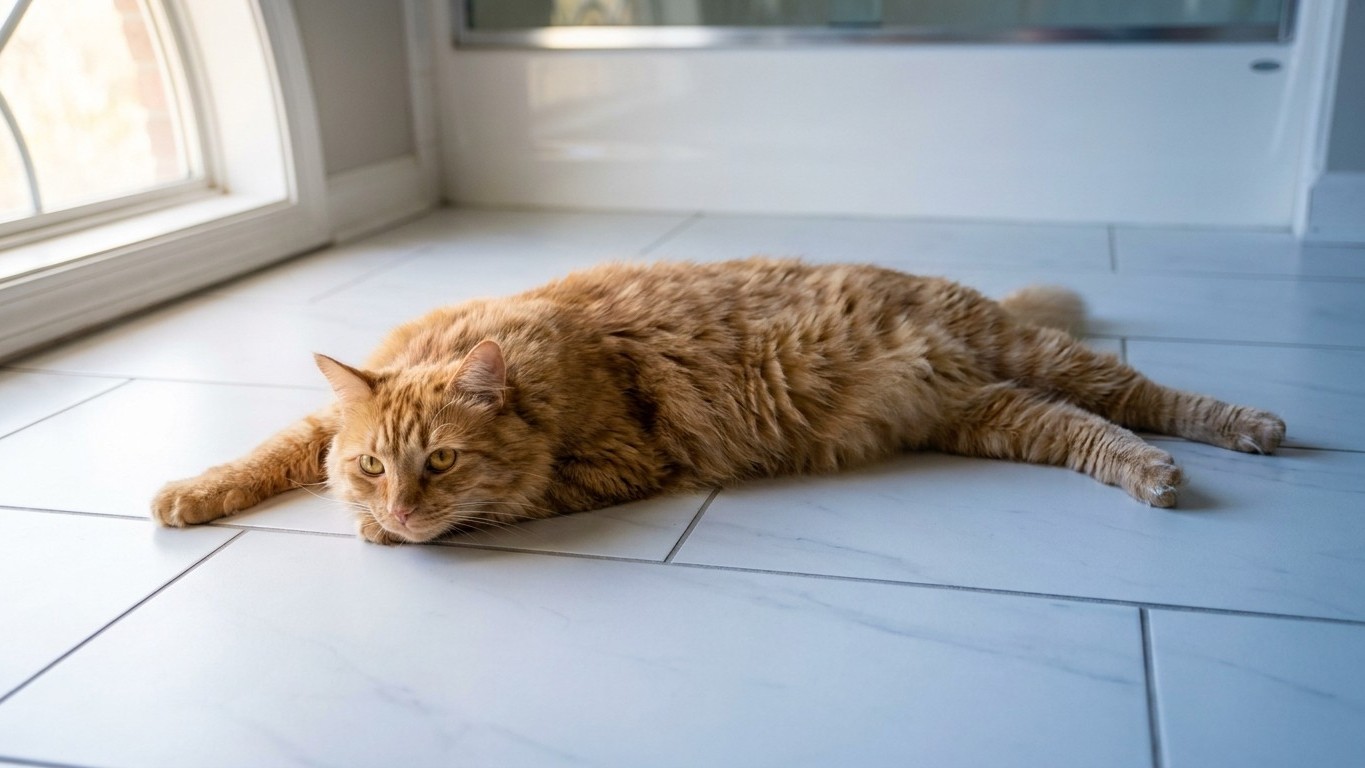
A cat sprawled flat on the kitchen floor, legs splayed, belly pressed to the tiles, isn’t automatically in trouble. It’s usually just sensible thermoregulation. But that same posture can also be one of the earliest, most easily dismissed signs of heat stress, and knowing which is which could save your cat’s life this summer.
Cats can’t sweat the way we do. Cats have a very limited ability to sweat, so instead, they control their temperature by licking themselves and seeking shade on warm days. The paw pads are really the only place with functioning sweat glands, which is why a cat pressing its whole body against cold ceramic or stone makes physiological sense: cats will often lie on cool surfaces like tile floors to lower their body temperature, and may stretch out on their stomachs to increase contact with the cool floor, helping them absorb the coolness. On a warm afternoon, this is simply a smart cat doing exactly what evolution equipped it to do.
The trouble starts when this “clever cooling trick” becomes the only tool left in the box. A cat suffering from heatstroke may appear unusually tired, sluggish, or unwilling to move, and they may lie stretched out on cool surfaces or show little interest in food or water. The difference between a contented flop and a distress signal isn’t the posture itself, it’s everything surrounding it: how alert the cat is, how it’s breathing, and whether it responds normally when you call its name or offer a treat.
Key takeaways
- The same posture that signals comfort can also mask a medical emergency—and the difference hinges on details most owners miss
- One specific breathing pattern is a red flag vets say you should never ignore in cats, unlike in dogs
- The most common cause of feline heat stroke isn’t outdoor heat—it’s an everyday location every cat owner overlooks
The line between comfort and crisis
Panting is the detail that should stop you in your tracks. Dogs pant constantly and it means nothing. Cats are different creatures entirely. Unlike dogs, cats rarely pant, so if they are, it’s a serious red flag. Combine open-mouth breathing with a cat glued to the tiles and refusing to shift even when you nudge it, and you’ve moved well past “just napping in the heat.”
Gum colour tells its own story, and it takes seconds to check. Check your cat’s gums by gently lifting their lip. Bright red gums indicate that their body is overheating, while pale gums suggest poor blood circulation, both of which are severe signs of heatstroke. Drooling that looks thicker or stickier than usual is another giveaway, as is any vomiting or diarrhoea, which vets treat as signs the internal temperature has already climbed too high.
Numbers help put this in perspective. Normal body temperature for a cat ranges between 38.1-39.2°C (100.5-102.5°F), this can get a bit higher if they have a fever from being unwell. Once that figure creeps past 40°C, things get properly dangerous: if your cat’s body temperature goes above 40°C/104°F they are at risk of heatstroke, which can cause severe dehydration, seizures, blood clotting problems, organ damage, coma and death. That’s not a slow decline either. Vets describe the deterioration from mild discomfort to genuine emergency as shockingly quick, which is exactly why the tile-floor flop deserves a second glance rather than a shrug.
Who’s most at risk, and why greenhouses are the real culprit
Some cats are simply built to struggle more in heat. Obese, long-haired, old, young and brachycephalic/flat-faced cats (such as Persians) are most at risk of developing heatstroke because they find it harder to cool down. A squashed nose might look endearing, but it genuinely compromises a cat’s already limited cooling options.
Interestingly, British vets point to a very specific danger that has nothing to do with sunbathing outdoors. The most common cause of heat stroke in cats is being accidentally trapped in a hot, poorly ventilated space such as a shed, greenhouse, conservatory, or garage. That’s rather counterintuitive when you consider that cats like to sleep in warm places, such as conservatories, greenhouses or sheds in the first place. A cat that loves a sunny conservatory windowsill in March can find itself trapped and overheating in the exact same spot come July, simply because nobody thought to prop the door open.
The reassuring part of all this is that genuine heatstroke isn’t especially common. The risk of cats getting heatstroke is quite low, as they are generally very good at keeping themselves cool if they have access to areas of varying temperatures, shade and water. Most cats sprawled on the tiles are simply making sensible use of that access, not signalling an emergency.
What to actually do if you’re worried
If your cat seems off, the golden rule vets repeat constantly is “cool first, worry about the journey second.” We recommend to “cool first, transport second” as the immediate first aid response for dogs with heatstroke, and the same logic applies to cats. Move them somewhere shaded and well ventilated straight away.
Resist the urge to reach for the coldest water in the house. Cooling your cat down needs to be gradual to avoid shock and not cause your cat stress, as stress can increase their body temperature further. A cool, damp towel against the belly, paws and ears works far better than an ice bath, and offering small amounts of water (never forcing it) helps too. Then get on the phone. If your cat has been in a very warm place and is showing these symptoms, don’t hesitate to contact your vet immediately.
One nuance worth remembering next time you spot your cat starfished on the bathroom tiles: it’s actually a sign of good instincts, not poor health, provided they get up, stretch, saunter over for dinner, and carry on as normal within a few minutes. It’s the cat that stays down, breathes oddly, or won’t rouse that needs your full attention, not the one simply enjoying the coolest square foot of flooring in the house.
Sources : rvc.ac.uk | pinolepethospital.com