
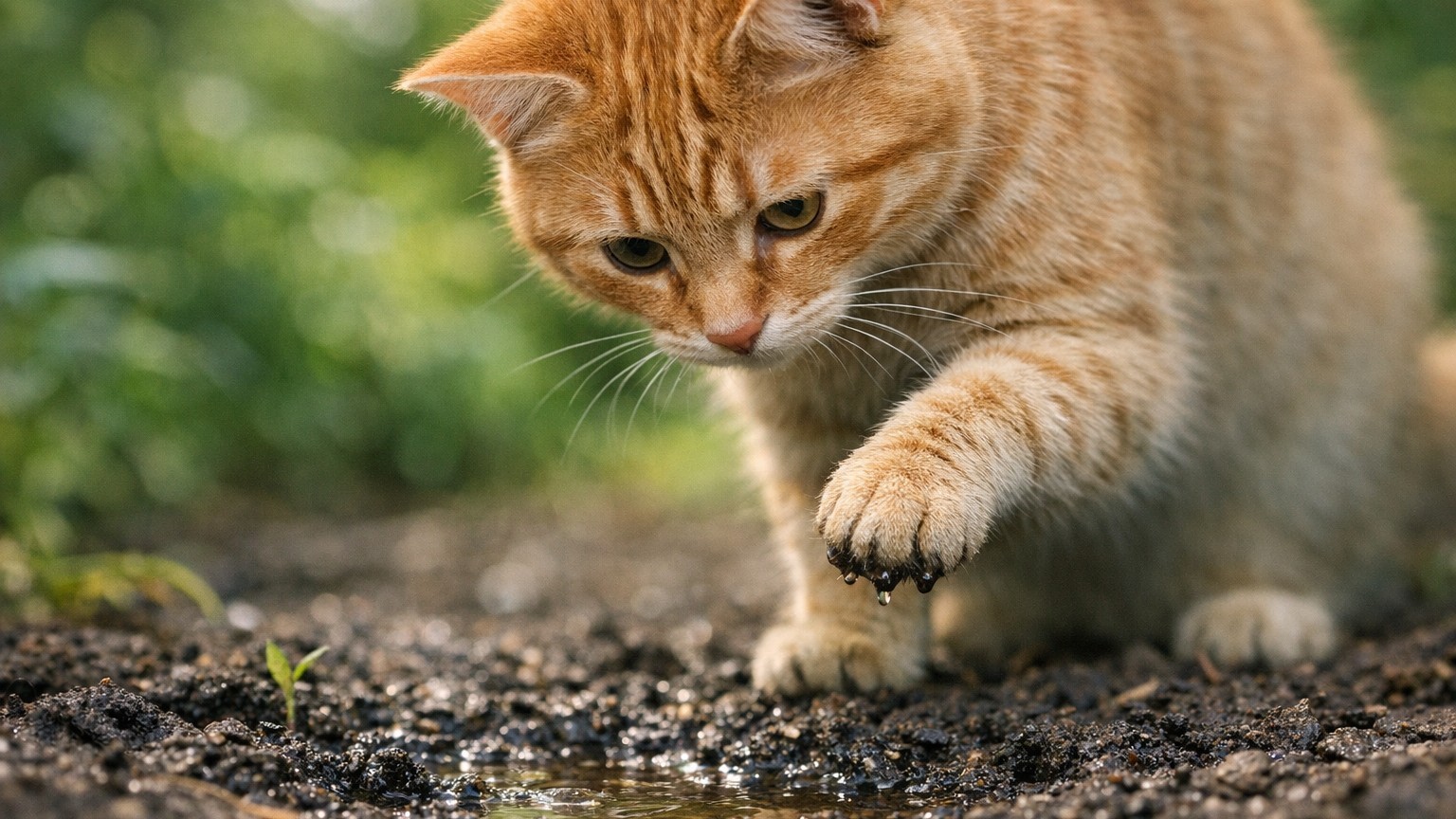
A quiet morning ritual: the garden gate swings open, your cat slinks out, rolls in the beds, paws through the freshly watered soil, and returns twenty minutes later looking thoroughly pleased with herself. Harmless, right? Not necessarily. Garden soil from outdoors can contain any number of unknown contaminants, from fertilisers to insecticides and other chemicals, and the morning watering routine many of us follow could be making direct exposure far worse.
Key takeaways
- Your cat doesn’t need to eat poison to be poisoned—paw contact during grooming can be fatal
- That innocent morning watering routine might be activating hidden toxins in your soil
- Garden chemicals kill more pets than toxic plants, yet receive far less attention from owners
What’s actually lurking in your garden soil
The problem isn’t really soil itself. Plain earth is benign. The issue is Everything humans add to it. It’s when chemicals like insecticides, herbicides, and fungicides are added to fertilisers, along with large quantities of minerals like copper, manganese, and iron, that the ground becomes genuinely dangerous for cats. Many gardeners reach for a combined feed-and-weed product without realising these all-in-one treatments are exactly the type of cocktail that can cause the most harm.
Then there are slug pellets, the most acutely dangerous product in a British garden. As of 1st April 2022, metaldehyde pellets are banned in the UK and can no longer be used or sold. But despite the ban, old stocks may remain in sheds and garages across the country. Metaldehyde is highly toxic to dogs and cats — ingestion causes tremors, incoordination, hyperthermia, seizures, and respiratory failure within 30 minutes to 3 hours. The replacement product, ferric phosphate, is marketed as “wildlife-friendly”, but this designation requires qualification, ferric phosphate pellets are significantly less acutely toxic than metaldehyde, but they are not entirely safe for pets.
Compost heaps deserve a special mention here. Natural fertiliser might be good for your plants but it can be dangerous to your cat, depending on what you’ve tossed into the compost bucket. Some fruits and vegetables, especially if they’re mouldy, as well as coffee grounds are toxic to cats. The mould factor is particularly underappreciated, it can produce tremorgenic mycotoxins that cause serious neurological symptoms.
The grooming cycle: why cats are uniquely at risk
Dogs tend to get into trouble by eating things directly. Cats have an entirely different, and more insidious, route of exposure. While dogs typically suffer poisoning through direct ingestion of baits or treated grass, felines face a twofold Biological threat: their meticulous grooming habits and a highly specialised, enzyme-deficient liver. A cat does not need to eat a pesticide to be fatally poisoned. Simply walking across a damp, treated surface and later licking their paws can induce severe neurological failure.
This is where watering habits matter more than most owners realise. When you water freshly treated soil, whether you’ve used a granular fertiliser, a weed killer, or a combined product — you can bring dissolved chemicals to the surface and create a damp, chemically active layer right where a cat’s paws land. Pesticide residues can remain on lawn surfaces and leaves for weeks or months, depending on rainfall and watering practices. Watering *before* those residues have fully bound to soil particles keeps them mobile, accessible, and sticky to paw pads.
Cats process chemicals differently from other species. They have different biological mechanisms and are in some situations less able to safely eliminate a toxic substance from their body. An adventurous lifestyle means owners don’t always know where their cat has been exposed, and cats can ingest toxic substances from their coat as they groom themselves. That post-garden wash routine your cat does on the kitchen floor? It’s effectively delivering whatever was on the soil straight into her digestive system.
Symptoms of acute pesticide poisoning in cats can include vomiting, diarrhoea, drooling, irritation to the skin or eyes, chemical burns, breathing problems, lethargy, disorientation, seizures, and even death. Some of these signs, a bit of lethargy, one bout of vomiting, are easy to dismiss as a minor stomach upset. That’s the danger.
What changed about the watering routine
The shift worth making isn’t dramatic. If your cat goes outdoors, make sure any newly spread fertiliser has dried before letting them roam, generally for 24 to 72 hours. It’s best to wait until after a rain shower has helped soak the fertiliser into the soil, then dried. The key word is “dried”, once moisture is gone from the surface and granules or residues have been drawn down into the soil structure, transfer to paws drops significantly.
Equally, check the small print on any garden product, because some granules are only deemed to be “safe” once they have been watered in. Left untreated, they remain potentially harmful. This is almost the opposite of the common assumption. Granular products need to be watered in fully and then the surface must dry, not watered *while* the cat is about to go out.
The majority of local councils use pesticides to manage weeds on pavements, paths, parks, and other urban spaces. Land managers are not required to provide any warning, either before or after pesticide application. It is therefore impossible for pet owners to avoid all treated areas. This is a bigger problem than most people imagine, your garden might be spotless, but the path your cat slips under the fence to reach most certainly isn’t.
Building a genuinely safer garden
The most practical shift is rethinking your product choices rather than trying to manage complicated waiting periods around chemical applications. Organic and natural fertilisers are available and won’t harm pets. They’re also effective without needing added chemicals and minerals, making them a great option for people with both gardens and pets. Organic, non-toxic pesticides such as neem oil, diatomaceous earth, or insecticidal soaps have little influence on the ecosystem and non-target species.
Many plants commonly found in British gardens, such as lilies, foxgloves, and daffodils, are highly toxic to cats. Even a small nibble on leaves or petals can lead to severe illness or worse. Switching to cat-safe planting schemes, marigolds, catnip, snapdragons, lavender, valerian, removes another layer of risk entirely. Consider turning your yard into a natural habitat by using native plants, especially pollinator-friendly species, and foregoing chemicals altogether.
On the practical side: wiping down your cat’s fur and paws when she comes back inside may offer some additional protection, particularly after she’s been out in wet conditions or when you’re not certain what she’s walked through. It takes ten seconds with a damp cloth. Remove your gardening shoes and gloves outside to avoid bringing toxins indoors, a detail that matters even for cats who rarely set foot in the garden themselves.
If you ever suspect your cat has been exposed to a garden chemical or toxic plant, contact your vet immediately, don’t wait for symptoms to worsen. The Animal Poison Line (01202 509000) is also available for urgent advice. Time genuinely matters with many of these compounds.
One fact that tends to surprise people: chemicals, fertiliser, pesticide, and herbicide, are a far greater and more common threat to pets than the plants themselves. All the energy pet owners put into memorising lists of toxic flowers is worthwhile, but the bag of lawn feed sitting in the shed deserves at least as much attention. The garden can be a genuinely wonderful space for a cat. It just requires its human to be a more careful steward of what goes into the ground.
Sources : westarbor.com | comparemyvet.uk