
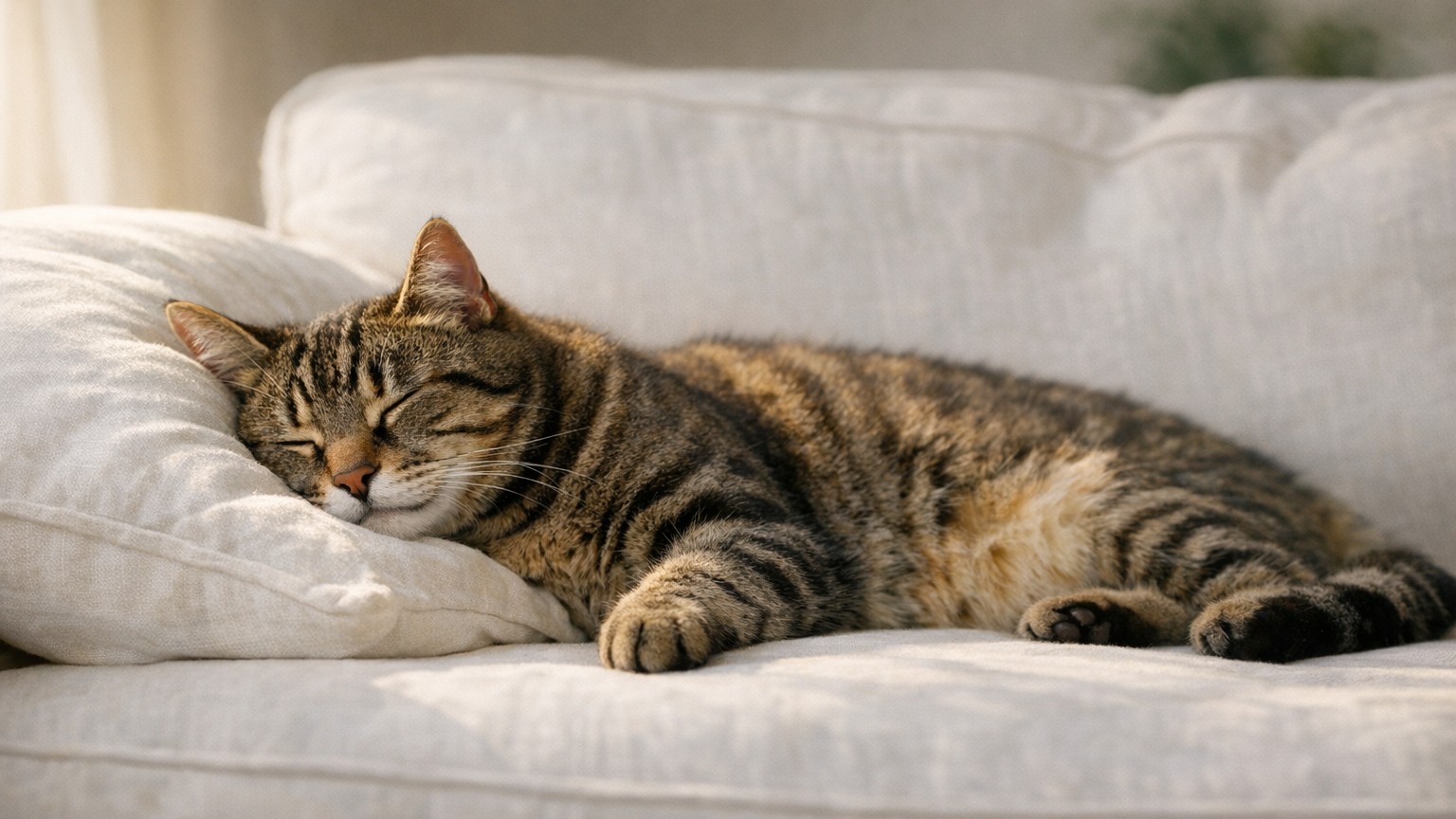
Cats sleep a lot. That part is not up for debate. But there is a meaningful difference between a cat power-napping its way through a Tuesday afternoon and one that has barely lifted its head from the sofa in three days. A significant, sudden change in sleep behaviour can be a warning sign, one that too many owners, quite understandably, dismiss as their pet just being its usual unbothered self. With summer arriving and temperatures climbing, that confusion is about to get worse.
Key takeaways
- Your cat’s normal sleep baseline matters more than the absolute hours—but what changed recently?
- Kidney disease, diabetes, and dementia hide behind excessive sleepiness long before obvious symptoms appear
- Summer heat creates the perfect cover for owners to miss warning signs they might otherwise catch
What “normal” actually looks like
On average, cats sleep between 12 and 18 hours in a 24-hour day, roughly twice to three times the amount their human owners require. That number surprises a lot of people. Your cat napping for most of the afternoon is not laziness; it is biology. Their bodies are built for the “hunt, feast, sleep, repeat” cycle of a predator. Even if the most dangerous thing your cat has stalked this week is a rogue crisp packet, those ancient instincts still drive the engine.
Age matters enormously here. Kittens are still growing and developing, so they may need up to 20 hours of sleep per day, while adult cats need 15 hours or less. At the other end of the spectrum, senior cats (aged 11 to 14) may sleep 16 to 18 hours per day, as their energy levels decrease, their metabolism slows, and they become less interested in play and exploration. Breed plays a role too : Persians and Ragdolls are known for sleeping up to 20 hours a day, while Siamese cats tend to be more active and may sleep for only 12 to 14 hours.
The key phrase in all of this is your cat’s normal. There is no set amount of sleep to indicate a health problem, it is about knowing your cat’s normal sleep patterns and recognising when that pattern changes significantly. A cat that has always been a world-champion lounger is a different story to a sociable, playful cat that has abruptly retreated into a duvet corner and stopped greeting you at the door.
When sleeping becomes a symptom
Lethargy in cats is a symptom, not a disease, and can indicate anything from a temporary issue like stress to a more serious condition requiring immediate vet care. The conditions hiding behind excessive sleep read like a worrying list. Hypothyroidism slows metabolism, leading to lethargy and increased sleepiness. Anaemia reduces oxygen in the blood, causing fatigue and a greater need for rest. Excessive sleep or sudden changes in sleep patterns could also signal issues like diabetes, arthritis, or hyperthyroidism.
Kidney disease deserves particular attention. Common symptoms of kidney disease in cats include decreased appetite, increased thirst and urination, lethargy, and vomiting. What makes this especially tricky is that many serious conditions in cats, particularly kidney disease and hyperthyroidism, can be present for months before causing obvious symptoms, and routine blood work catches them early when treatment is most effective. your cat may look merely sleepy long before it looks unwell.
There is also a neurological angle that owners of older cats should know about. A reversed sleep-wake cycle, sleeping all day and becoming active, restless, or vocal at night — is one of the hallmark signs of cognitive dysfunction syndrome, or feline dementia. If your elderly cat has started yowling at 2am and then barely moving by noon, that is worth a vet conversation sooner rather than later.
The red flags to watch for, beyond sheer volume of sleep, are these:
- Lack of interest in playtime, food, or treats they normally love
- Hiding away in a secluded spot rather than sleeping in their usual places
- Changes in appetite or water intake, eating or drinking much more or less than usual
- Difficulty waking, or seeming lethargic upon waking, this could be a sign of underlying health concerns
Persistent lethargy lasting more than 24 to 48 hours, especially if combined with vomiting, diarrhoea, difficulty breathing, or other severe symptoms, requires immediate vet care.
The summer trap: heat, boredom, and missed signals
Summer makes all of this harder to read. It is common for cats to sleep more during hot weather as a way to conserve energy and keep cool, and increased lethargy can be a normal response to heat. So owners who might otherwise have flagged a change in behaviour are instead reassured by the warm weather and chalk it up to seasonal laziness. This is where the danger lies.
While cats sleep more in hot weather, excessive lethargy can indicate overheating or early signs of heatstroke. Heatstroke is not just a dog problem. Although it is more common in dogs, cats can get heatstroke, especially in enclosed, hot environments or during heatwaves. Anything over 37°C greatly increases the likelihood of cats overheating, which is why shade is essential in helping them keep cool in hot weather. UK summers rarely hit those extremes across the board, but conservatories, south-facing rooms, and cars absolutely can — and cats should never be left in a car, even for very short periods of time, as it will become very hot very quickly and can be life-threatening.
The distinction between “hot and sleepy” and “dangerously overheated” comes down to accompanying signs. Unexplained restlessness, excessive panting, drooling, vomiting, lethargy, staggered gait, red tongue or mouth, and rapid breathing can all indicate heat-related feline illness. A cat that is simply warm will find a cool tile to sprawl on and perk up by evening. One suffering from heat exhaustion will not.
Stress is another summer factor. New people in the house, holidays disrupting routines, building work next door, one way cats express stress or anxiety is by changing their sleep patterns, and if they are suddenly sleeping more than usual, it could be a sign they are feeling overwhelmed or anxious about something in their environment. Boredom, too, can lead cats to sleep more, and while that might not seem like a big deal, boredom can lead to other problematic behaviours such as destruction, constant meowing, and over-grooming.
What to do, and when to call the vet
Start with observation. A gradual increase in sleep time over a month is something you might not notice day to day, but tracking patterns helps, so instead of telling your vet “I think my cat is sleeping more,” you can give them a clearer picture. Notes on a phone, a simple diary, even a camera set up while you are out — anything that gives you an objective sense of change over time is genuinely useful in a consultation.
Keep the basics solid during warm weather. Make sure your cat always has plenty of fresh water to drink, as dehydration is a real risk, signs include dry or tacky gums, low energy or listlessness, and sudden behaviour changes. Keep rooms well ventilated and do not let your cat access very hot rooms such as conservatories. For indoor cats, creating an engaging environment with toys, scratching posts, and playtime can balance out excessive lounging driven by boredom rather than illness.
If your cat’s sleep has noticeably increased alongside any change in eating, drinking, grooming, or social behaviour, speak to your vet. Senior cats should have wellness bloodwork at least once a year, and twice a year for cats over 14, even when they seem healthy. The frustrating truth about cats is that they are experts at concealing illness. When cats do not feel well, they are adept at masking it. Sick cats become more reclusive and sleep more, and this may be the only signal that something is wrong. Your job is simply to notice when “a lot of sleep” has quietly become “something more.”
One final thing worth knowing: cats alternate between light naps and deep sleep, with about 75% of their sleep being light, where they remain semi-alert, while the remaining 25% is deep sleep necessary for body repair and immune system support. That ear twitching and whisker flickering while your cat dozes on the sofa? Entirely normal. The cat that cannot be roused for its favourite treat at dinnertime? That one deserves a closer look.
Sources : petmedicalcenterverobeach.com | dialavet.com