
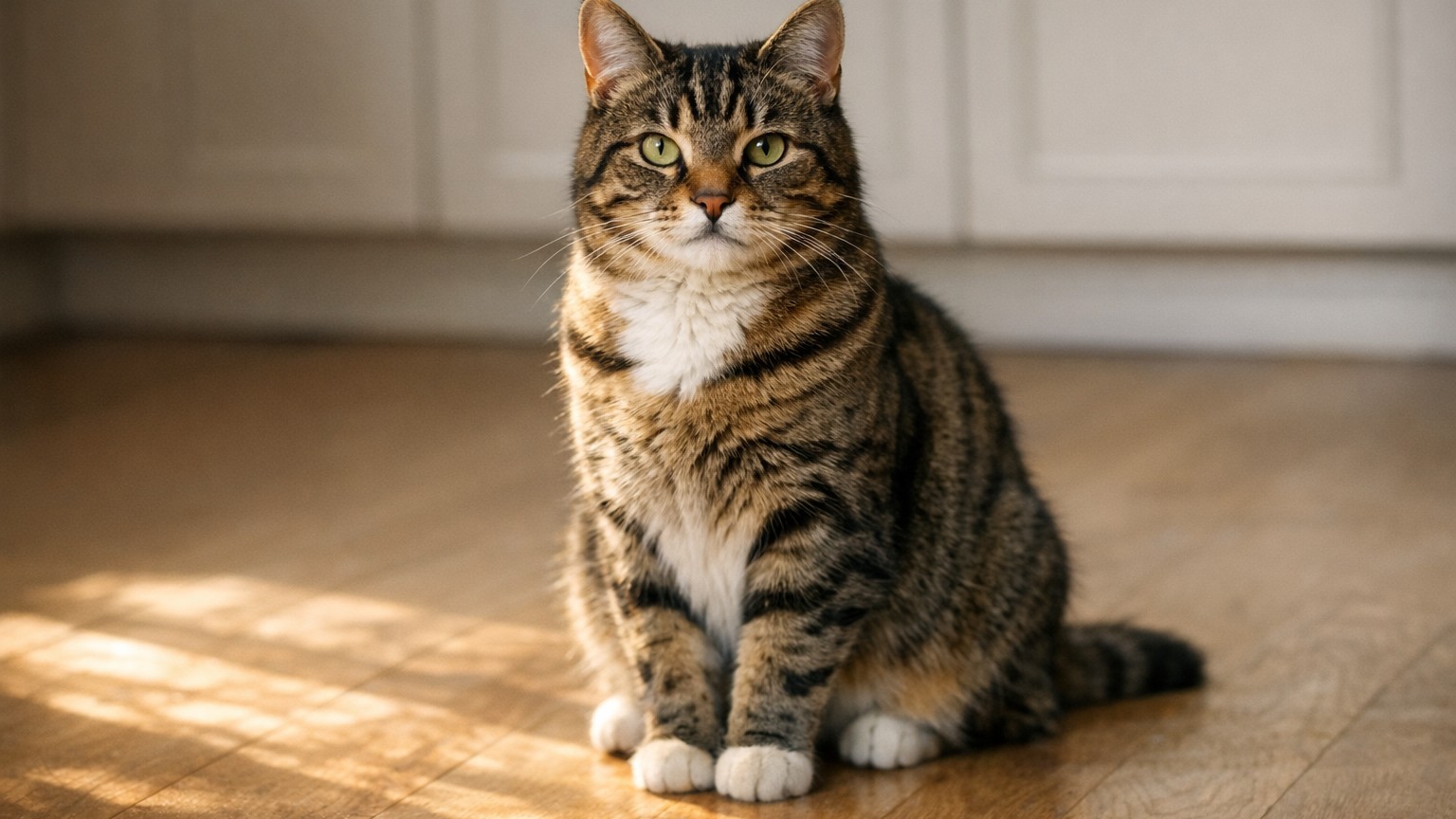
For years, my cat Milo deposited dead mice on the kitchen floor with the quiet pride of a seasoned professional. I’d shriek, grab the nearest rubber glove, mutter something rude under my breath, and carry on. I thought it was random, just something cats did, like knocking glasses off tables or pretending not to hear their name. Then I actually looked into it. What I found fundamentally changed how I read my cat’s behaviour.
Key takeaways
- Your cat’s hunting drive has nothing to do with hunger and never stops, even after neutering
- Dead mice gifts may reveal your cat sees you as an incompetent family member who needs survival lessons
- This behavior could also be a compliment—your cat trusts your home as their safe den
The hunter who never needed to be hungry
This behaviour has nothing to do with hunger. Domestic cats are, by nature, one of the most proficient hunters on the planet, and even when they no longer rely on hunting for survival, they retain a powerful prey drive from their wild ancestors. That means a cat who has just polished off an entire bowl of premium kibble will still sprint across the garden and return twenty minutes later with something deeply unwelcome.
According to International Cat Care, if cats were to rely solely on their own catches to sustain themselves, they would need to catch around 10 to 20 creatures a day, a staggering number, especially given that each hunting attempt has less than a 50% chance of success. Because of this, cats evolved to hunt whenever the opportunity arises, regardless of whether they are actually hungry. The drive is simply always on. Along with the urge to defend territory, the hunting instinct is one of the most distinctive behavioural patterns in cats — and crucially, it is not governed by hormones, so it does not diminish after neutering.
Research published in Applied Animal Behaviour Science shows that even cats with no nutritional need to hunt will engage in the full predatory sequence: stalk, chase, pounce, kill, and present. These behaviours fulfil psychological needs and provide mental stimulation. Think of it less as violence and more as a deeply satisfying puzzle your cat needs to solve every single day.
What the dead mouse is actually saying
Here is where it gets genuinely touching, once you get past the initial horror. The main hypothesis is that this behaviour is maternal: in the wild, mother cats go out and hunt and then bring food back for their kittens, not only feeding them but giving them something to play with, practice hunting on, and recognise as prey. In the context of human owners, our cats may see us as “not so efficient kittens.”
When your cat presents you with a dead mouse, they may view you as a beloved but terribly incompetent member of their family. They’ve noticed you never catch your own mice, so they are trying to teach you survival skills. Honestly, from a cat’s perspective, the logic is sound. You open tins, stare at glowing rectangles, and never once stalk anything through tall grass. Someone has to step in.
Some experts believe that when a domestic cat brings dead mice to their owners, they are attempting to initiate a similar lesson. This doesn’t mean your cat thinks you’re a kitten, rather, it may perceive you as inexperienced or incapable of providing for yourself. After all, you don’t stalk bugs or chase birds; you open a can. From the cat’s perspective, you might seem oddly dependent on mysterious food sources.
There is a second, equally plausible explanation running alongside the teaching theory. A veterinarian cited by Live Science describes it as “somewhat of a compliment.” Your cat feels comfortable in their home and considers you part of their family. Bringing dead animals inside also reflects a practical instinct: in the wild, eating or storing prey in an exposed area attracts scavengers and predators. A safe den, your home, becomes the ideal place to deposit kills. To your cat, the living room is the secure core of its territory, making it the logical destination for captured prey.
Does it matter which cat you have?
Some breeds, including the Bengal, Egyptian Mau, and Abyssinian, are known for high prey drive due to their closer genetic ties to wild ancestors. Neutered cats also continue to hunt; sterilisation reduces mating behaviours but does not eliminate predatory instincts. So if you were hoping that a trip to the vet would solve your morning mouse problem, that ship has sailed.
How much hunting a cat does depends on both its environment and how much time it spends outside. A cat that lives in a rural area may have more space to roam and access to more prey than city cats do, so urban owners may get fewer dead animals than those in the countryside. Interestingly, research suggests that cats allowed outdoors only part of the time, particularly during dawn and dusk, peak rodent activity hours — are more effective hunters than full-time outdoor cats. This implies that controlled access may actually increase hunting motivation, possibly due to novelty or heightened alertness. keeping a cat partially indoors does not necessarily reduce the gift-giving.
Even indoor cats without outdoor access may exhibit this gift-giving behaviour using toys. Some carry stuffed mice to their owners’ beds or place them in shoes, mimicking the same ritual. If your cat keeps depositing a scruffy toy mouse by your slippers every morning, that is the exact same gesture, just without the cleanup.
How to respond (and when to worry)
The most important rule is to never punish or yell at your cat. Hunting is a natural, instinctive behaviour. Scolding them will not stop the hunting, it will only cause stress and confusion, potentially leading to other undesirable behaviours. Your cat will not understand what they did wrong; they will only register that their valued family member reacted negatively to a natural act. Rejecting or punishing them for bringing prey can actually be counterproductive, as they may try harder next time.
Never touch the dead animal with bare hands. Wild rodents and birds often carry parasites like fleas and ticks, or diseases including Toxoplasmosis. Wear gloves, double-bag the carcass, and dispose of it in an outdoor bin immediately. If your cat has eaten part of the prey, keep an eye on them and consult your vet, worm treatments may need updating more frequently for outdoor hunters.
To reduce how often it happens, the most effective strategy is enrichment rather than restriction. Use toys that simulate prey, such as wand toys with feathers, battery-operated mice, or flirt poles, as these trigger your cat’s natural predatory sequence. Some cats also need to simulate the “killing” blow, so providing small stuffed animals or specific wrestle toys allows them to safely complete the hunting sequence. A 2019 study published in Animal Behavior found that cats deprived of opportunities to “hunt” through play or environmental enrichment showed signs of stress, anxiety, and even aggression. A fifteen-minute play session before dusk, when cats are naturally most active, can make a genuine difference.
One thing worth knowing: domestic cats achieve around a 32% success rate when catching prey; they can detect frequencies up to 64,000 Hz and discern the faintest rustling sounds; and their night vision is boosted sixfold compared to humans’ by a reflective layer at the back of the eye. The mouse at your feet was not a lucky accident. It was the result of an extraordinarily refined predator doing precisely what millions of years of evolution shaped it to do, and then choosing to share the result with you.
Sources : livescience.com | alibaba.com