
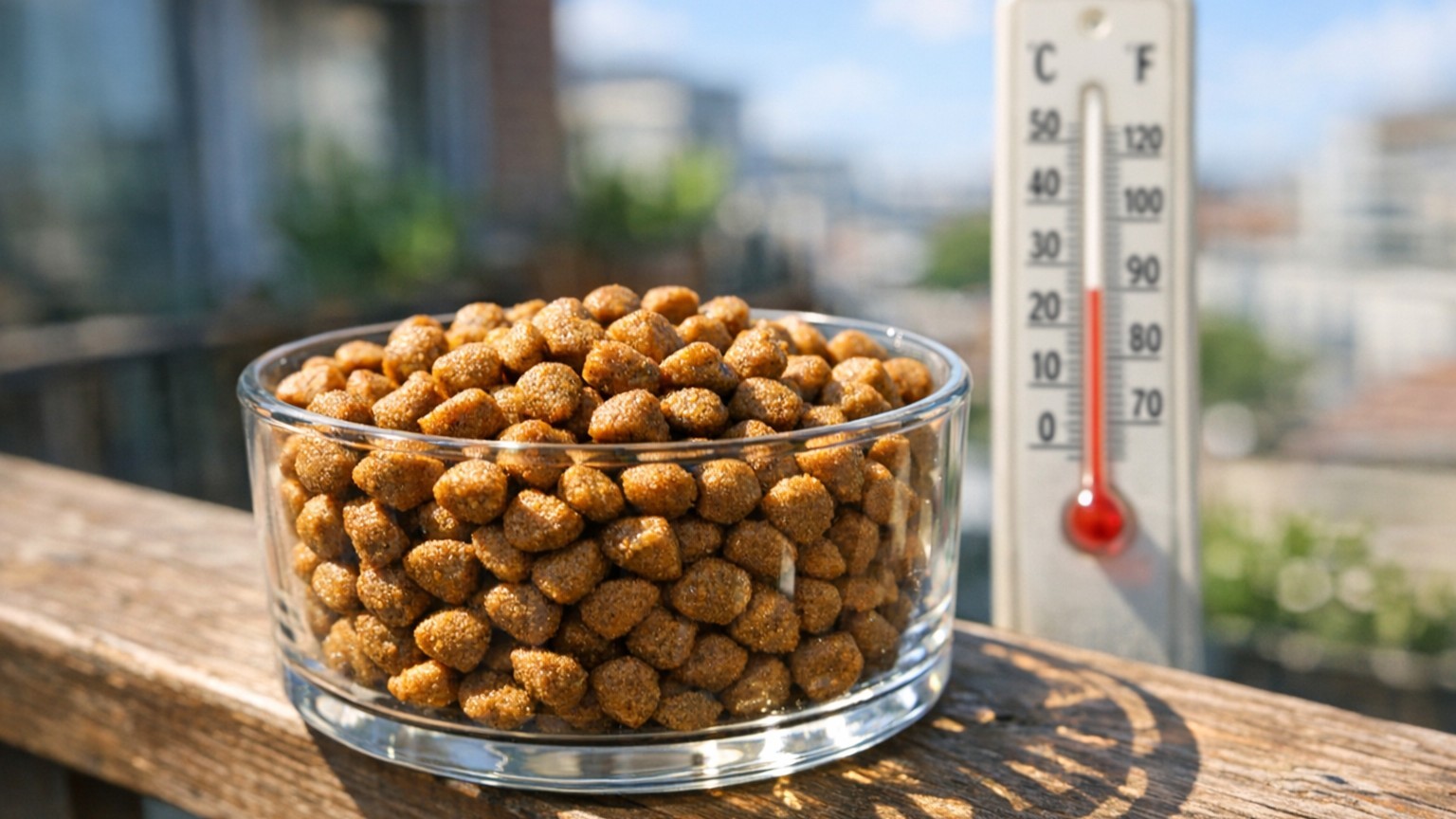
A sunny June balcony might seem like a perfectly harmless place to stash a bag of dog food, out of the way, convenient, aired out. The problem is that the moment temperatures climb above 27°C, the fats inside that kibble begin to silently decompose. By the time you notice a slightly stale smell, the damage is already well under way.
Key takeaways
- Kibble fats begin breaking down above 27°C, producing invisible free radicals—but the bag still looks and smells completely normal
- A vet discovered one pet owner’s dog had been eating oxidised kibble for weeks, destroying vitamins A and E and causing chronic digestive issues
- One in four European pet owners can’t guarantee their dog’s food never exceeded 30°C in summer—and humid outdoor storage risks deadly mould toxins
What is actually happening inside your dog’s bowl
Kibble is not just dried biscuit. Manufacturers spray fats directly onto the surface of kibble for flavour, and those fats are the first casualty of summer heat. Heat accelerates the oxidation of fats and oils present in the kibble, leading to the formation of free radicals that can damage nutrients and compromise the food’s safety. This process is called lipid peroxidation, and it does not announce itself with a dramatic colour change or visible mould. The kibble can look completely normal.
Rancid fats produce free radicals that can cause cellular damage over time, and the food may look and smell fine to you. That is the unsettling part. Your nose is simply not sensitive enough to catch oxidation in its early stages. Once you open a bag of dry dog food, the fats begin to oxidise, and research tracking kibble over 12 months found that rancid, stale, and oxidised aromas increased significantly over time, with the biggest changes occurring in formulas without added antioxidant preservatives.
A balcony in June adds a compounding threat: humidity. When warm, moist air gets trapped inside a dog food container, it creates a breeding ground for bacteria and fungi, and mould growth is a significant risk in humid environments. Some moulds produce mycotoxins, which are invisible but highly toxic to dogs. That is a long way from the innocuous-looking bag you left outside to save kitchen space.
The real health cost for your dog
The most common result of feeding food that has gone bad in the heat is an upset stomach, with vomiting, diarrhoea, and gas as frequent side effects of rancid fats. While these are often temporary, they are uncomfortable for your dog and can lead to dehydration in hot weather. But the consequences can run deeper than a bad afternoon.
Consuming oxidised fats over a long period can lead to vitamin deficiencies because the oxidation process actually destroys vitamins E and A. Fat-soluble vitamins like A, D, E, and K can degrade in high temperatures, leading to deficiencies over time. These are vitamins that support immune function, skin integrity, and vision. A dog eating slightly rancid kibble every day for weeks is not getting the diet the bag claims to provide.
In more severe cases, the situation escalates well beyond a tummy upset. In rare cases where humidity has caused mould growth, dogs can suffer from mycotoxin poisoning, a serious condition that can cause tremors, seizures, and liver damage. If your dog displays any of these symptoms after eating food stored in warm or outdoor conditions, contact your vet immediately.
As fats break down, they lose nutritional value and produce harmful compounds that cause digestive upset, skin issues, organ strain, or even increase the risk of long-term illness. The cost of replacing a bag of kibble is considerably less than a vet bill for any of these conditions.
How widespread is this mistake?
You are not alone in this. A peer-reviewed survey published in scientific literature painted a telling picture of how owners across Europe actually handle their pets’ food. The owners interviewed reported taking care to avoid exposure to light and heat, yet nearly one out of two kept dry pet food in the kitchen, usually one of the warmest rooms in the house, and one out of four admitted they could not be sure the food was never exposed to temperatures above 30°C in the summer. A sunny balcony in the UK in June can easily reach or exceed that figure, especially if the bag sits in direct sunlight.
Room temperature was the most overlooked parameter during storage, and this may be a cause of concern because exposure to warmth can enhance rancidity, especially in diet formulations rich in fats and oils. Fish-based recipes are particularly vulnerable: these products are at great risk of deterioration during storage due to their high content of polyunsaturated omega-6 and omega-3 fatty acids, and fish oils have a significantly higher oxidation rate than other oils, with increasing storage temperatures shown to accelerate this process further.
Storage habits that actually protect your dog
The guidance is consistent across vets and pet food manufacturers. Store dry pet food and unopened canned food in a cool and dry place, at a temperature below 27°C (80°F), as excess heat or moisture may cause nutrients to break down. A kitchen cupboard away from the cooker or radiator works well. A balcony, garage, shed, or conservatory in summer does not.
Keep the food in its original bag, which is often lined with a barrier coating, squeeze out excess air, and seal it tightly. The bag is engineered specifically to slow oxidation, decanting kibble straight into a plastic bin can actually make things worse. Transferring kibble to a plastic bin without the original bag can accelerate fat breakdown, since oils from previous batches build up on the container walls and go rancid. If you do use a storage bin, place the whole sealed bag inside it rather than tipping the kibble in loose.
Bag size matters more than most people realise. Buying smaller bags that your dog finishes within four to six weeks reduces the window for oxidation. For owners who buy in bulk to save money, that economy quietly disappears when the second half of a large bag spends three weeks slowly degrading on a warm shelf. Even unopened bags degrade faster than their “best by” date suggests if stored in warm or humid conditions.
One final detail that catches many owners out: the storage container itself. If you are pouring new kibble on top of old food without washing the bin in between, oils from dog food can build up on the inside of containers, eventually going rancid and affecting the flavour and safety of fresh food. A quick wash with warm soapy water and a thorough dry between bags takes two minutes and removes a genuine risk. Small habit, big difference, especially once the summer heat arrives.
Sources : thegrubbypuppy.com | woofgangflemingisland.com