
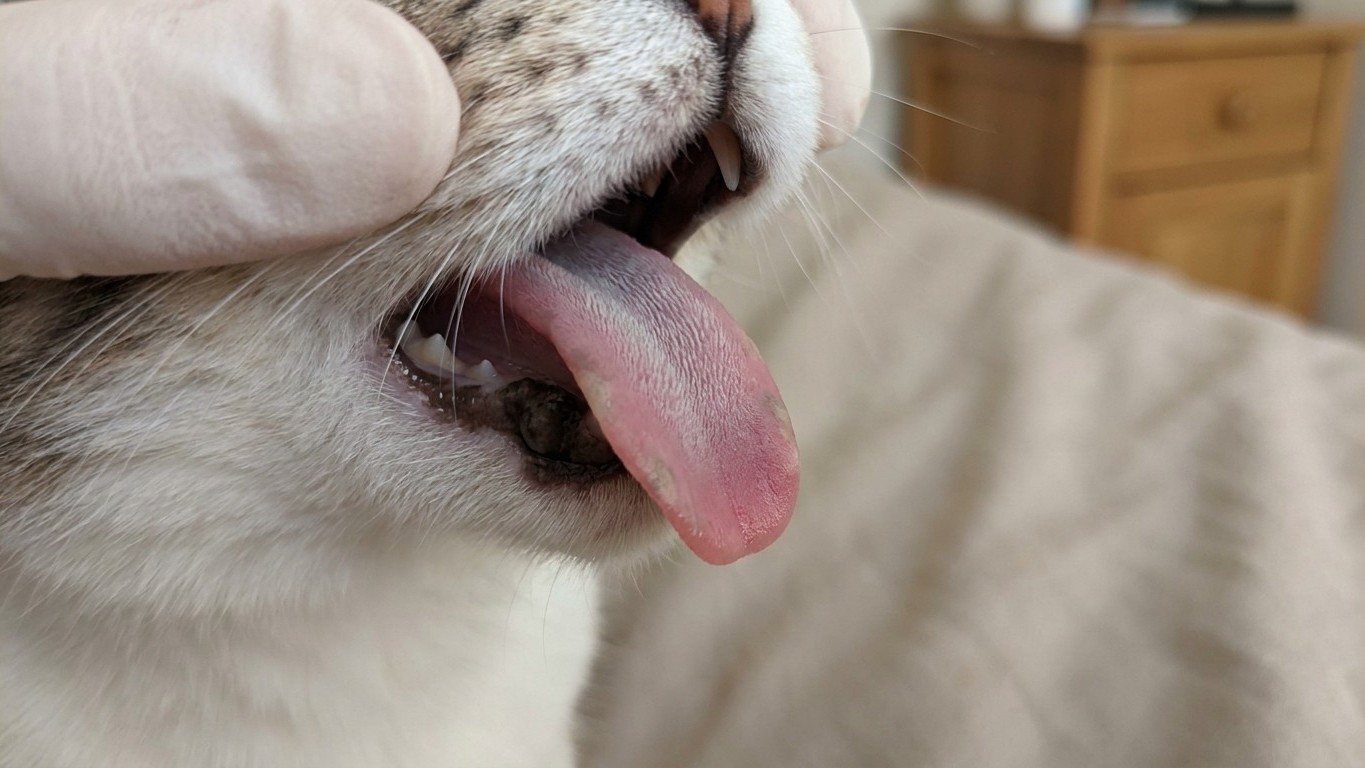
Phone charger cables left on the bedroom floor overnight are one of the most Overlooked hazards for cats in British homes. The danger isn’t theoretical. When a vet examines a cat’s tongue and finds pale grey or tan burn lesions along its edges, a charging cable left casually on the floor while its owner slept is often the culprit. This is the story of how a mundane bedtime habit became a genuine veterinary emergency, and what every cat owner needs to Understand about their home’s invisible risks.
Key takeaways
- A vet discovered something alarming on a cat’s tongue that traces back to a nightly bedroom charging habit
- Cats are mysteriously drawn to charging cables for reasons that go beyond simple curiosity—and their pain receptors work differently than ours
- The real danger isn’t always immediate: life-threatening symptoms can appear 24-48 hours after a cat bites a live wire
Why Cats Are Dangerously Drawn to Charging Cables
Cats are predators by nature, and cords resemble long, slithery prey. Some cats chew on them out of instinct, as if they’re hunting and killing their dinner. But the attraction runs deeper than that. Most wires are coated in plastic, which can offer a feel, smell, or taste that cats find appealing. The rubbery sensation against their gums may be particularly satisfying. Some cable coatings are even treated with fatty acids derived from animal or vegetable fats, which can draw a cat’s nose from the other side of the room.
Cats chew on electrical cords because kittens explore their world with their mouths and may like the texture of the cord covering. Older cats might chew cords due to dental discomfort, boredom, or stress. Some cats are drawn to the slight vibration or warmth from active cords, triggering their hunting instincts. A phone charging on the floor offers all three of these draws at once: warmth, vibration, and the irresistible texture of a rubberised cable. It is, from a cat’s perspective, a perfect toy. From a veterinary perspective, it is a trap.
There is also a subtler pull at work. A cat’s passion for warmth is connected to its genes, they are descended from desert-dwelling ancestors, which means they have a naturally higher body temperature than humans. Cats have fewer pain receptors than humans when it comes to heat: the human body acknowledges pain at 112°F, but cats don’t recognise heat-related pain until around 126°F is reached. This means a cat can press itself against a warm, charging phone or gnaw on a warm cable without registering any distress until the damage is already done.
What the Vet Actually Sees: The Damage to the Tongue
When an animal plays with an electrical cord and bites through it, the electrical energy coursing through the wire is converted to heat at the site of contact with tissue, resulting in a thermal burn. The electrical current may then pass through the animal’s body, disrupting normal functions such as heart rhythm and breathing.
The first category of injury is a local thermal burn. These burns occur at the site of contact with the electrical current, so in animals that bite the cord, the burns are found in the mouth, on the lips, gums, and tongue. Thermal burns can appear pale yellow, tan, or grey in colour. Many owners miss these signs entirely. Mild electrical injuries may show as slight redness or minor burns around the mouth and gums. The cat might paw at its face, drool more than usual, or show less interest in food. That reluctance to eat, which could be mistaken for fussiness, may in fact be a cat in significant oral pain.
The systemic consequences are far more alarming. Injuries can range from mild to life-threatening and manifest as vomiting, abdominal pain, muscle spasms, seizures, unconsciousness, respiratory distress, fluid accumulation in the lungs, irregular heart rate and rhythm, or cardiac arrest. Respiratory distress and the development of fluid within the lungs, called non-cardiogenic pulmonary edema, is one of the more serious and potentially life-threatening outcomes. Critically, a cat can still be in danger even if they appear normal after chewing an electrical cord. Fluid in the lungs can develop 24 to 48 hours after the initial electrical injury. This is the detail that catches owners off guard most often: the cat seems fine, the owner relaxes, and then collapses hours later.
If you ever suspect your cat has chewed a live cord, the first step is to cut the power at the socket or the fuse box before touching your cat. If a pet bites into a live electric cable, the muscles in their jaw may end up spasming and closing around the cable, making it difficult for them to let go. After that, get to a vet immediately, even if your cat appears unhurt. Always consult your veterinarian in any situation like this, there is no safe “wait and see” period with electrical injuries.
The Blue Light Problem Nobody Talks About
Even for cats that never chew a single cable, the phone on the bedroom floor creates a second, slower problem. Artificial light, especially blue light from screens, disrupts a cat’s circadian rhythm, leading to restlessness. Here is where feline biology makes things considerably worse than it does for humans.
The tapetum lucidum, the reflective layer behind a cat’s retina, reflects with constructive interference, increasing the quantity of light passing through the retina. In cats, it increases the sensitivity of vision by 44%, allowing them to perceive light that is imperceptible to human eyes. The charging indicator light that barely registers to you glowing in the dark is, to your cat, a much more powerful signal. Studies have revealed that blue light can affect a cat’s circadian rhythm by suppressing melatonin production, a hormone that regulates sleep and wakefulness. This disruption can lead to behavioural changes such as restlessness, irritability, and aggression.
Melatonin is known mainly for its ability to improve sleep quality and to participate in the antioxidant system, preventing oxidative damage to cells. In this respect, it exceeds the effectiveness of all known substances in the cat’s body. A cat whose melatonin production is chronically disrupted by nightly blue light exposure isn’t just sleepier, it’s losing one of its key cellular defence mechanisms. Research found a significant correlation between cortisol levels and behavioural stress scores for cats exposed to white light. Preliminary data indicate that female cats exhibited lower behavioural stress scores and cortisol levels in response to blue-depleted and dim light compared to white light.
Making Your Bedroom Safer: Practical Steps
The good news is that the solutions here are genuinely simple and cost nothing. The most obvious fix is to charge your phone in a different room overnight, or at the very least on a surface your cat cannot reach, not on the floor where a trailing cable is an open invitation. Products such as anti-chew wire covers can protect cats from exposed wires. You should also inspect cords for signs of wear and damage, then promptly replace exposed wires and unplug devices when not in use.
For cats that are persistent chewers, running cords behind furniture, taping them along skirting boards, or using cord covers makes them less accessible and appealing. Plastic cord covers or flexible tubing can make cords less enticing for cats to chew. Deterrent sprays with a citrus base are also worth trying, as cats generally dislike citrus scents on objects they’d otherwise investigate with their teeth.
If a cat is unwell, it is likely to manifest in behaviours that sometimes seem random, like chewing on cords. Some health problems that might lead to wire chewing include mouth soreness from ulcers, abscesses, gum inflammation, fractured teeth, or dental disease. So if your cat has developed a sudden new interest in cables it previously ignored, that alone is a reason to book a vet appointment rather than just hiding the charger.
One often-overlooked detail: cats prefer complete darkness for deep sleep or dimmable warm whites for light-sensitive zones, and shorter wavelength light, like blue, can interrupt rest. Switching to charging in another room means your cat gets a darker, quieter, less electrically active sleeping environment, which, for an animal whose night vision amplifies even the faintest glow, is far more restorative sleep than sharing a room with a pulsing LED indicator all night long.
Sources : bodywell.com | betterbehavedcat.com