
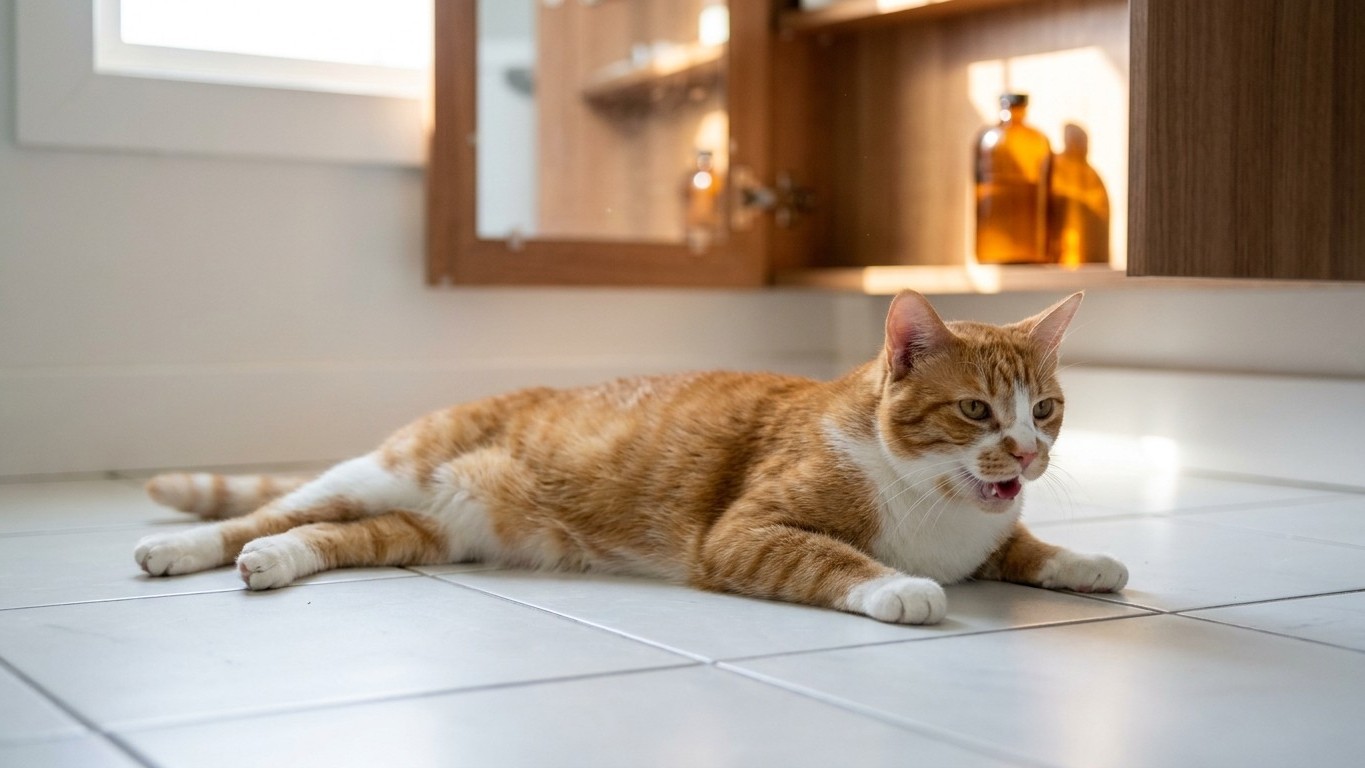
Every summer, millions of cat owners reach for the same antiparasitic spot-on or monthly tablet, the one the vet prescribed, the one that’s been sitting in a kitchen drawer since April. Routine, reliable, reassuring. But the heat that sends your cat sprawling on the cool bathroom tiles is doing something rather more troubling to those little pills and pipettes stored nearby. The chemistry involved is worth understanding.
Key takeaways
- Medications can lose effectiveness and become toxic in just 2 hours of heat exposure—faster than most pet owners realize
- Your bathroom cabinet and car are silent killers of drug potency; the real danger isn’t just weakness, it’s degradation byproducts
- Cats metabolize drugs differently and lack enzymes to safely process medication breakdown products—a risky combination
What heat actually does to a drug’s active ingredients
When a medication is exposed to temperatures outside its recommended storage range, this is known as a “temperature excursion”, and in general, heat causes medications to break down, making them not work as they should. That sounds straightforward enough, but the consequences go further than a pill simply becoming a bit weaker.
When this breakdown happens, new chemicals called byproducts can form, and some may be harmful. This is the part most pet owners never hear about. It isn’t just a question of your cat’s flea treatment being less effective in August, in some cases, degraded molecules may produce compounds that weren’t there when the product was manufactured. Beyond 40°C, there are risks of irreversible degradation in terms of quality and effectiveness, or even toxicity from the formation of degradation products.
A striking real-world illustration comes from research on veterinary drug storage in practice vehicles. Samples stored at room temperature retained at least 90% of the initial active concentration for 30 days, while samples stored at heated temperatures exhibited an apparent first-order degradation process, with the concentration decreasing to less than 90% within just two hours. Two hours. Not two months. The speed of chemical breakdown at elevated temperatures is genuinely sobering.
For cats specifically, this matters more than owners might expect. Cats metabolise medications differently from dogs and lack the required enzymes to safely break down certain compounds. A drug that degrades partially and produces a novel chemical intermediate goes into a body that may already be poorly equipped to process it. That’s a combination worth taking seriously.
Where the damage actually happens in your home
The standard definition of “room temperature” for medication storage usually means under 25°C, unless stated otherwise on the packaging or leaflet. In a British July, that threshold becomes surprisingly easy to breach, and the problem is rarely the living room thermometer. It’s the specific spots where we habitually store things.
The bathroom cabinet is, counterintuitively, one of the worst choices. The potency of many medicines is impacted by exposure to extreme environmental conditions, such as the heat and humidity generated by people taking hot, steamy showers. Your cat’s monthly antiparasitic, tucked next to the toothpaste, is cycling through warm humid air every time someone has a shower. Humidity directly affects the stability of medications, and keeping them in a dry environment is essential to prevent moisture-related issues.
The sunny kitchen windowsill is just as bad, possibly worse. Certain medications are sensitive to light and should be kept in opaque containers or away from direct sunlight. A pipette of spot-on treatment left in a south-facing window on a warm afternoon is simultaneously being attacked by heat and UV light, both of which accelerate molecular breakdown. Safer storage locations include dresser drawers, nightstand drawers, closed kitchen cabinets and a shelf in an enclosed cabinet.
Car boots deserve a special mention. During transport, it’s important to limit exposure to high temperatures such as those frequently encountered in car boots or passenger compartments exposed to direct sunlight. This catches people out most often when they collect a prescription from the vet and leave it in the car while finishing other errands. Even 30 minutes in a parked car on a warm day can push temperatures well beyond what the packaging specifies.
How to spot a compromised medication before you use it
The frustrating reality is that medications exposed to very hot temperatures can undergo changes that affect their safety or effectiveness, but sometimes this causes a visible change in their appearance, and sometimes it does not. You cannot always tell by looking.
That said, some signs are reliable red flags. In some cases, the medication will change its appearance or consistency as it breaks down. Before using any liquid medication, inspect it for abnormalities, if it was previously clear and is now cloudy, do not use it, even if it has not expired. Pills or capsules may become crumbly, hard, or sticky. If the colour of a medication has changed, discard it. And liquid flea formulations in particular are vulnerable: if a product has been sitting in a shed or garage where temperatures have fluctuated, don’t trust it — freezing or overheating can ruin medications.
The product’s appearance should always be examined when opened, as any alteration indicates a change in the pharmaceutical form’s properties or a risk of degradation of the active substances. Products that have been degraded or exposed to high temperatures must be replaced. If you’re uncertain, the most sensible course of action is to contact your vet or a veterinary pharmacist rather than press on regardless.
Practical steps that actually make a difference
The expiry date on the box is calculated under controlled conditions. The expiry date specified by the manufacturer indicates that the therapeutic effect has not changed until that date, but the expiry date stated on the package is based on the stability of the medicine inside its original, closed packaging. Open the foil, store it somewhere warm and bright, and you can effectively accelerate that timeline considerably.
Aim to keep medications in their original packaging until they are used, this helps distinguish between different medications and preserves their integrity. The packaging is explicitly designed to safeguard the medicine from environmental elements like light and moisture. Decanting pills into a convenient jar or loosely sealing a part-used box is a habit that quietly compromises what’s inside.
The clock-change trick is genuinely useful here. Checking expiration dates twice a year when the clocks change, spring forward, check the medicine cabinet; fall back, check the medicine cabinet — is a practical rhythm that keeps your pet’s medications in order. Pair that with a twice-yearly audit of where Everything/”>Everything is stored, and the risk of giving your cat a degraded product drops significantly.
Diabetic cats require consistent medication that matches their dosing needs, and any dose adjustments during summer should only be made under veterinary supervision. For any cat on regular long-term medication, thyroid drugs, steroids, pain relief, this conversation is worth having with your vet before the warm months arrive, not after treatment seems to have stopped working as expected. Always consult your vet for any health concerns related to your cat’s medication.
One detail that often gets overlooked: certain antibiotics, such as tetracyclines, may actually become toxic after degradation, and breakdown products can potentially harm the kidneys and cause other adverse effects. It’s a reminder that “less effective” and “harmless” are not the same thing when heat gets to work on a medicine. The goal isn’t just to keep the pill working, it’s to keep it from becoming something other than what it was prescribed as.
Sources : pmc.ncbi.nlm.nih.gov | researchgate.net