
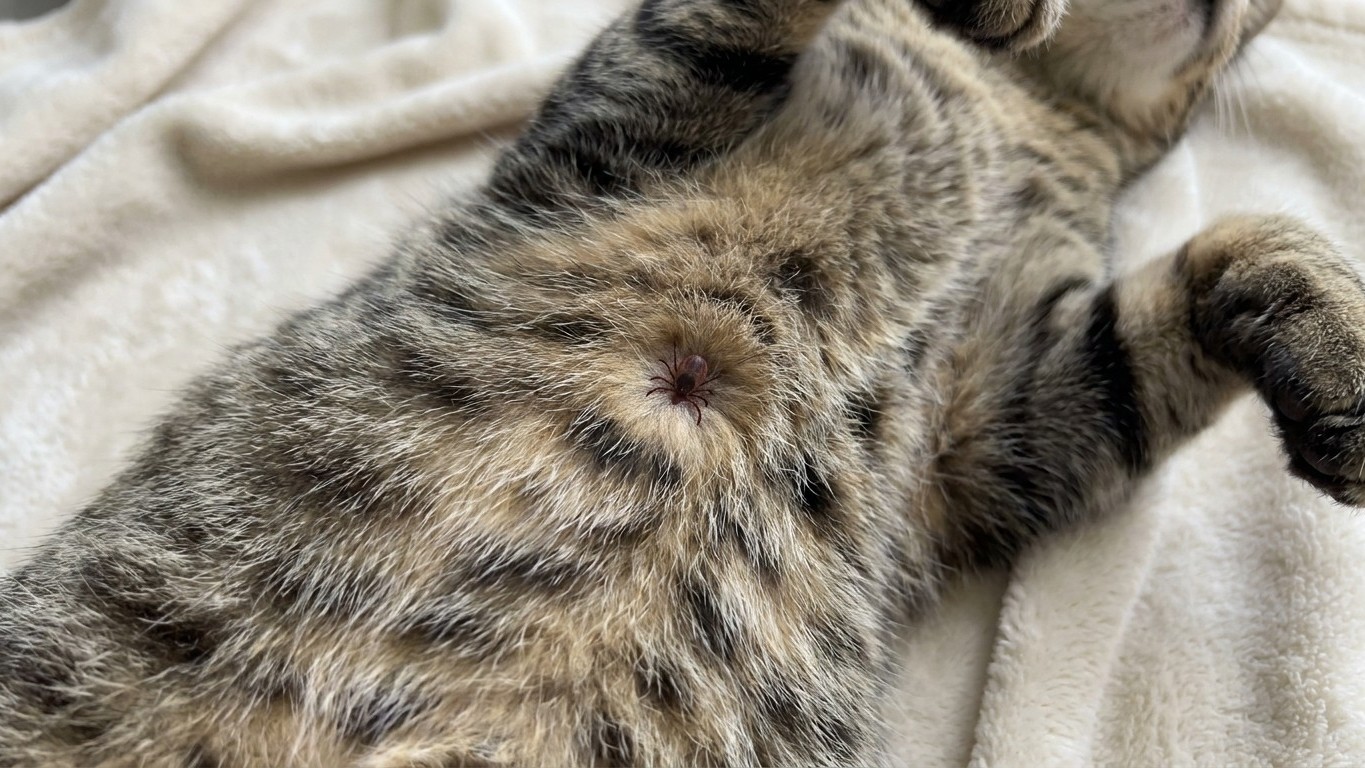
May is peak tick month for cats in the UK. Research published in scientific literature on companion animals in Great Britain confirms it bluntly: in cats, ticks are mainly observed in spring, peaking in May at around 17% of all annual tick records. So right now, as the grass grows long and your cat trots in from the garden or a nearby field, the chances of finding a small bump buried in their fur are higher than at any other point in the year. The instinct is to grab it and pull. That instinct, vets will tell you, is exactly wrong, and the reason why starts with something most cat owners completely overlook: making sure what you’re looking at is actually a tick in the first place.
Key takeaways
- Vets reveal the one detail cat owners always miss before grabbing tweezers
- The dangerous mistake that could cause infection and serious skin damage to your cat
- The correct removal technique that actually works—and why pulling is exactly wrong
The detail that stops owners in their tracks
Before you reach for any removal tool, be careful that you’re not accidentally trying to remove something else entirely, like a wart or a nipple. Look for the tick’s legs to be sure you’re dealing with a tick. This sounds almost comic until you realise how often it happens. It can be surprisingly hard to tell the difference between a tick, a nipple, and a skin tag on your cat. If you’re in any doubt about what you can feel, put the tweezers down and speak to a vet first.
The classic mistake happens on the belly. Cat owners should double-check that the bump on the skin is a tick instead of a nipple or other small skin growth. Even male cats have nipples, and multiple ticks don’t usually attach in symmetrical rows along the abdomen. So if you find two identical bumps sitting in a neat line down your cat’s tummy, step back. You are almost certainly looking at normal anatomy, not a tick infestation. Attempting to “remove” one of those bumps by pulling or twisting it causes real pain and can break the skin, and no amount of panic or good intentions makes that outcome acceptable.
Actual ticks, by contrast, have a very specific appearance. A tick embedded in the skin looks like a reddish-brown, grey, or black bump; the size will depend on how full of blood it is. The surrounding area may be swollen and/or red, and you might notice the legs spread out. Those legs are the giveaway. Adult ticks have eight legs, which you might be able to spot on either side of the lump. Ticks can sometimes be mistaken for a small lump or skin tag. When they attach, they embed tightly, and as they feed, their swollen body is the main thing you can see. Sometimes the surrounding skin will look pink or a little swollen. If you genuinely cannot see legs and you are uncertain, the safest call is your vet, no debate.
Why rushing the removal makes everything worse
Once you’ve confirmed it’s a tick, the method matters enormously. If you find a tick on your cat, it’s important to remove it carefully and correctly. Incorrect removal can result in the mouthparts of the tick remaining inside your cat, or squeezing fluids from the tick into your cat, both of which can lead to infection and/or skin reaction. The panicked tug, fingers gripped around the body, a sharp yank, is precisely how you cause the worst outcomes.
When removing a tick, make sure you don’t squeeze the tick’s body or leave the head in. If you squeeze its body or leave the head in, this can push blood back into your pet, which will increase the chance of them getting a disease. And those home remedies that have been floating around for years? Avoid folk remedies such as painting the tick with nail polish or petroleum jelly, or using a hot match to make the tick detach from the skin. The goal is to remove the tick as quickly as possible, not to wait for it to detach. Using irritants such as petroleum jelly or a hot match will not cause the tick to “back out” and may cause more disease-carrying tick saliva to be deposited in the wound.
Twisting ticks to remove them is safer and more effective than pulling them. Specific tick removal tools make twisting them off much more straightforward. These tools, often called tick twisters or tick hooks, are available from most pet shops and vet practices in the UK, and they’re designed to get close to the skin without compressing the tick’s body. Slide the tool under the tick, getting as close to your cat’s skin as possible, then twist the tick out rather than pulling or squeezing. The twisting action unscrews the barbed mouthparts cleanly rather than snapping them off mid-removal.
There is one more persistent myth worth killing off. It’s a myth that you need to worry about getting the “head” out, because the head of the tick was never embedded in your kitten’s skin to begin with. Ticks insert only their mouthparts, and digging around in a tick bite can increase the risk of infection. That dark spot you see at the centre of the bite site after removal is not a buried tick head, it’s just the normal appearance of a healing bite wound.
After removal: what the skin is telling you
The job isn’t finished when the tick comes out. Keep a close eye on the bite site for any signs of infection or irritation such as redness or swelling, and on your cat’s behaviour for any signs of illness. If you are worried, contact your veterinary team. Monitor your cat for any signs of illness or infection for several weeks. Redness or swelling could indicate a skin infection or other health issue. Also keep an eye out for jaundice (yellowing in the eyes or ears), as well as behaviour changes such as lethargy or reduced appetite.
In terms of disease risk, Lyme disease is a serious bacterial infection spread by ticks, but it’s very rare for cats to get Lyme disease in the UK, and many recover quickly with treatment. The longer a tick remains attached to the skin, the more pathogen- and/or toxin-containing saliva is injected into the host. Prompt removal is therefore imperative.
Prevention is the most sensible long-term strategy. If your cat goes outdoors often, you must use a flea and tick prevention method. There are many types available, including topical options like spot-ons, sprays, or tablets. Speak to your vet about the best tick-preventative treatment for your cat. One thing to be absolutely clear about: never apply a tick treatment made for dogs on your cat. Some dog products may be lethal if used on cats.
One last fact worth knowing as you enter the busy tick months: the earlier peak of tick records in cats compared to dogs may reflect the activity of Ixodes hexagonus, the most common tick species on cats, linked to its primary host, the hedgehog, which emerges from hibernation earlier in the year. if hedgehogs are visiting your garden, your outdoor cat’s tick risk rises before most owners even start thinking about it. A quick hands-on check of your cat’s coat after every outdoor session, paying special attention to the head, ears, armpits and groin, costs nothing and could save your cat from a very uncomfortable, and easily avoidable, problem.
Sources : petco.com | oakcreekvetcare.com