
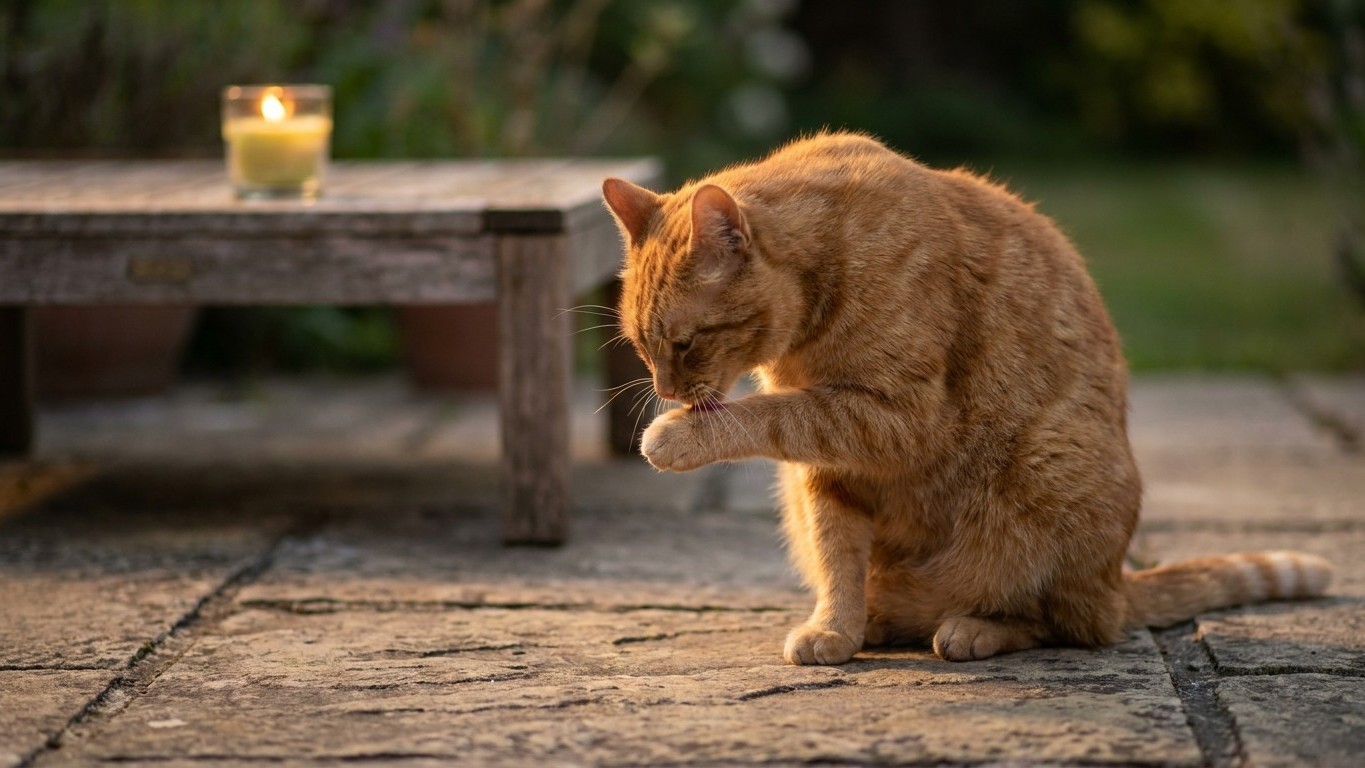
Every summer evening, millions of UK households light a citronella candle on the patio and think nothing more of it. The mosquitoes (and the midges) are kept at bay, the air carries a vaguely pleasant lemony scent, and the cat stretches out nearby on the warm flagstones. What most owners don’t realise is that a burning citronella candle doesn’t simply vanish into the air. It leaves behind a fine, oily residue on every surface it touches, the table, the chairs, the tiles underfoot, and a cat who grooms those paws each evening is quietly ingesting a substance their body fundamentally cannot process.
Key takeaways
- Citronella candles leave an invisible oily residue that accumulates on your cat’s fur and paws night after night
- Cats have a genetic inability to metabolise citronella’s toxic compounds, unlike humans, leading to dangerous buildup in their system
- Subtle symptoms like excessive grooming or digestive upset could signal citronella poisoning—but most cat owners never make the connection
The Invisible Residue Problem
Citronella candles work by burning wax infused with citronella oil, which releases aromatic compounds into the surrounding air to deter insects. The act of burning itself generates combustion byproducts, and burning the wax releases fine particulate matter and Volatile Organic Compounds (VOCs) into the surrounding air. These particles don’t simply drift away harmlessly; pets are physically closer to the ground, where heavier scent particles and chemical residues settle, and they often lick their fur or paws, increasing the chance of exposure through ingestion.
This is where the real danger lies for cats, not necessarily in a dramatic encounter with a lit candle, but in the cumulative, invisible exposure that happens night after night. Even citronella candles and diffusers can cause health problems for cats through the release of oil particles into the air, which cats can inhale or get on their fur and later ingest while grooming. A cat who spends the evening on the patio, then comes inside and washes their paws, is effectively dosing themselves repeatedly. Direct skin contact can result in redness, itching, or chemical burns, particularly in sensitive areas like the ears or paws. Ingestion, often occurring when cats groom themselves after contact with citronella-treated surfaces, can lead to gastrointestinal symptoms like vomiting, diarrhoea, or loss of appetite.
Why Cats Cannot Handle Essential Oils
The reason citronella poses a particular risk to cats comes down to a quirk in their liver. Cats are uniquely vulnerable because they lack glucuronyl transferase, the liver enzyme responsible for metabolising phenols, terpenes, and ketones found in most oils. Cats lack certain liver enzymes, specifically glucuronyl transferase, which are crucial for metabolising and eliminating certain compounds found in essential oils. One such group of compounds is phenols, and another is compounds like limonene and linalool found in citrus oils. These substances can accumulate in a cat’s system, leading to toxicity.
This is not a minor metabolic quirk. The risk to household pets, especially cats, is significantly greater due to a fundamental biological difference in metabolism. Cats lack a specific liver enzyme (glucuronyl transferase or UGT) necessary to process and eliminate phenolic compounds, such as citronellal and geraniol, found in essential oils. This metabolic deficiency means that even small amounts of inhaled oil fumes or residue on the fur can accumulate in their system, leading to potential liver damage. To put it plainly: what your cat absorbs stays in their body for far longer than it would in yours, building up over repeated exposures rather than being cleared efficiently.
All essential oils, including citronella, are toxic to cats. They’re rapidly absorbed by the cat’s skin or orally. The problem then is that cats cannot metabolise and break down the essential oils. Garden torches are, if anything, more hazardous still. Compared to candles, citronella-infused garden torches usually contain higher concentrations of the oil, so you should ensure your cat is kept well clear as much as possible.
Recognising the Signs of Exposure
The symptoms of citronella exposure in cats can mimic several other common ailments, which makes them easy to overlook or attribute to something else. Citronella candle wax can cause mild toxicity if ingested by cats, leading to drooling, vomiting, or diarrhoea. Skin contact may result in irritation or redness. Monitor for symptoms like excessive licking, lethargy, or digestive upset.
In more serious cases, the picture can worsen considerably. Exposure can result in a range of symptoms, including respiratory distress, drooling, vomiting, loss of balance, and in severe cases, liver failure. Severe cases may involve tremors, difficulty walking, or even seizures, requiring immediate veterinary intervention. One cat owner reported that after three hours of citronella oil being diffused indoors, their cat vomited repeatedly. Cats are known for their heightened sense of smell; therefore, the strong scent of citronella might cause discomfort and could potentially lead to respiratory issues if inhaled over a prolonged period.
If your pet starts showing signs like sneezing, watery eyes, coughing, vomiting, excessive grooming, or sudden changes in behaviour, a vet may ask questions about environmental changes, especially any new fragranced products. Scent-related reactions can look a lot like allergies, asthma, or even low-grade poisoning, so vets often diagnose through a process of elimination. If your cat has been spending evenings on a citronella-scented patio, that information is worth mentioning to your vet. Always consult a vet promptly if you’re concerned, don’t wait to see whether symptoms resolve on their own.
Should your cat come into direct contact with the oil or wax, remove your cat from the exposure source immediately, wash off any oil with warm water and mild dish soap, and contact your veterinarian right away. Don’t wait for symptoms to develop.
What to Use Instead
The good news is that swapping out the citronella candle doesn’t mean surrendering your patio to midges. Several genuinely effective and cat-safer alternatives exist. Rosemary is a multi-use plant, it repels not only mosquitoes but, as a bonus for your cats, fleas as well. Catnip, an evergreen perennial, will keep those pesky little mosquitoes away, along with ants, flea beetles, and weevils. Planting these around the borders of your outdoor space provides passive, ongoing protection without any residue on your surfaces.
Physical barriers also work well. Fine mesh screens on doors and windows dramatically reduce the number of insects that get indoors in the first place. Indoor fans can help create a breeze that makes it difficult for mosquitoes to fly around. Mosquitoes are weak fliers, and a well-placed fan can disrupt their flight and make it challenging for them to reach you. Battery-powered flameless LED candles give you all the ambient glow of a real candle with zero smoke, no hot wax pooling on your table, and no volatile oils settling on the tiles your cat will be walking across all evening.
One detail that often surprises cat owners: the ASPCA and the Pet Poison Helpline don’t list citronella as toxic to cats, although they do warn against using citronella candles, oils, and insect coils, and there is very little information or data on this topic and no apparent documented cases of toxicity. This absence of documented cases doesn’t mean exposure is harmless, it likely reflects the difficulty of linking repeated low-level exposure to a specific cause, rather than any genuine confirmation of safety. Cats who seem fine after years near a citronella candle may simply have been lucky, or may be experiencing subclinical liver stress that won’t become apparent until later. Given what we know about feline liver metabolism, the precautionary case for removing citronella products from your cat’s environment is strong.
Sources : motherluckranch.com | quora.com